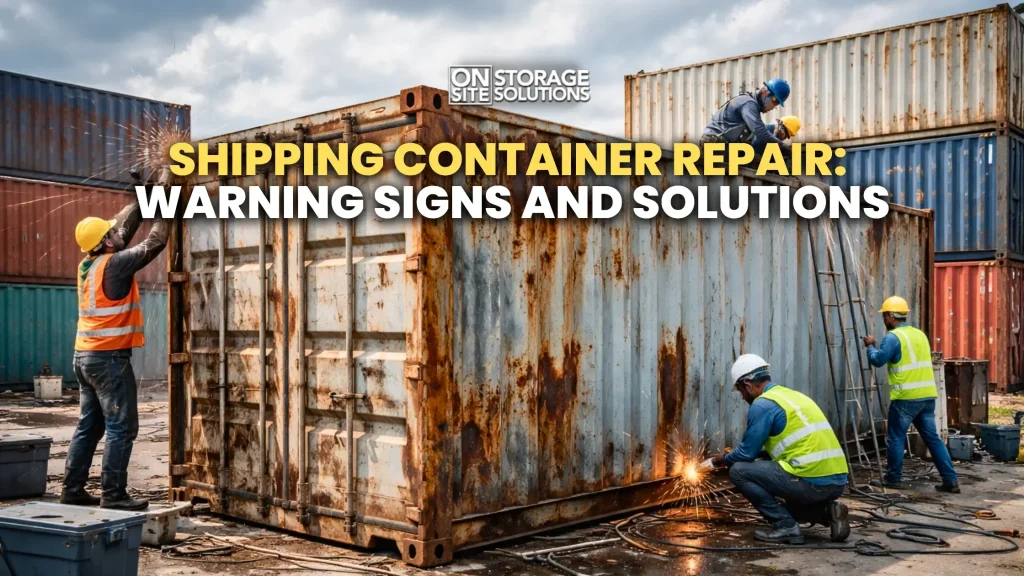

Shipping container repair is essential for maintaining the safety, strength, and usability of storage units used for various shipping container storage solutions exposed to harsh environmental conditions. Although built for durability and heavy-duty use, containers can still develop hidden damage over time without clear warning.
Many issues go unnoticed in the early stages. A container may still appear structurally sound while internal corrosion, weak joints, frame shifts, rust formation, or minor leaks are already developing. If left untreated, these problems can quickly worsen and lead to costly repairs or full replacement.
Identifying early warning signs, understanding the causes of damage, and applying proper repair methods are key to extending container lifespan and ensuring long-term reliability.
Understanding Shipping Container Repair Warning Signs
Early detection is key in shipping container repair and maintenance. Most damage starts small but worsens over time.
Rust Formation and Surface Damage
Rust is an early warning sign in shipping container repair. It starts as small spots caused by moisture or exposure to rain and humidity. If ignored, it spreads under the surface, weakens the steel, and can reduce the container’s durability over time.
Door and Seal Problems
Difficulty opening or closing doors may indicate frame misalignment. Worn or damaged seals allow water, dust, and air to enter, increasing the risk of internal damage and corrosion.
Water Leaks and Interior Moisture
Leaks are usually caused by roof damage, worn seals, or poor ventilation. Even small leaks can lead to moisture buildup and long-term corrosion if not addressed early.
Unusual Odor or Mold Growth
A damp smell or mold inside the container signals long-term moisture buildup. This often points to hidden leaks or poor airflow that can damage stored items and interior surfaces.
What Causes Shipping Container Damage
Several environmental and operational factors cause gradual container deterioration over time.
- Environmental Exposure – Rain, heat, humidity, and salt air gradually cause corrosion and surface breakdown.
- Heavy Load Stress – Uneven or long-term weight pressure can weaken flooring and affect door alignment.
- Lack of Maintenance – Without regular inspection, small issues like rust, leaks, and seal damage worsen over time.
- Improper Placement or Ground Contact – Containers placed directly on soil or uneven ground are more prone to rust, flooding, and structural stress.
These causes help reduce the risk of recurring damage over time and allow early action before minor issues turn into costly repairs.
How Shipping Container Repair Works
Most container repairs follow specific methods depending on the type and severity of damage. The goal is to restore structural strength, prevent further corrosion, and ensure safe long-term use.
1. Dented Panels and Structural Deformation
Damage: Dents can form on walls and roofs. A shipping container roof dent is caused by stacking loads, falling objects, or pressure, while wall dents come from impact or handling errors, weakening the structure.
Fix: Small dents are tapped out, while larger ones are reshaped with tools. A roof dent on a shipping container may require reinforcement. Cracks are welded or patched with steel.
2. Door Alignment Problems
Damage: Doors may become difficult to open or close due to frame shifting, worn hinges, or repeated use.
Fix: Hinges and locking bars are adjusted or replaced. If the frame is affected, realignment or reinforcement may be needed to restore proper function.
3. Rust and Corrosion
Damage: Rust forms when moisture reaches exposed steel and spreads over time, weakening the container.
Fix: Rust is removed using grinding tools or wire brushing. A rust converter is applied, followed by primer and protective coating to prevent further corrosion and extend service life.
4. Roof Leaks and Water Damage
Damage: Leaks occur due to cracks, worn seals, or long-term exposure to rain and moisture, allowing water to enter the container.
Fix: Small leaks are sealed with waterproof coatings, while larger damage requires metal patching or panel replacement to restore full protection.
5. Floor Damage
Damage: Heavy loads and moisture exposure can cause flooring to crack, warp, or weaken over time.
Fix: Damaged floorboards are replaced, and underlying support structures are reinforced to ensure stability and safe use.
When to DIY or Call a Professional for Shipping Container Repair
Not all damage requires expert intervention. Some repairs can be handled using basic tools, while structural issues require professional expertise.
DIY Shipping Container Repair Tasks
- Light Rust Removal – Surface rust can be removed using basic tools before it spreads deeper into the steel.
- Repainting Surfaces – Applying protective paint helps prevent further corrosion and restores surface protection.
- Sealing Small Leaks – Minor leaks can be fixed using sealants to prevent water and moisture entry.
- Lubricating Hinges and Moving Parts – Keeps doors functioning smoothly and prevents strain or misalignment.
- Cleaning Interior Moisture Buildup – Regular cleaning helps reduce humidity and prevents mold or corrosion inside the container.
When Professional Help is Needed
Professional assistance is required when structural integrity is compromised. This includes deep rust penetration, bent frames, roof instability, door failure due to structural shifting, and severe floor damage.
These issues require welding, realignment, and specialized equipment to restore safety, stability, and long-term durability.
Shipping Container Repair Prevention and Maintenance Tips
Preventing damage is one of the most effective ways to reduce the need for frequent shipping container repair. Regular shipping container maintenance helps extend the lifespan of the container and lowers long-term costs.
Inspection Routine
Regular inspection every one to three months helps detect early signs of rust, leaks, or structural stress before they develop into serious problems.
Moisture Control
Proper airflow reduces condensation buildup, while moisture control helps prevent corrosion and internal damage. Shipping container ventilation also plays an important role in minimizing moisture accumulation, reducing the risk of mold and rust over time.
Protective Measures
Applying protective coatings regularly helps shield steel surfaces from environmental exposure. Elevating the container also prevents water accumulation and improves ventilation underneath.
FINAL SUMMARY
Shipping container repair is essential for maintaining long-term durability, safety, and performance, especially for units exposed to harsh weather and continuous use. Without proper maintenance, small issues like rust, leaks, and structural wear can quickly develop into costly damage or full replacement.
Early detection, proper repair methods, and consistent upkeep are key to extending container lifespan and avoiding unnecessary expenses. Knowing when to repair or replace helps ensure safe, reliable, and cost-efficient storage solutions.
If you need dependable containers or expert assistance, On-Site Storage Solutions is ready to help you find the right solution for your needs.
You can call (888) 977-9085 to speak with us directly and find the right storage option for your project.
FREQUENTLY ASKED QUESTIONS
Yes, shipping containers can be repaired depending on the level of damage. Common issues like rust, dents, seal damage, and flooring problems can often be fixed through welding, sanding, sealing, or part replacement to restore structural strength and usability.
Rust on a shipping container is treated by removing the affected area through sanding or grinding, then applying anti-corrosion coatings or paint. In severe cases, welding or steel panel replacement may be required to restore durability and prevent further spread.
Proper maintenance includes regular inspections, cleaning, applying protective coatings, and ensuring proper ventilation. Keeping the container on level ground also helps prevent structural stress, rust formation, and moisture buildup that can lead to long-term damage or costly repairs.
A container needing repair is typically classified as “damaged” or “requires maintenance.” This status indicates that structural, surface, or functional issues are present and should be addressed promptly to avoid further deterioration and ensure safe usage.
Container damage can occur due to rust, heavy impact, overloading, poor ventilation, moisture exposure, and improper handling. Environmental factors like salt air and humidity also accelerate wear, leading to structural weakening, corrosion, and reduced container lifespan over time.