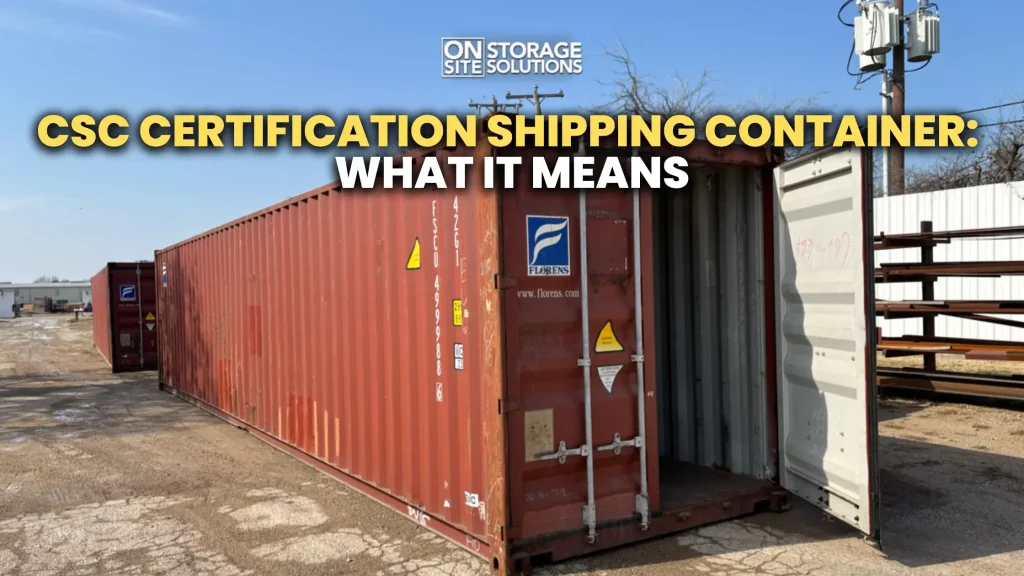

CSC certification shipping container refers to the international safety approval required for containers used in global transport. It confirms that a container meets the structural and safety standards set under the Convention for Safe Containers (CSC).
In fast-moving global trade, safety remains essential. Every container transported by sea, rail, or road must be durable enough to protect cargo, workers, and equipment throughout the journey.
Understanding CSC certification helps businesses prevent delays, minimize risks, and ensure smooth, compliant operations across the logistics chain.
Understanding the Basics of CSC Certification Shipping Container
A csc certification shipping container follows the rules set by the Convention for Safe Containers. This international agreement was introduced to create uniform safety standards across countries.
Before this system existed, container failures caused accidents and cargo losses. Today, certified containers provide assurance that they are structurally sound and safe for transport.
A shipping container that meets CSC standards is approved for international use. This approval is visible through a metal plate attached to the container.
CSC Certification Shipping Container and Its Global Importance
The csc certification shipping container system supports global trade by creating trust between shipping companies, ports, and customers.
Without certification, containers may be rejected at ports. This can lead to delays, extra costs, and damaged business relationships.
Standardized safety rules also protect workers who handle containers daily. Strong containers reduce the chance of collapse during stacking or lifting.
Key Details on a CSC Certification Shipping Container Plate
- Maximum Gross Weight – Indicates the total weight the container can safely carry, including cargo.
- Allowable Stacking Weight – Shows how much weight the container can handle when stacked with other containers on ships.
- Racking Test Load Value – Reflects the container’s ability to withstand stress during lifting and transport.
- Manufacturing Details – Includes the date and place of manufacture, which helps track the container’s origin.
- Inspection and Reinspection Dates – Confirms when the container was last checked and when the next inspection is due.
- Approval Reference Number – Identifies the authority that approved the container under CSC standards.
Why CSC Certification Shipping Container Matters in Daily Operations
A. Ensures Cargo Safety
A csc certification shipping container safeguards cargo during transport by complying with rigorous structural integrity and safety requirements. It reduces the risk of damage caused by weak frames, corrosion, or poor maintenance. This is especially important for long-distance shipments where containers face rough handling and changing weather conditions.
B. Improves Operational Efficiency
Certified containers move more smoothly through ports and checkpoints because they already comply with international regulations. This minimizes the chances of inspections, rejections, or delays during transit. As a result, businesses can maintain faster turnaround times and keep their logistics schedules on track.
C. Reduces Financial Risks
Using certified containers lowers the likelihood of cargo damage, penalties, or shipment delays. This helps businesses avoid unexpected repair costs, fines, and loss of goods. Over time, fewer disruptions translate into more predictable expenses and better financial planning.
D. Builds Client Trust
Using certified containers demonstrates a company’s commitment to quality and safety standards. Clients are more confident knowing their goods are handled with reliable equipment. This trust can lead to stronger partnerships, repeat business, and a better reputation in the market.
E. Supports Consistent Supply Chains
Reliable and certified containers help maintain a steady flow of goods across the supply chain. With fewer delays and issues, businesses can meet delivery deadlines more consistently. This stability is crucial for maintaining inventory levels and satisfying customer demand.
CSC Certification Shipping Container Inspection Process and Validity
A csc certification shipping container must pass a detailed inspection before it is approved. Inspectors check the structure, doors, flooring, and overall strength.
After approval, the certification is valid for a limited time. Most containers require reinspection after five years, followed by regular checks.
There are two main systems used. One is periodic inspection, and the other is a continuous inspection program that ensures ongoing compliance.
Types of Shipping Containers Covered
CSC certification applies to different container sizes used in logistics. These include the commonly used 10 ft container, 20 ft container, and 40 ft container.
Each size serves a different purpose depending on cargo volume. Smaller containers are useful for limited shipments, while larger ones handle bulk goods.
Most containers are made from Corten steel, which is known for its durability and resistance to harsh weather. This material helps containers last longer while maintaining safety standards.
Risks of Using Non-Certified Containers
Using an uncertified shipping container can lead to serious problems. Containers may be denied entry at ports, causing shipment delays.
There are also safety risks involved. Weak containers can collapse or fail during handling, putting workers at risk.
Financial losses can occur due to damaged cargo. Companies may also face penalties for failing to meet international safety regulations.
Maintaining Compliance Through Proper Care
Regular maintenance is essential to keep a container certified. This includes routine inspections and timely shipping container repair.
Small issues like rust, dents, or door misalignment can become major problems if ignored. Proper care extends the life of the container and keeps it compliant.
Keeping accurate records of inspections and repairs is also important. Documentation helps prove compliance during audits.
How to Check a CSC Certification Shipping Container
- Locate the CSC Plate – Find the CSC plate, usually attached to the container door, where all certification details are displayed.
- Verify Inspection Dates – Check the last inspection date and ensure the certification is still valid. Expired certification means the container should not be used.
- Inspect Overall Condition – Assess the general condition of the container, including doors, seals, and flooring.
- Confirm Need for Repair or Reinspection – If any damage is present, the container may require repair or a new inspection before use.
- Check for Structural Damage – Look for visible issues such as cracks, dents, or heavy rust that may affect safety.
Understanding Shipping Container Locks
Shipping container security is just as important as structural safety. Different types of locks are used to protect cargo during transit.
- Twist locks are commonly used to secure containers on ships. They lock containers together and prevent movement during transport.
- Padlocks are simple and widely used for basic security. They are easy to install and provide a basic level of protection.
- Bolt seals are often used for international shipping. These seals show clear signs if tampered with, which helps prevent theft.
- Electronic locks are more advanced. They allow tracking and monitoring, which adds an extra layer of security for valuable cargo.
Common Misconceptions About CSC Certification
Some people believe that once a container is certified, it stays certified forever. In reality, regular inspections are required to maintain compliance.
Another misconception is that only large companies need certified containers. Even small businesses must follow these rules when shipping internationally.
There is also a belief that older containers are unsafe. Age alone does not determine safety, as long as the container passes inspections.
Final Thoughts
The csc certification shipping container standard remains essential for safe and efficient global shipping. It protects cargo, supports workers, and helps businesses avoid delays while building trust in the supply chain.
Staying compliant is not just a requirement but a smart investment in reliability and long-term operations. With the right support, maintaining certified containers becomes much easier.
On-Site Storage Solutions offers durable, high-quality shipping container options that meet industry standards and are ready for inspection. Call (888) 977-9085 today to find the right solution and keep your operations running smoothly.
FREQUENTLY ASKED QUESTIONS
CSC stands for the International Convention for Safe Containers. It sets global safety standards that ensure a shipping container is structurally safe, properly inspected, and fit for international transport.
Yes. Most containers used in global trade must have CSC certification. This ensures they meet safety, structural, and compliance standards, allowing them to move smoothly through ports and customs without delays.
The CSC number is part of the information found on the CSC plate. It identifies the container’s approval and inspection details, confirming that the unit has passed required safety checks and is compliant for use.
ISO standards define the size and design specifications of shipping containers, while CSC certification focuses on safety, inspection, and operational compliance. In simple terms, ISO is about structure standards, and CSC is about safety approval.
Yes. CSC certification is internationally recognized under global maritime regulations. It ensures that containers can be used across different countries, transport systems, and ports while maintaining consistent safety standards.