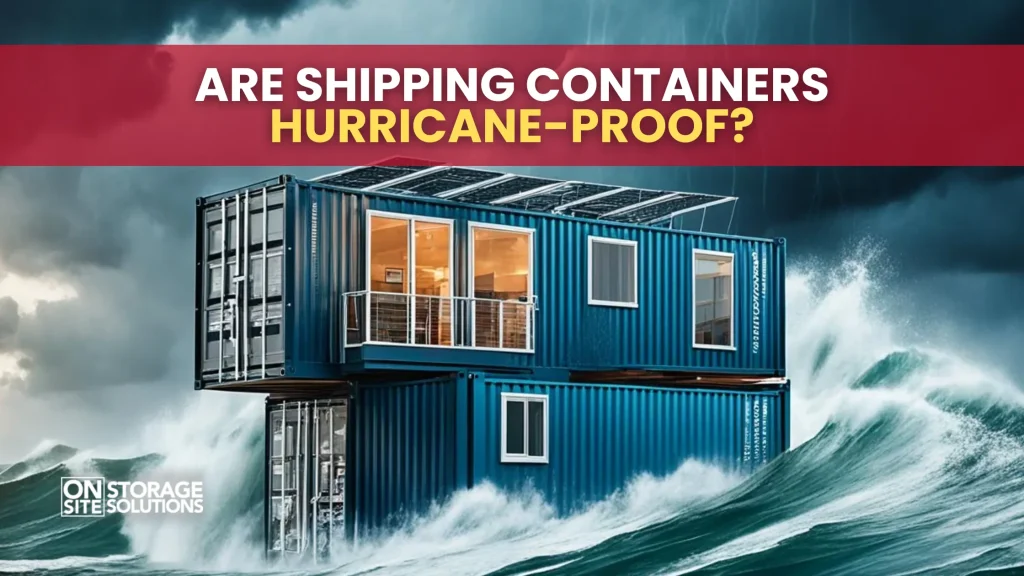

Shipping containers have become more than just cargo carriers; they’re now used as homes, offices, and even emergency shelters. But with hurricanes and extreme storms becoming more frequent, many people are asking the same question: Are shipping containers truly hurricane-proof?
Let’s take a closer look at what makes these steel boxes so tough, how they perform in storms, and how to strengthen them with the right accessories to make them safer and more reliable in hurricane-prone regions.
Understanding the Strength of Shipping Containers
Shipping containers are built from Corten steel, a high-strength, weather-resistant alloy designed to survive long voyages at sea. Their corrugated (wavy) walls and reinforced frames evenly distribute stress, making them remarkably durable.
A standard 20-foot container can carry up to 52,910 pounds (24,000 kilograms) of cargo without bending or cracking, a testament to its engineering. This durability makes containers a popular choice for people seeking affordable, wind-resistant storage or even temporary shelters during storm seasons.
How Wind Ratings Are Calculated
Wind ratings help determine how well a shipping container can resist high-speed winds and extreme weather conditions. These ratings depend on several engineering and environmental factors that influence how a container performs in hurricane-force winds.
Shipping Container Type and Size
Shipping containers typically come in two standard lengths: 20 feet and 40 feet. Because of its shorter frame and balanced weight distribution, a 20-foot container generally offers better resistance to tipping or twisting during heavy winds.
In comparison, 40-foot containers are equally strong in structure but have a longer side profile that catches more wind, which increases lateral pressure. Proper anchoring helps reduce this effect.
Shipping Container Weight
The heavier a container is, the more stable it becomes. An empty or lightly loaded container can be displaced by hurricane-strength winds, while a fully loaded and grounded unit stays in place more effectively. Adding weight, such as ballast or stored items, helps improve stability.
Wind Speed and Direction
Wind resistance also depends on how the container is positioned. End-on winds (winds hitting the narrow ends) apply less surface pressure, while broadside winds (winds hitting the long sides) exert greater force and increase the risk of sliding or tipping.
Containers designed for stationary use are tested and rated based on different wind speed thresholds. When properly anchored and positioned to face the wind end-on, most containers can withstand wind speeds of up to 100 to 120 mph, which is equivalent to a Category 2 hurricane.
However, winds from Category 3 hurricanes (111 mph and above) or stronger can exceed this limit unless additional reinforcements and anchoring systems are installed.
Shipping Container Wind Ratings Table
| Container Setup | Wind Speed Resistance | Notes |
|---|---|---|
| 20 ft container (unanchored, empty) | Around 60 to 80 mph | Risk of sliding or tipping; not recommended in open areas. |
| 20 ft container (anchored, loaded) | Around 100 to 120 mph | Stable under Category 2 conditions when properly secured. |
| 40 ft container (unanchored, empty) | Around 50 to 70 mph | A longer profile makes it more vulnerable to broadside winds. |
| 40 ft container (anchored, loaded) | Around 100 mph | Can withstand strong winds if positioned end-on and fully secured. |
| Multi-container setup (anchored with twist locks and bridge fittings) | Around 120 to 140 mph | Highly stable configuration suitable for hurricane-prone zones. |
(These figures are general engineering estimates. Actual performance depends on site conditions, load distribution, and anchoring quality.)
Advantages of Shipping Containers in Hurricane Zones
When properly reinforced and secured, shipping containers can offer significant advantages in hurricane-prone regions. Their unique construction and adaptability make them a smart, reliable option for both residential and commercial applications where safety and durability are top priorities.
1. Built Tough
Shipping containers are designed to withstand the harshest conditions at sea, where high winds, heavy rain, and constant movement are the norm. Their interlocking corner posts distribute stress evenly, preventing structural warping or collapse during intense storms.
For extra protection, homeowners and businesses can reinforce containers by adding steel bracing, weather seals, or anchor points to keep them stable and watertight even in Category 4 or 5 hurricane conditions.
2. Cost-Effective
Compared to traditional construction materials like concrete or wood, shipping containers are far more affordable. This makes them an excellent choice for temporary or emergency housing, disaster relief shelters, and secure commercial storage.
Since containers are pre-built and easy to transport, they can be deployed quickly, helping communities recover faster after hurricanes.
Additionally, using containers can save on long-term maintenance costs because they require minimal upkeep once properly sealed and treated for corrosion.
3. Adaptable and Customizable
One of the biggest advantages of shipping containers is their flexibility. You can modify them easily to meet specific safety and comfort needs, whether that means adding insulation for temperature control, welding reinforcements to increase wind resistance, or installing hurricane-rated windows and doors.
4. Environmentally Friendly
Reusing retired shipping containers not only saves money but also helps the planet. Instead of letting old steel units sit unused or go to waste, converting them into a shipping container tornado shelter reduces the need for new building materials.
This promotes sustainability while providing a durable, ready-to-convert structure that can last for decades with proper care. Because containers are modular, they can also be stacked or expanded, making them a sustainable solution for long-term community rebuilding projects in disaster-prone areas.
Limitations You Should Know
While shipping containers are incredibly strong, they’re not automatically hurricane-proof. Understanding their potential weaknesses helps ensure they’re properly reinforced before a storm hits. Here are a few key challenges to keep in mind:
Weak Points in the Structure
Although the main walls and frame of a shipping container are built to handle intense pressure, the doors and window cutouts are more vulnerable during high winds. These openings can create pressure points where strong gusts or flying debris may cause dents, warping, or even breaches.
If a container is being converted for living or office use, it’s essential to reinforce door frames and window edges with additional steel bracing or hurricane-rated coverings. Sealing gaps and installing storm shutters can also help prevent wind and water intrusion, maintaining the container’s integrity throughout the storm.
Comparison to Traditional Buildings
Traditional hurricane-rated buildings are constructed with specialized materials and designs such as aerodynamic roofs, reinforced concrete bases, and engineered fasteners to reduce wind resistance and structural strain. Shipping containers, while built tough, are not naturally designed with these features.
However, with the right upgrades, such as reinforced roofing, foundation anchoring, and additional bracing, containers can reach a similar level of storm resilience. These modifications not only increase safety but also extend the container’s lifespan, making it a practical choice for those living or operating in hurricane-prone regions.
Best Practices for Hurricane-Proofing Shipping Containers
You can dramatically increase a shipping container storm shelter resistance with the right upgrades. Here’s how:
1. Anchor the Container Securely
Anchoring prevents a container from shifting or overturning. Use heavy-duty steel anchors or ground screw systems that attach to each corner casting.
Recommended Product: Shipping container anchors from On-Site Storage Solutions provide high-tension hold to keep your container stable in high winds.
2. Secure Connections
When stacking or connecting multiple shipping containers, using the right locking accessories is essential for safety and stability. These components are engineered to keep containers tightly secured together, preventing separation or shifting during hurricanes, earthquakes, or strong wind gusts.
Dovetail Style Shipping Container Twist Lock & Base
This shipping container twist lock and base is designed for stacking and securing containers either vertically or side by side. It features a twist mechanism that locks into the container’s corner casting, keeping the connection tight and stable. The dovetail base ensures easy alignment, even when working on uneven surfaces or stacking multiple units.
Sea Rail Shipping Container Manual Twist Lock (Left-Right Handlocking)
The sea rail manual twist lock is a heavy-duty, hand-operated device designed to secure stacked containers during transport or installation. The left and right-hand locking options provide flexibility and ease of use, allowing you to safely lock or release containers manually without special tools.
These locks are commonly used in both stationary container setups and mobile units, such as modified container offices, portable storage, and on-site housing.
Sea Rail Shipping Container Bridge Fittings Clamp
The sea rail bridge fittings clamp connects containers positioned side by side, “bridging” the gap between them with a heavy-duty clamp mechanism. Once bolted in place, it provides a strong, unified structure that resists separation caused by high winds, seismic movement, or shifting terrain.
Bridge fittings are essential for multi-unit setups where side-by-side strength is just as important as vertical stacking security.
3. Reinforce the Frame and Walls
Add interior and exterior braces to reinforce the roof and walls. For container homes, install steel beams or hurricane straps to strengthen the frame against wind pressure.
If you’re modifying openings like doors or windows, use reinforced framing kits to maintain the container’s structural integrity.
4. Insulate and Waterproof
Corten steel is strong, but it can heat up quickly and retain moisture. Use spray foam or panel insulation to regulate temperature and prevent rust or condensation damage during storms.
Proper shipping container insulation also helps your container maintain air pressure balance, which is key to preventing structural stress under extreme winds.
5. Choose a Safe and Elevated Site
Location matters. Avoid flood-prone zones and choose elevated, well-drained terrain. Install drainage trenches or gravel beds around the site to keep water from pooling under your container.
Related Reading: How to Anchor a Shipping Container to the Ground for Storms
Conclusion
So, are shipping containers hurricane-proof? Not entirely, but they can be made highly resistant to wind and debris when properly reinforced and anchored.
Their steel construction, affordability, and modular design make them excellent choices for storage or shelter in hurricane-prone areas.
Just remember: the key to safety lies in anchoring, reinforcement, and smart site selection.
Build Your Storm-Ready Container with On-Site Storage Solutions
At On-Site Storage Solutions, we specialize in providing high-quality shipping containers for sale, rental, and rent-to-own to meet your specific needs. You can use them to secure valuable equipment, set up a reliable shelter, or build a hurricane-resistant structure. We offer the right solutions to keep your property protected.
Our team can help you make your container storm-safe with durable anchoring kits that provide ground stability, as well as twist locks, dovetail locks, and bridge fittings that keep containers securely stacked and connected.
Call us today at (888) 977-9085 to explore our selection of hurricane-resistant shipping containers and accessories.