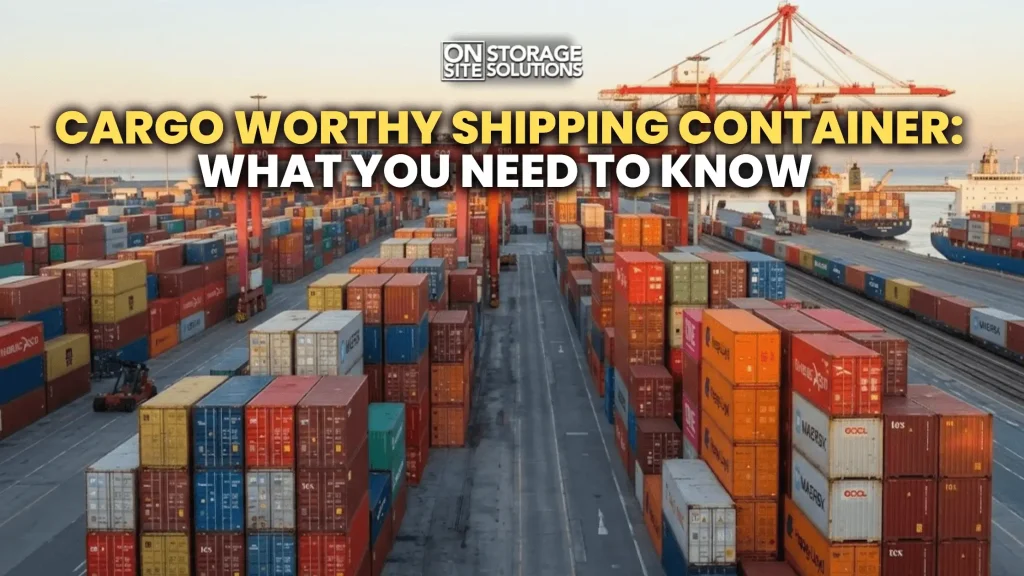

A Cargo Worthy Shipping Container is a dependable solution for secure shipping and durable storage. Built to handle demanding conditions across sea, rail, and road, it provides the strength and protection needed to keep cargo safe in transit.
From international shipping to secure storage and container conversion projects, understanding cargo-worthy standards, certifications, and durability can help you choose the right container with confidence.
Key Takeaways
- Understand what a Cargo Worthy Shipping Container means and what to expect from its condition.
- Learn the key requirements that make a container suitable for international transport.
- Explore common uses, from shipping and storage to conversions and specialized projects.
- Know what to check when buying a container, including size, condition, site access, and certification.
- Follow simple maintenance practices to keep your container in good condition and extend its useful life.
What Is a Cargo Worthy Shipping Container?
A cargo worthy shipping container is a used or new container that has been inspected and found to be structurally suitable for cargo transport. It may have normal signs of use, such as surface rust, dents, or scratches, but these should not compromise the container’s strength, doors, flooring, or ability to protect its contents.
The term “cargo worthy” describes the container’s physical condition, but it does not always mean the container has a current CSC plate for international ocean transport. A valid CSC certification may be required depending on the intended use and shipping requirements. Proper inspection and necessary repairs can help ensure the container meets the standards required for safe cargo movement.
What to Look for in a Cargo Worthy Shipping Container
A Cargo Worthy Shipping Container must meet technical requirements that allow it to withstand the demands of international transportation. These requirements focus on the container’s construction, standardized dimensions, and ability to perform safely during loading, stacking, lifting, and transit.
1. Compliance With Shipping Standards
International shipping containers are built according to established ISO standards. These standards help ensure consistency in container dimensions and design, allowing equipment to handle and transport containers efficiently across global shipping networks.
2. Sound Frame and Load-Bearing Structure
The container’s corner posts, rails, walls, roof, and floor should be structurally sound. These components must be capable of supporting the container and its cargo during lifting, stacking, and transportation without major deformation or structural failure.
3. Functional Cargo Access
Container doors should operate properly and provide a secure closure. Locking mechanisms, door hardware, and seals should function as intended so the container can be safely loaded, secured, and handled during transit.
4. Protection Against Moisture
A container used for international transport should protect its contents from exposure to rain and moisture. An intact roof, walls, and properly functioning seals help maintain a watertight interior during transportation and handling.
5. Compatibility With Cargo Handling Equipment
International containers are repeatedly lifted, moved, and stacked using specialized equipment. Their structural components and standardized construction must support these handling processes throughout the shipping cycle.
How a Cargo Worthy Shipping Container Can Be Used
A Cargo Worthy Shipping Container can support much more than standard freight transportation. Its durable construction and adaptable design make it useful for shipping, storage, specialized operations, and custom projects.
1. International Shipping and Trade
A cargo worthy container is well suited for moving products through international supply chains. Businesses can use these containers for import and export operations, provided the container has the appropriate certification for overseas transportation. Their standardized design also allows efficient handling across ships, railways, and trucks.
2. Secure Business and On-Site Storage
Businesses, contractors, and property owners can use shipping containers as secure storage for equipment, inventory, tools, building materials, and other valuable items. The enclosed steel structure helps protect contents from weather and unauthorized access, making containers practical for warehouses, construction sites, and commercial properties.
3. Custom Conversion and Specialized Projects
Shipping containers can be modified into offices, workshops, studios, retail spaces, cafés, and other functional structures. Depending on the intended use, they can be fitted with insulation, electrical systems, ventilation, windows, and additional security features. Smart containers can also incorporate monitoring technology for features such as temperature, humidity, security, and location tracking.
4. Reuse and Recertification
A used container can continue serving a useful purpose after its initial shipping life. Containers that remain structurally suitable may be repaired, inspected, and recertified for additional transport cycles. This approach can extend the container’s service life while reducing the need for replacement units and supporting more sustainable reuse.
What to Consider When Buying a Cargo Worthy Shipping Container
When choosing a Cargo Worthy Shipping Container, focus on these key factors:
- Condition: Check for major rust, dents, holes, floor damage, or leaks.
- Size and Capacity: Choose a size that fits your cargo and available space.
- Intended Use: Choose a container based on your intended use, such as shipping, storage, or a specialized project.
- Site Access: Make sure the delivery location has enough space and clearance for placement.
- Special Features: For demanding applications, military conex containers may offer added durability and security.
- Certification: Confirm that the container has the proper documentation for your intended use, especially for international shipping.
How to Maintain a Cargo Worthy Shipping Container
To support long-term use and compliance with international shipping standards, follow these simple maintenance steps:
1. Inspect Regularly
Check for rust, corrosion, leaks, and structural damage. Address minor issues promptly to help preserve the container’s condition.
2. Keep the Interior Clean and Dry
Remove dirt and moisture regularly to help prevent mildew and damage to stored goods.
3. Maintain Doors and Locks
Lubricate hinges, locks, and other moving parts to keep the doors operating smoothly.
4. Check Certification
If the container is used for overseas shipping, confirm that it has the required certification and documentation.
Regular maintenance helps preserve the container’s condition, extend its service life, and maintain its resale value.
Choosing the Right Cargo Worthy Shipping Container
A Cargo Worthy Shipping Container offers a practical combination of strength, protection, and versatility for shipping, storage, and specialized applications. Understanding its condition, technical requirements, certification, intended use, and maintenance needs can help you select a container that fits your specific requirements.
Ready to get the right container for your needs? On-Site Storage Solutions provides inspected shipping containers designed for reliable storage, transportation, and custom projects. Call (888) 977-9085 to discuss your requirements and find the right option for your project.
FREQUENTLY ASKED QUESTIONS
A cargo-worthy container is in condition to safely handle and protect goods during transportation. It should have a strong frame, working doors, a secure floor, and an intact exterior that helps keep moisture out. International shipments may also require valid CSC certification.
Yes. Age alone does not determine if a container is suitable for international transport. A used container can still qualify if its structure, doors, flooring, and other key components meet the required standards and it has the proper certification.
Look closely at the roof, walls, floor, doors, frame, and corner posts for rust, holes, dents, or other damage. Also consider the container’s size, intended use, delivery requirements, and certification before making a purchase.
Cargo worthy containers are intended for cargo transportation and may meet requirements for international shipping. Wind and watertight containers are primarily used for storage and protection from the elements and may not have the certification needed for overseas transport.
A well-maintained shipping container can remain useful for many years. Its longevity depends on factors such as its original condition, weather exposure, frequency of use, and maintenance. Regular inspections and prompt repairs can help prevent premature deterioration.


