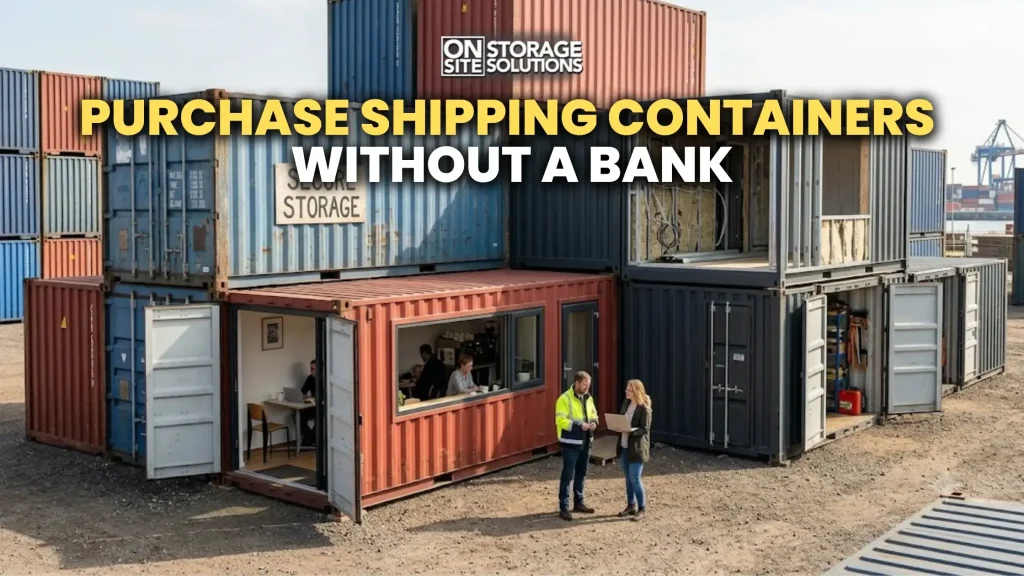

Purchase shipping containers has become a practical solution for storage, business use, construction projects, and flexible space needs. These containers offer durability, mobility, and long-term value, making them a reliable investment for both personal and commercial applications.
The main challenge is not choosing a container, but finding a financing method that fits your budget without requiring a large upfront payment or traditional bank approval.
This guide explores smart financing options, cost considerations, and key decision factors to help you choose the right way to move forward with container ownership.
Understanding Costs Before You Purchase Shipping Containers
Before you purchase shipping containers, it is important to understand what drives pricing in the market. Container costs are not fixed and depend on several operational and physical factors.
The most common pricing influences include container size, condition, delivery distance, and any modifications required for your project.
Here is a simple overview of typical market ranges:
|
Container Type |
Price Range |
Common Use |
|
20ft Used Container |
$2,000 – $3,800 |
Storage, small business use. |
|
40ft Used Container |
$2,800 – $4,500 |
Large storage, logistics. |
|
20ft New Container |
$3,500 – $5,500 |
Long-term use, conversions. |
|
40ft New Container |
$4,500 – $7,500 |
Commercial projects. |
Delivery fees, site preparation, and accessories such as locks or insulation can also affect the total cost. These additional expenses should be included in your financing plan to avoid unexpected budget pressure.
Financing Options to Purchase Shipping Containers Without a Bank
Many buyers assume that banks are the only way to fund a container purchase, but that is no longer the case. Today, you can purchase shipping containers through several flexible financing paths that do not rely solely on traditional bank approval.
Each option serves different financial needs and risk levels.
1. Personal Loans
Personal loans are commonly used for individuals who want to finance a shipping container for personal storage or small projects.
These loans usually offer:
- Fixed monthly payments.
- Flexible usage of funds.
- No need for business documentation.
Approval depends heavily on credit score and income stability, making this option best suited for qualified borrowers.
2. Business Financing
Business financing is often used when companies need to purchase shipping containers for operations such as storage, construction, or logistics.
This option may include equipment financing structures that allow businesses to spread payments over time while maintaining working capital.
It is commonly used by:
- Construction firms.
- Retail and inventory-based businesses.
- Logistics and transport operations.
3. Leasing Options
Leasing provides access to a container without immediate ownership. This option is often chosen for temporary projects or short-term operational needs.
Key advantages include:
- Lower upfront cost.
- Flexible usage periods.
- Reduced financial commitment.
However, leasing does not lead to ownership unless a purchase option is included in the agreement.
Container Rent-to-Own Options and How They Work
One of the most practical alternatives to traditional financing is the container rent to own model. This structure allows buyers to make monthly payments while using the container immediately.
Instead of paying the full cost upfront, ownership is gradually achieved through consistent payments over time.
The process is straightforward:
- Select your container size and condition.
- Agree on payment terms and duration.
- Make scheduled monthly payments.
- Gain full ownership once the agreement is completed.
This model is widely used by buyers who want predictable budgeting while working toward ownership without bank restrictions.
Rent-to-Own Containers Comparison
To better understand how rent to own containers compare with other financing methods, here is a simplified breakdown:
Option | Upfront Cost | Ownership | Credit Requirement | Flexibility |
Bank Loan | Medium | Immediate | High | Medium |
Personal Loan | Medium | Immediate | Medium | High |
Leasing | Low | No ownership | Low | High |
Rent-to-Own | Low | Gradual ownership | Flexible | High |
This structure makes rent-to-own appealing to buyers who need immediate access but prefer to spread costs over time.
How to Select the Best Financing Approach for Your Situation
When deciding how to purchase shipping containers, selecting the right financing option depends on your financial situation, usage needs, and long-term goals.
Key factors to consider include:
1. Budget and Cash Flow
Evaluate your available upfront budget and set a monthly payment range that fits comfortably within your ongoing financial capacity.
2. Purpose of the Container
Containers used for business operations may require different financing structures compared to personal storage or temporary use.
3. Credit and Approval Flexibility
Traditional loans often rely heavily on credit history, while alternative solutions like rent-to-own may offer more flexible approval criteria.
In some cases, options similar to rent container storage solutions provide access to containers with less strict approval requirements, making them useful for buyers who need fast access without strong credit profiles.
Common Mistakes to Avoid When You Purchase Shipping Containers
Many buyers focus only on the initial price when they purchase shipping containers, but overlooking the total cost can lead to unexpected expenses.
Common mistakes include:
- Ignoring delivery and site preparation costs.
- Not reviewing contract terms carefully.
- Choosing financing based only on the monthly payment size.
- Overlooking the total repayment cost.
- Failing to compare multiple financing options.
Careful planning ensures a smoother purchasing process and better long-term financial control.
Get Started with Flexible Shipping Container Financing
If you are ready to purchase shipping containers, On-Site Storage Solutions offers flexible and affordable container options designed for storage, business use, and long-term projects.
You can explore different container sizes and financing options that may include rent-to-own style payment plans, making ownership more manageable without high upfront costs.
For details or assistance, contact:
FREQUENTLY ASKED QUESTIONS
The easiest way to finance a shipping container without a bank is through alternative options such as rent-to-own programs, equipment financing companies, or private lenders. These options typically have faster approvals and more flexible requirements compared to traditional bank loans.
Rent-to-own is especially popular because it allows buyers to make monthly payments while using the container immediately.
The typical cost of a shipping container usually falls between about $2,000 and $7,500, depending on its size, condition, and any modifications. Smaller 20ft units tend to be the most budget-friendly, while larger 40ft containers or customized builds come at a higher price due to added space and features.
Delivery charges and site preparation can also increase the overall cost beyond the base price.
Yes, many suppliers offer monthly payment plans for shipping containers. Options like rent-to-own agreements or financing programs allow buyers to spread payments over time instead of paying the full cost upfront.
This makes containers more accessible for small businesses and individuals with limited cash flow.
Rent-to-own can be a good option for buyers who want immediate access to a container but cannot afford full upfront payment. It allows users to pay in installments while gradually building ownership.
However, it is important to review total contract cost, payment terms, and ownership conditions before signing an agreement.
The credit score needed depends on the financing provider. Traditional lenders may require good to excellent credit, often above 600 or 650. However, some alternative financing options and rent-to-own programs may be more flexible and consider income or payment ability instead of credit score alone.


