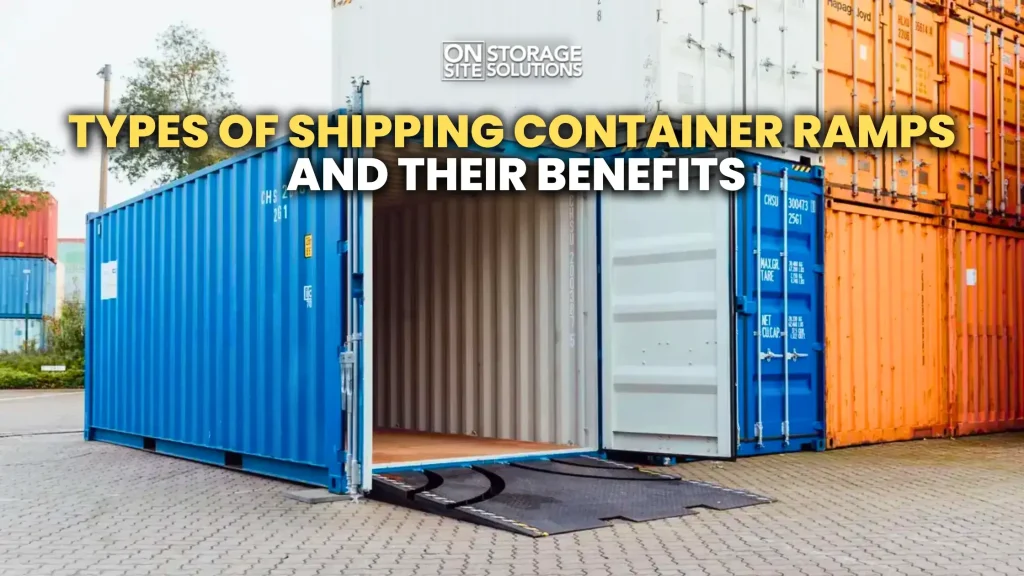

Shipping container ramps play a vital role in logistics, warehousing, and construction by making container access safer and more efficient. They allow equipment, vehicles, and workers to move cargo between ground level and containers with minimal risk.
As supply chains expand and different types of intermodal transportation increase, the right ramp can significantly improve operational efficiency.
For businesses using containers for storage or transport, choosing the right ramp is essential. From warehouses and container yards to construction sites and ports, ramps are no longer optional tools but key assets that enhance safety, speed, and cost control.
Why Shipping Container Ramps Are Essential
Shipping container ramps create a smooth transition from ground to container, reducing manual lifting and protecting workers. They also add flexibility, allowing a single container to serve multiple applications, which is especially useful in dynamic environments like temporary storage sites or work zones.
Operational Benefits of Shipping Container Ramps
Ramps speed up loading by letting forklifts, pallet trucks, and equipment enter containers directly, which is vital in intermodal transport. They also protect cargo by minimizing jolts and movement, reducing damage and insurance costs.
Understanding Container Size for Shipping Container Ramps
Before selecting shipping container ramps, understanding container dimensions is essential. Standard containers are typically eight feet wide, with narrower door openings that affect ramp fit and slope. Intermodal container dimensions also influence ramp width, angle, and load capacity.
Some containers feature wider or taller access points that may require custom ramp solutions. Proper sizing ensures smooth equipment access and stable loading operations.
Weight Capacity and Ground Conditions
The surface beneath the ramp is as important as the ramp itself. Uneven ground, gravel, or concrete requires different designs. Choosing ramps with proper load ratings prevents stress and ensures long-term durability.
Ground conditions also influence traction needs. Non-slip surfaces and reinforced lips help maintain control during heavy loading cycles.
Forklift Shipping Container Ramps
Forklift ramps are among the most widely used shipping container ramps in industrial settings. These ramps are engineered to support high weight loads while maintaining stability for forklifts entering and exiting containers.
They feature reinforced steel or aluminum construction and textured surfaces to reduce slipping. Forklift ramps are ideal for warehouses, factories, and construction sites handling heavy pallets or machinery.
Benefits of Forklift Ramps
Forklift ramps increase efficiency by allowing direct container access without cranes or dock levelers. This reduces equipment dependency and streamlines workflows.
Proper training is essential when using forklift ramps. When used correctly, they offer a safe and cost-effective solution for high-volume cargo handling.
Telescopic Ramps
Telescopic ramps offer adjustable length and height, providing smooth, controlled slope adjustments for varying container elevations.
Lightweight and easy to store, these ramps are ideal for warehouses with limited space and perform best on flat, stable surfaces.
Advantages of Telescopic Ramps
Telescopic ramps adapt quickly to changing operational needs. This flexibility reduces downtime and improves loading efficiency.
Their compact storage design also helps facilities maintain organized workspaces without sacrificing functionality.
Folding Container Ramps
Folding ramps are designed for portability and convenience, folding into compact units that are easy to transport and store.
They typically include leveling lips that accommodate slight ground variations. This makes them suitable for temporary setups or mobile operations.
When to Use Folding Ramps
Folding ramps are ideal for businesses that frequently relocate containers. They provide quick deployment without heavy installation requirements.
Their lightweight design improves handling while still offering reliable performance for moderate loads.
Hydraulic Shipping Container Ramps
Hydraulic ramps provide advanced functionality for high-demand environments, using hydraulic systems to adjust height quickly and precisely.
They are commonly used in facilities with frequent loading cycles and varying container heights. Hydraulic control enhances safety while minimizing manual adjustments.
Long-Term Value of Hydraulic Shipping Container Ramps
Hydraulic ramps are built for durability and continuous use. Their robust construction makes them suitable for long-term storage hubs and distribution centers.
Although the initial investment is higher, the efficiency gains often justify the cost over time.
Rubber Ramps
Rubber container ramps provide excellent grip and shock absorption. These shipping container ramps are commonly used on curbs, docks, and platforms where vibration reduction is important.
The rubber construction cushions both cargo and equipment during loading. This helps protect sensitive goods and reduces wear on machinery.
Safety and Stability Benefits
Rubber ramps excel in environments requiring high traction. Their non-slip surface performs well in wet or indoor conditions.
They are also low maintenance, making them a practical choice for many facilities.
Pallet Truck Ramps
Pallet truck ramps are designed for manual and electric pallet jacks, providing smooth access without forklifts. They are ideal for smaller warehouses and retail distribution centers handling palletized goods.
Efficiency for Light to Medium Loads
Pallet truck ramps reduce manual lifting and improve operator ergonomics. This results in faster loading cycles and reduced worker fatigue.
Their straightforward design ensures seamless integration into any existing workflow.
Aluminum Shipping Container Ramps
Aluminum ramps combine strength with lightweight portability. They are corrosion-resistant and easy to maneuver.
They are ideal for operations requiring frequent ramp repositioning or transport between sites.
Why Choose Aluminum Ramps
Aluminum ramps offer high load capacity without excessive weight. This balance improves usability and reduces setup time.
Built to last, they perform reliably in both indoor and outdoor settings.
Shipping Container Ramps for Container Yards
Container yard ramps are heavy-duty solutions for outdoor use, allowing forklifts to access containers where dock infrastructure is unavailable.
They are adjustable to accommodate different container heights and yard conditions.
Yard Efficiency and Flexibility
These ramps improve yard operations by enabling direct loading without repositioning containers. This saves time and fuel costs.
Their weather-resistant construction ensures reliable performance year-round.
Light Duty Ramps
Light-duty ramps are designed for lower-weight applications. These shipping container ramps are suitable for hand carts, dollies, and light equipment.
They offer stability on uneven surfaces while remaining easy to handle.
Ideal Use Cases for Light-Duty Ramps
Light-duty ramps work well in small businesses and temporary storage sites. They provide precision without unnecessary bulk.
Their affordability makes them an accessible option for growing operations.
Wedge Ramps for Warehouses
Wedge ramps create smooth transitions between varying dock heights and are commonly used in warehouse settings.
Rubber and aluminum wedge designs offer different advantages depending on load requirements.
Choosing the Right Wedge Ramp
Rubber wedge ramps provide traction and shock absorption. Aluminum wedge ramps offer portability and strength.
Both options enhance safety and efficiency when accessing containers at different levels.
How Shipping Container Ramps Support Intermodal Logistics
As global trade grows, ramps become essential tools, bridging the gap between transport modes and storage environments.
By supporting efficient transfers, ramps help maintain momentum across supply chains that depend on intermodal container dimensions and standardized equipment.
Final Thoughts
Shipping container ramps are essential for businesses focused on safety, efficiency, and long-term growth. Choosing the right ramp based on cargo type, environment, and operational needs improves workflow while protecting both workers and goods.
As container use continues to expand, ramps remain a critical part of modern logistics. On-Site Storage Solutions provides reliable storage containers and expert guidance to help you choose the right ramps for your operation.
With nationwide availability and industry experience, we make container solutions simple. Call (888) 977-9085 today.
FREQUENTLY ASKED QUESTIONS
A container ramp is a sturdy incline that provides safe and easy access between the ground and a shipping container. It allows equipment, vehicles, and workers to load and unload cargo efficiently while minimizing manual lifting and risk of injury.
The purpose of a ramp is to bridge height differences, making it easier to move goods into and out of containers. Ramps improve workflow, protect cargo, and ensure worker safety, while also allowing containers to be used in various environments like warehouses, construction sites, or temporary storage areas.
To raise a container, use adjustable ramps like hydraulic ramps, telescopic ramps, or yard ramps. These ramps allow you to lift the container safely, create a level loading surface, and enable forklifts or pallet trucks to access the container easily.
For stability and safety, it’s best to place level, solid surfaces such as concrete, gravel, or compacted soil under a container. Proper support prevents shifting or sinking and ensures that ramps maintain the correct angle and stability for safe loading and unloading.


