
Buy shipping containers for as low as $1,350.00! CALL US TODAY! (888) 977-9085

Rent shipping containers for as low as $95.00 a month. CALL US TODAY! (888) 977-9085
Rent-To-Own Shipping containers for as low as $79.99 a month. CALL US TODAY! (888) 977-9085
  • Buy
    • Buy Shipping Containers
    • Buy Refrigerated Shipping Containers
    • Modifications
    • Shipping Container Accessories
  • Rent
    • Shipping Container Rental
    • Rent Refrigerated Shipping Containers
  • Rent-To-Own
  • Locations
  • Resources
    • FAQ
    • Container Types
    • Container Conditions
    • Container Grades
    • Delivery Guide
    • Containers We Delivered
    • Tax Exemption
    • Blogs
  • Onsite Special
  • Why Onsite Storage
  • Buy
    • Buy Shipping Containers
    • Buy Refrigerated Shipping Containers
    • Modifications
    • Shipping Container Accessories
  • Rent
    • Shipping Container Rental
    • Rent Refrigerated Shipping Containers
  • Rent-To-Own
  • Locations
  • Resources
    • FAQ
    • Container Types
    • Container Conditions
    • Container Grades
    • Delivery Guide
    • Containers We Delivered
    • Tax Exemption
    • Blogs
  • Onsite Special
  • Why Onsite Storage
Onsite Storage Solutions Logo
$0.00 0 Cart
(888) 977-9085
(888) 977-9085
Onsite Storage Solutions Logo
$0.00 0 Cart

My Account

  • Buy
    • Buy Shipping Containers
    • Buy Refrigerated Shipping Containers
    • Modifications
    • Shipping Container Accessories
  • Rent
    • Shipping Container Rental
    • Rent Refrigerated Shipping Containers
  • Rent-To-Own
  • Locations
  • Resources
    • FAQ
    • Container Types
    • Container Conditions
    • Container Grades
    • Delivery Guide
    • Containers We Delivered
    • Tax Exemption
    • Blogs
  • Onsite Special
  • Why Onsite Storage
  • Buy
    • Buy Shipping Containers
    • Buy Refrigerated Shipping Containers
    • Modifications
    • Shipping Container Accessories
  • Rent
    • Shipping Container Rental
    • Rent Refrigerated Shipping Containers
  • Rent-To-Own
  • Locations
  • Resources
    • FAQ
    • Container Types
    • Container Conditions
    • Container Grades
    • Delivery Guide
    • Containers We Delivered
    • Tax Exemption
    • Blogs
  • Onsite Special
  • Why Onsite Storage

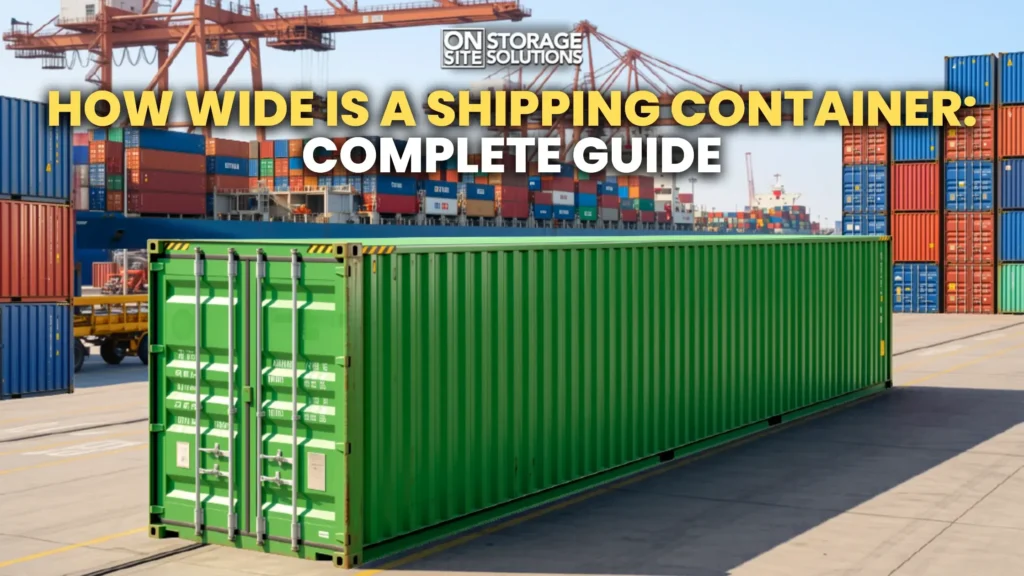
How Wide is a Shipping Container: Complete Guide

How wide is a shipping container showing standard container width dimensions

How wide is a shipping container is a common question when planning to buy, rent, or convert one. These containers are essential for global trade, transporting goods safely across oceans, roads, and railways. They are also widely used as storage units, modular workspaces, and even innovative building structures. 

Knowing the width helps plan storage layouts, arrange pallets efficiently, and ensure the container fits transport and space requirements. Most standard containers have an exterior width of 8 feet, with slightly less interior space due to wall thickness.

This consistency makes stacking, loading, and transporting containers easier. Specialty units, like high cubes, flat racks, or open-top containers, may vary slightly to accommodate larger or irregular cargo.

This guide will cover different container types, their dimensions, and practical tips to choose the right shipping container for storage, shipping, or conversion needs.

How Wide Is a Shipping Container? Standard Dimensions

How wide is a shipping container showing standard dimensions

If you’re asking how wide is a shipping container, the standard exterior width for most dry van containers is 8 feet (2.44 meters).

However, interior width is slightly smaller, usually about 7 feet 8 inches. Due to wall corrugation and structural framing.

Here’s a quick overview of standard widths:

  • 10ft container – 8 ft wide.
 
  • 20ft container – 8 ft wide.
find shipping containers for sale
  • 40ft container – 8 ft wide.
 
  • 40ft High Cube – 8 ft wide.
 
  • 45ft High Cube – 8 ft wide.
 

Although lengths and heights vary, width generally remains consistent across standard containers.

How Wide Is a Shipping Container for 20ft and 40ft Sizes

How wide is a shipping container for 20ft and 40ft sizes

If you’re wondering how wide is a shipping container, the dimensions for both 20ft and 40ft units are largely the same:

  • Exterior width: 8 feet.
 
  • Interior width: Approximately 7 ft 8 in (slightly smaller due to wall thickness).
 

This standard width ensures:

  • Easy stacking and loading across ships, trucks, rail systems, and container chassis.
 
  • Simplified logistics and reduced loading errors.
 
  • Efficient interior planning for pallets, shelving, or storage conversions.
shipping containers for sale in san diego ca

Key differences by container length:

  • 20ft container: Compact and versatile, perfect for smaller shipments or storage needs. Knowing how wide a shipping container is helps plan pallet layouts efficiently.
 
  • 40ft container: Offers double the length for larger cargo while maintaining the standard width, making it ideal for high-volume shipments.
 

Even specialty containers, such as reefers or high cubes, generally follow the 8-foot exterior width standard, ensuring compatibility across international transport systems. 

This consistency allows businesses and individuals to make informed choices when selecting containers for shipping, storage, or conversion projects.

Standard Dry Van Container Width Explained

Standard dry van container width showing common dimensions

Standard dry van containers are the most commonly used type for transporting dry goods such as clothing, electronics, and packaged items.

Even though their lengths range from 10ft to 45ft, their width remains consistent at 8 feet externally. This uniform measurement makes stacking, transporting, and storing containers efficient across global logistics networks.

If you’re planning shelving or pallet storage, knowing how wide is a shipping container is internally helps maximize space planning.

How Wide Is a Shipping Container Compared to Specialty Containers?

How wide is a shipping container compared to specialty containers

While standard containers are 8 feet wide, some specialty containers differ slightly depending on design and function.

Flat Rack and Open-Top Types

.Flat rack and open-top containers are typically:

  • 8 ft 6 inches wide (external frame width).
 
  • Interior usable width may vary due to structural components.
 

These containers are ideal for oversized cargo such as machinery, vehicles, and construction materials.

Best Price on Shipping Containers

Refrigerated and Tank Units

Refrigerated (reefer) and tank containers usually maintain the standard 8-foot exterior width. However, interior width may be slightly reduced due to insulation or tank framing systems.

When transporting temperature-sensitive or specialized cargo, it’s important to consider internal dimensions, not just exterior width, to ensure proper fit and protection of your goods.

Other Shipping Container Types and Their Width

Other shipping container types and their width showing different dimensions
  • Open Side Containers: 8 ft 6 in wide (external).
 
  • Duo-Con Containers: 8 ft 6 in wide.
 
  • Tank Containers: 8 ft 6 in wide.
 
  • Shipping Container Chassis: Built for 8 ft wide containers.
 

Most intermodal systems are designed around this consistent 8-foot standard.

Why Container Width Matters

Why container width matters for storage and project planning

This information helps you:

  • Plan pallet layouts efficiently.
 
  • Design interior conversions accurately.
 
  • Ensure transport compatibility.
 
  • Maximize storage capacity.
 
  • Avoid costly sizing mistakes.
 

When deciding which container to purchase or rent, it’s also important to factor in used shipping container cost. Knowing the price helps you plan your budget while selecting a container that meets your storage, shipping, or conversion needs.

For example, a standard 20ft container can typically hold 10–12 pallets, while a 40ft container can hold 25–30 pallets, thanks to the standardized width.

Conclusion

Conclusion on how wide is a shipping container showing key dimensions

So, how wide is a shipping container? In most cases, the standard width is 8 feet externally, with slightly less interior space due to wall thickness.

Whether you’re choosing a 10ft, 20ft, or 40ft container, the width remains largely consistent. Specialty containers may vary slightly, but global transport systems are built around the 8-foot standard.

Before purchasing or renting, always verify both exterior and interior dimensions to ensure the container meets your specific storage or shipping needs.

Looking for Shipping Container Sales Near You?

At On-Site Storage Solutions, we provide a wide range of shipping containers across approximately 60 depots in the United States and Canada.

Whether you need a small storage unit or a large commercial container, our team can help you find the right fit. Visit our website for a free quote or call (888) 977-9085to get started today.

refrigerated shipping container for sale

FREQUENTLY ASKED QUESTIONS

1. Are all shipping containers 8 ft wide?

Most standard shipping containers have an exterior width of 8 feet (2.44 meters). Some specialty containers, like flat racks or high cubes, may vary slightly, but the 8-foot standard is widely used for stacking, shipping, and storage compatibility.

2. How wide is a 20ft container?

A standard 20ft container is 8 feet (2.44 meters) wide externally, with an interior width of approximately 7 feet 8 inches. This standard width allows it to fit on ships, trucks, and rail chassis while accommodating pallets efficiently.

3. How wide is a high cube container?

High cube containers maintain the standard 8-foot exterior width. The main difference is in height: high cubes are typically one foot taller than standard containers, providing extra vertical storage space for cargo or conversion projects.

4. What is the difference between a 20ft container and a 20ft high cube container?

The primary difference is height: a standard 20ft container is 8 ft 6 in tall, while a 20ft high cube container is 9 ft 6 in tall. Width and length remain the same, but high cubes provide more vertical storage space.

5. What are the exterior dimensions of a 40 ft shipping container?

A standard 40ft container measures 40 feet long, 8 feet wide, and 8 ft 6 in tall externally. High cube versions are the same length and width but 9 ft 6 in tall, offering additional interior volume for cargo or storage conversions.

PrevPreviousTypes of Shipping Container Ramps and Their Benefits
NextExploring the Advantages of Intermodal Shipping ContainersNext
  • July 12, 2023
  • By Gregg Schoenborn
  • Blog, How to...
Shipping Containers for Sale Los Angeles: 2026 Guide

Shipping Containers for Sale Los Angeles: 2026 Guide

October 7, 2026
Shipping Container Los Angeles Rental vs Buying Guide

Shipping Container Los Angeles Rental vs Buying Guide

October 6, 2026
Reefer Refrigerated Containers vs. Reefer Trailers

Reefer Refrigerated Containers vs. Reefer Trailers

September 4, 2026
Search

Related Blog Post

Shipping Containers for Sale Los Angeles: 2026 Guide
Blog

Shipping Containers for Sale Los Angeles: 2026 Guide

Finding the right shipping containers for sale Los Angeles customers can trust starts with knowing what you need, where it will go, and how long

Read More »
October 7, 2026 No Comments
Shipping Container Los Angeles Rental vs Buying Guide
Blog

Shipping Container Los Angeles Rental vs Buying Guide

Finding the right shipping container Los Angeles rental option starts with understanding your choices. Renting, buying, and rent-to-own each have different payment structures, ownership terms,

Read More »
October 6, 2026 No Comments
Reefer Refrigerated Containers vs. Reefer Trailers
Blog

Reefer Refrigerated Containers vs. Reefer Trailers

Reefer refrigerated containers give businesses a practical way to protect temperature-sensitive cargo, but keeping products cold is only part of the challenge. The real question

Read More »
September 4, 2026 No Comments
Reefer Container or Trailer? How to Choose the Right One
Blog

Reefer Container or Trailer? How to Choose the Right One

A reefer container is an insulated shipping container with an integrated refrigeration unit that helps maintain a controlled temperature for temperature-sensitive cargo. If you’re wondering

Read More »
August 28, 2026 No Comments
How to Bury a Conex Container: Complete Guide
Blog

How to Bury a Conex Container: Complete Guide

How to bury a conex container begins with careful planning, proper reinforcement, and the right preparation to ensure a safe and durable underground storage solution.

Read More »
August 26, 2026 No Comments
How Much Does a Conex Container Weigh by Size
Blog

How Much Does a Conex Container Weigh by Size

How much does a conex container weigh is one of the first questions buyers ask before choosing, transporting, or installing a container. Container weight affects

Read More »
August 24, 2026 No Comments
How Wide is a Shipping Container: Complete Guide

SUBSCRIBE TO OUR NEWSLETTER TO RECEIVE THE LATEST NEWS AND EXCLUSIVE OFFERS

Captcha validation failed. If you are not a robot then please try again.
Onsite storage solution logo footer

Navigation

  • Blog
  • Locations
  • Type of Containers
  • Conditions
  • Why Onsite Storage
  • Get a Quote
  • Blog
  • Locations
  • Type of Containers
  • Conditions
  • Why Onsite Storage
  • Get a Quote

Resources

  • Sizes
  • Gallery
  • FAQ
  • Reviews
  • Privacy Policy
  • Terms and Conditions
  • Refunds and Returns
  • Shipping Policy
  • Sizes
  • Gallery
  • FAQ
  • Reviews
  • Privacy Policy
  • Terms and Conditions
  • Refunds and Returns
  • Shipping Policy

Contact Us

  • 888-977-9085
  • info@OnSiteStorage.com
  • 21050 Union Street Suite 4, Wildomar, CA 92595

Follow Us

Facebook Page Instagram Page Youtube Channel Linkedin  Page Pinterest Page Google Business Page

Ⓒ 2026 On-Site Storage Solutions, Inc. | All Rights Reserved

secured-payments

(888) 977-9085
Call before you buy. Best prices by phone!

Let's get you the best price.

We use your location to show accurate pricing and availability in your area.