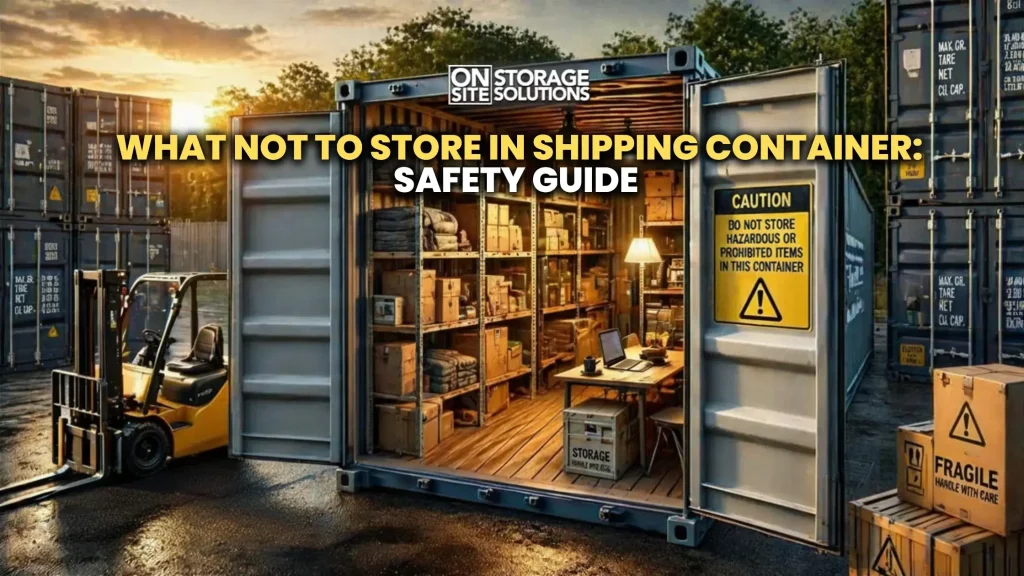

What not to store in shipping container is something many people often overlook when using containers for storage. Shipping containers are known for being strong, secure, and weather-resistant, making them a popular choice for both personal and business use.
However, while they are highly durable and versatile, they are not designed for every type of item. Some materials can become unsafe, damaged, or even illegal to store under the wrong conditions. Heat, moisture, fire risks, and contamination can all lead to serious problems.
Being aware of these risks helps protect your belongings, improve safety, and avoid costly mistakes. This guide highlights items you should never store in a shipping container and why.
Why Proper Storage Matters in Shipping Container
While shipping containers are widely used for storage and construction, proper usage is essential to maintain safety, efficiency, and long-term protection. Since containers are sealed and exposed to fluctuating temperatures, poor insulation can quickly lead to moisture buildup, material damage, and reduced item quality over time.
Understanding proper storage practices helps prevent costly mistakes and makes it easier to determine which items are safe to store and which should be avoided.
What Not to Store in Shipping Container to Avoid Damage
Understanding what not to store in shipping container is critical for safety, especially for valuables. These items remain vulnerable to theft, moisture, and heat exposure, even inside a sealed unit.
1.Hazardous and Toxic Materials
Avoid hazardous materials that pose serious health risks, cause contamination, and can damage the container over time.
Common examples include:
- Industrial chemicals (acids, pesticides, solvents)
- Medical or biological waste
- Radioactive materials
2.Flammable and Explosive Materials
Flammable and explosive items are highly dangerous in enclosed containers, where heat buildup and poor ventilation can increase fire or explosion risks.
Examples include:
- Gasoline and propane
- Fireworks
- Paint thinners and solvents
- Other combustible substances
3.Sensitive Electronics and Batteries
Electronics and batteries are easily damaged by heat, humidity, and condensation, which can shorten their lifespan or cause permanent failure without proper climate control.
Common affected items:
- Computers and laptops
- Batteries and power banks
- Audio and video equipment
- Electrical components
4.Liquids and Leak-Prone Materials
Liquids are risky due to leaks, spills, and contamination, which can damage other stored items and worsen over time due to temperature changes.
Examples include:
- Cleaning chemicals
- Oils and fuels
- Paints and solvents
- Bottled liquids stored long-term
5.Valuable or Irreplaceable Items
Valuables are vulnerable to theft, moisture, and heat damage even inside secure shipping containers, making them unsafe for long-term storage.
Examples include:
- Jewelry and cash
- Important documents
- Collectibles and antiques
- High-value electronics
6.Weapons and Restricted Items
Weapons and ammunition are prone to rust, corrosion, and legal restrictions, making them unsafe and unsuitable for standard container storage.
Examples include:
- Firearms
- Bladed weapons
- Regulated defense equipment
What Not to Store in Shipping Container and Common Mistakes to Know
Even though shipping containers are durable and secure, improper use can still lead to damage and safety risks. Avoiding mistakes and knowing what not to store in shipping container helps protect your items, especially when ventilation is insufficient, causing heat and moisture buildup.
1.Storing prohibited or unsafe items
Many users overlook restrictions and end up storing hazardous, flammable, or sensitive materials that can cause serious issues.
2.Ignoring ventilation
Poor airflow can lead to heat buildup and condensation, which may damage stored items over time, especially when shipping container ventilation is not properly managed.
3.Overpacking the container
4.Skipping regular inspections
Failing to check for leaks, rust, or structural issues can lead to bigger problems if left unnoticed.
5.Not using moisture control
Without moisture absorbers or proper shipping container insulation, humidity can quickly affect the condition of your items.
6. Improper item placement
Placing items directly on the floor or against walls can expose them to moisture and reduce airflow.
Proper Ways to Use a Shipping Container for Storage
Use pallets to keep items elevated from the floor to prevent moisture damage. Add moisture absorbers to reduce humidity buildup inside the container. Ensure proper ventilation to avoid heat accumulation whenever possible.
Avoid overpacking so air can circulate freely, and regularly inspect the container for leaks, rust, or structural damage.
What You Can Safely Store in a Shipping Container
Shipping containers are best for dry, stable items that are not sensitive to temperature or humidity changes, offering a secure and efficient storage solution when used properly.
Common examples of suitable items include:
- Furniture and household goods
- Tools and construction equipment
- Business inventory and supplies
- Seasonal items and decorations
- Vehicles and machinery
- Sports equipment
These items are safe to store when properly packed and protected, but proper storage practices are key to keeping them in good condition.
Items That Require Special Storage Conditions
Some items are not strictly prohibited but require controlled environments to remain safe.
Food and Perishable Goods
Food is highly sensitive to temperature changes and should only be stored in a shipping container if refrigeration or climate control is available. Without proper conditions, spoilage can happen quickly, leading to waste and potential health risks.
Animals and Plants
Living things such as animals and plants require proper airflow, lighting, and temperature control to survive. Without a fully modified container, these conditions cannot be met, making standard storage unsafe for them.
Final Thoughts on What Not to Store in Shipping Container
Understanding what not to store in shipping container is essential for safe and effective storage. While containers are durable and versatile, they are not suitable for hazardous materials, flammable substances, sensitive electronics, or perishables without proper modification.
By following proper storage guidelines, you can maximize safety, protect your belongings, and extend the lifespan of your shipping container.
Don’t risk damage or safety issues, get expert help today. Contact On-Site Storage Solutions at (888) 977-9085 for reliable guidance and safe storage solutions you can trust.
FREQUENTLY ASKED QUESTIONS
You should avoid storing hazardous materials, flammable items, electronics without protection, liquids, valuables, and perishable goods. These items can be damaged by heat, moisture, or pose safety risks inside a sealed shipping container.
You can safely store dry and stable items like furniture, tools, machinery, seasonal goods, and business inventory. These items hold up well in changing temperatures as long as they are properly packed and protected from moisture.
Do not pack chemicals, fuels, explosives, sensitive electronics, or perishable food. These items can leak, spoil, or become dangerous due to heat buildup, condensation, and lack of ventilation inside a sealed container.
Yes, moisture buildup is common due to temperature changes and limited airflow. Without ventilation or moisture control, condensation can form inside, leading to mold, rust, and damage to stored items over time.
Yes, furniture is generally safe to store in a shipping container. However, it should be cleaned, covered, and elevated from the floor to prevent moisture damage, mold growth, and potential warping during long-term storage.