

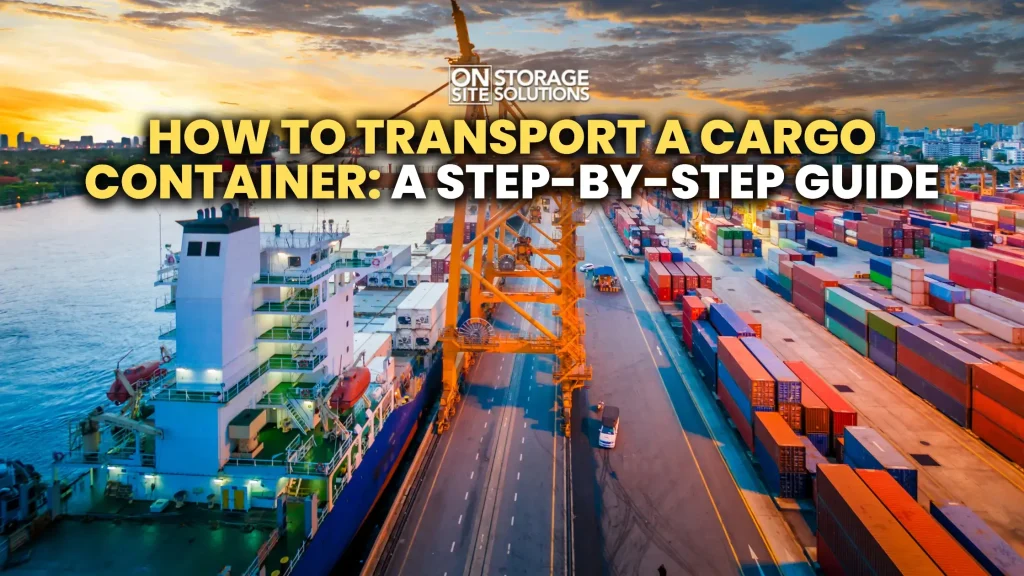
Moving a cargo container is more than shifting a big steel box from one spot to another. It’s about planning ahead, choosing the right tools, and making sure the entire process runs smoothly.
With the right approach, you’ll save money, protect your cargo, and avoid unnecessary stress. This guide breaks it down into clear, easy-to-follow steps.

Every container tells a story of value. Inside could be family belongings, equipment for a job site, or goods destined for a customer.
Transporting a cargo container correctly protects both what’s inside and the investment you’ve made. It’s about keeping your project on track and your cargo secure.

The first step is knowing exactly what you’re working with. Most shipping container sizes come in 20-foot and 40-foot sizes, but there are high-cube and refrigerated options too.
Each type has unique requirements when it comes to transport. Matching the right container with the right moving method makes everything easier.
When you miscalculate size or weight, things get expensive quickly. That’s why every move of a cargo container begins with clear measurements.

The way you move a container depends on distance, destination, and cost. Some options are quick and simple, while others require more planning.
For short trips or local moves, trucks are the go-to. Flatbed and tilt-bed trucks make loading and unloading a cargo container straightforward.
Tilt-beds can even drop the unit directly on the ground. That’s perfect for construction sites or residential deliveries.
When containers need to travel across regions, trains are efficient. They move large volumes quickly and keep costs lower than long-haul trucking.
But trains don’t reach every destination. You’ll still need a truck to complete the journey.

For international shipping, the ocean is king. Global ports are designed to load and unload containers with speed and precision.
Port fees and customs rules can get tricky. Being prepared keeps the process smooth.
Air shipping is rare, but it exists for urgent or lightweight cargo. The cost is high, which makes it practical only for specialized needs.
Choosing wisely saves both time and money. The wrong method can derail your entire move of a cargo container.

Preparation is your insurance policy. Before the move, check for rust, dents, or damage that could weaken the structure.
If you’re packing it, secure items tightly so nothing shifts. For overseas shipping, double-check labels, paperwork, and customs documents.
The better prepared your container is, the fewer surprises you’ll face. Moving a cargo container should start with confidence, not guesswork.

Containers are heavy, even before they’re full. A 20-foot shipping container weighs more than 5,000 pounds, and a 40-foot container tips the scale at over 8,000 pounds.
Cranes, forklifts, or tilt-bed trucks are the only way to lift safely. Trying to cut corners here is risky.
Trained operators know how to protect both your container and its contents. Loading a cargo container is not a DIY job; it’s a professional’s task.

Once it’s on the truck, ship, or train, the container must be securely locked in place. Chains, tie-downs, and twist locks keep it stable.
Transporters follow strict guidelines for a reason: safety. A loose container is a danger to cargo, drivers, and everyone on the road.
Securing properly is non-negotiable. It’s the step that ensures your journey with a cargo container ends without incident.

Transporting containers isn’t just physical work; it’s paperwork too. Depending on your route, you may need permits for oversized or heavy loads.
Cross-border shipments add another layer with customs and inspections. Missing even one document can delay everything.
This is where experienced logistics partners earn their value. They know the rules and save you headaches when moving a cargo container.

The final stop is just as important as the start. Before shipping container delivery, make sure the ground is solid, level, and easy for trucks or cranes to access.
Concrete or compact gravel makes the best foundation. Soft soil or grass can sink under the weight of a container.
Plan the drop zone carefully. Think about doors, stacking, and long-term access when placing a cargo container.

Moving containers on your own may sound adventurous, but it’s rarely practical. Professionals bring equipment, insurance, and expertise that you don’t want to overlook.
They handle loading, driving, permits, and delivery. Hiring the right partner saves time and reduces stress.
Do your homework before choosing a company. Trusted providers like On-Site Storage Solutions specialize in container sales, rentals, and safe transport.
When you work with pros, moving a cargo container feels less like a problem and more like progress.

Book early to secure trucks, cranes, or equipment when you need them. Take photos before and after to protect your insurance claims.
Double-check addresses and access points before delivery. A good lock will also keep your cargo secure during the trip.
Small actions build big peace of mind. When details are managed, the whole process runs smoothly.
Transporting a cargo container doesn’t have to be complicated. With smart planning and the right partners, it becomes a straightforward process.
Think of it less as moving steel and more as moving possibility. When done right, it delivers security, opportunity, and peace of mind.

At On-Site Storage Solutions, we don’t just sell and rent containers; we help you move them safely and quickly. Our team of professionals makes sure your container arrives where you need it, when you need it, without the stress or hidden costs.
Whether you’re a business owner, contractor, or homeowner, we’ll handle the heavy lifting so you can focus on what matters most. Call us today at (888) 977-9085 or visit our website to get a free quote and see how easy moving a cargo container can be with the right partner by your side.

Reefer refrigerated containers give businesses a practical way to protect temperature-sensitive cargo, but keeping products cold is only part of the challenge. The real question

A reefer container is an insulated shipping container with an integrated refrigeration unit that helps maintain a controlled temperature for temperature-sensitive cargo. If you’re wondering

How to bury a conex container begins with careful planning, proper reinforcement, and the right preparation to ensure a safe and durable underground storage solution.

How much does a conex container weigh is one of the first questions buyers ask before choosing, transporting, or installing a container. Container weight affects

When choosing a storage solution, many buyers ask how wide is a conex container before purchasing. The width affects how much space is available for

Are shipping containers called Conex boxes is a common question because shipping containers go by several names, but few are as confusing as Conex box.


