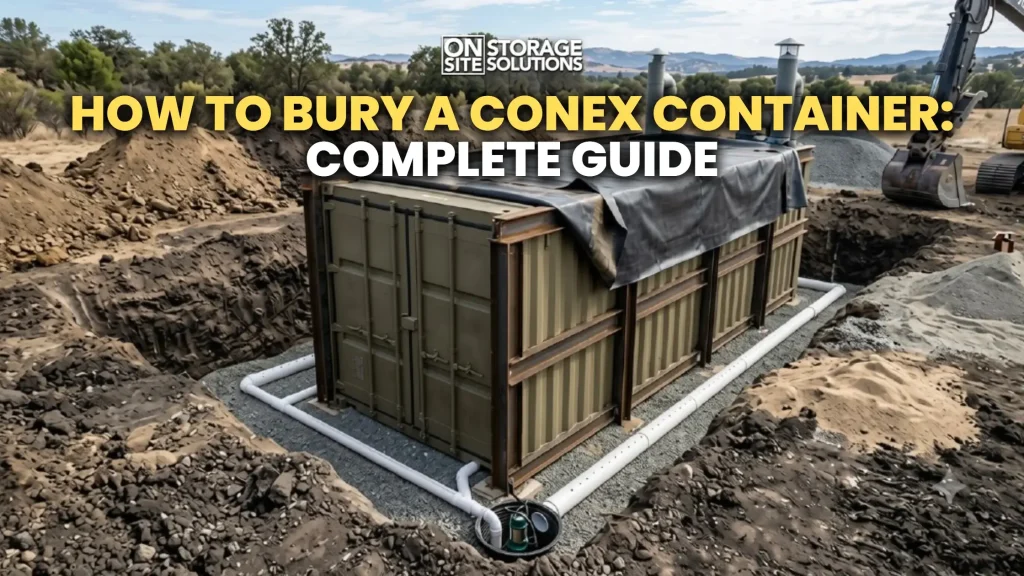

How to bury a conex container begins with careful planning, proper reinforcement, and the right preparation to ensure a safe and durable underground storage solution. While Conex containers are built for strength and transportation, burying them requires additional considerations such as soil pressure, drainage, waterproofing, and ventilation.
With the correct approach, a shipping container can be transformed into a secure underground space for storage, equipment protection, emergency supplies, and other specialized uses.
Key Takeaways
- Proper planning helps prevent installation issues.
- Reinforcement is needed to handle underground pressure.
- Waterproofing and drainage protect the container from moisture.
- Ventilation helps prevent condensation inside the container.
- Choosing a quality shipping container improves long-term performance.
Planning How to Bury a Conex Container Before Excavation Begins
Before excavation starts, how to bury a conex container successfully depends on proper planning. Preparing the site, choosing the right container, and understanding local requirements can prevent costly issues later.
1. Choose the Right Installation Location
Select a location with stable soil and good drainage. Avoid areas prone to flooding or poor water movement, as excess moisture can affect the container’s durability.
2. Check Permits and Local Requirements
Review local building codes and permit requirements before installation. Proper approval helps prevent delays and ensures the project follows safety regulations.
3. Identify Underground Utilities
Locate nearby water lines, electrical cables, and gas connections before digging. Checking utilities helps prevent accidents and unexpected repair costs.
4. Select a Structurally Sound Container
Choosing the right container is an important step in how to bury a conex container successfully. Used shipping containers can be a cost-effective option, but they should be inspected for rust, damage, and structural issues before burial.
5. Understand the Container Type Before Installation
Many people ask, what is a conex shipping container. A Conex container is a durable steel cargo container originally developed for military use and now commonly used for storage and custom projects.
Some also ask, are shipping containers called conex boxes. These terms are often used interchangeably today, although Conex originally referred to military cargo containers.
6. Match the Container to Its Intended Purpose
Consider how the container will be used before installation. Storage, workshops, shelters, and other applications may require different layouts or container modification options.
Understanding Structural Requirements: How to Bury a Conex Container Safely
A shipping container is strong, but it is not automatically designed for underground use. Its strength comes mainly from the corner posts and frame, while burial creates pressure on the walls and roof that requires additional support.
Before learning how to bury a conex container, consider these factors that affect structural requirements:
- Burial depth: Deeper installations create more pressure against the container.
- Soil type: Heavy clay soil applies more force than loose, well-draining soil.
- Moisture levels: Wet soil becomes heavier and increases pressure on the container walls.
- Surface loads: Vehicles, buildings, or heavy equipment above the container can add extra stress.
Understanding these conditions helps determine the right reinforcement approach before installation
How to Bury a Conex Container with Proper Structural Reinforcement
Understanding how to bury a conex container requires recognizing that reinforcement is a critical part of the installation process. A standard container is built for transportation and stacking, but underground conditions require additional support to handle soil pressure.
Common reinforcement solutions include:
- Internal steel supports: Strengthen the walls and roof by helping distribute external pressure.
- Reinforced concrete structures: Add extra stability and protection around the container.
- Retaining systems: Reduce direct soil pressure against the container walls.
- Engineered support designs: Provide customized solutions based on burial depth, soil conditions, and intended use.
Proper reinforcement helps prevent structural damage, improves safety, and extends the lifespan of the underground container. Professional engineering guidance is especially important for deeper installations, occupied spaces, or areas with heavy surface loads.
How to Bury a Conex Container with Proper Excavation and Foundation Preparation
A stable foundation helps keep the container secure and prevents shifting after installation.
- Level the base: Use compacted gravel or concrete for a stable surface.
- Allow working space: Leave room around the container for waterproofing and drainage.
- Improve drainage: Grade the area to direct water away from the container.
- Prevent settling: Proper preparation helps maintain alignment over time.
How to Bury a Conex Container with Proper Waterproofing Protection
A proper waterproofing system protects the container from moisture, corrosion, and water intrusion.
- Apply protective coatings: Add a moisture barrier to protect the steel.
- Seal openings: Protect doors, vents, and modified areas from leaks.
- Prevent corrosion: Reduce damage caused by groundwater and soil moisture.
Effective waterproofing helps extend the container’s lifespan and protects stored items.
How to Bury a Conex Container with an Effective Drainage System
How to bury a conex container successfully also requires proper drainage to control water around the structure.
- Use gravel backfill: Improves water movement around the container.
- Install drain pipes: Redirect groundwater away from the walls.
- Add sump pumps when needed: Helps manage excess water in wet areas.
- Grade the surrounding soil: Prevents surface water buildup.
A reliable drainage system reduces moisture exposure and helps protect the container over time.
Ventilation and Moisture Control Inside the Container
Proper ventilation helps maintain airflow inside the buried container and prevents condensation.
- Install ventilation systems: Allow fresh air to enter and humid air to escape.
- Control humidity: Use dehumidifiers for moisture-sensitive storage.
- Prevent condensation: Reduce corrosion and protect stored materials.
Good airflow keeps the underground space dry, functional, and better protected.
How to Bury a Conex Container and Customize It for Different Uses
A buried container can be adapted for different uses through professional modifications. Many owners choose to repurpose shipping container units for secure storage, workshops, emergency supplies, or specialized spaces.
Common container modification options include:
- Additional doors and access points
- Ventilation systems
- Electrical connections
- Insulation
- Interior storage solutions
Planning modifications before burial makes installation easier and helps create a container that matches its intended purpose.
Safety Considerations for Underground Container Installation
Safety should be considered throughout the entire installation process. Key areas to focus on include:
- Structural Support: Ensure proper reinforcement and foundation preparation to handle underground pressure.
- Safe Access: Design entrances properly and protect them from water intrusion.
- Proper Installation: Follow safety standards when adding electrical systems, lighting, and ventilation.
- Regular Inspections: Check drainage, ventilation, and structural conditions to catch problems early.
A properly planned installation helps create a safer and more reliable underground storage solution.
How to Bury a Conex Container: Common Mistakes to Avoid During Installation
Avoiding common mistakes helps improve the safety, durability, and performance of an underground container installation.
- Ignoring soil pressure: Underground conditions can strain the container and may require added reinforcement.
- Skipping drainage planning: Waterproofing alone cannot prevent water buildup around the container.
- Choosing the wrong location: Poor soil conditions or drainage issues can cause future problems.
- Neglecting ventilation: Limited airflow can lead to condensation, mold, and moisture damage.
Proper planning before installation helps prevent costly repairs and structural issues.
How to Bury a Conex Container: Maintenance Tips for Long-Term Durability
Regular maintenance helps protect your underground shipping container and extends its service life.
- Inspect drainage systems: Ensure water continues flowing away from the container.
- Check ventilation equipment: Maintain proper airflow and humidity control.
- Monitor the entrance area: Look for soil movement, erosion, or water buildup.
- Review structural conditions: Identify small issues before they become major repairs.
Consistent inspections and maintenance help keep the container safe, dry, and functional for many years.
Final Thoughts
How to bury a conex container requires proper planning, reinforcement, waterproofing, and drainage to create a safe and reliable underground storage solution. From secure equipment storage to customized container projects, On-Site Storage Solutions offers durable storage containers to support your needs.
Contact us today at (888) 977-9085 to explore your container options and find the right solution for your next installation.
FREQUENTLY ASKED QUESTIONS
Conex containers and shipping containers are often used interchangeably. Conex containers were originally developed for military transportation, while shipping containers were designed for global cargo transport. Today, both are widely used for secure storage.
Conex containers are used for storing equipment, tools, inventory, supplies, and personal belongings. They are also commonly modified into workshops, offices, and other customized spaces.
A well-maintained Conex container can last for many years. Proper placement, regular inspections, and basic maintenance help extend its lifespan.
Common Conex container sizes include 10 foot, 20 foot, and 40 foot options. The best size depends on your storage needs, available space, and intended use.
Conex containers are built with strong steel walls and durable doors to help protect contents from weather and unauthorized access. Additional security features can also be added for extra protection.