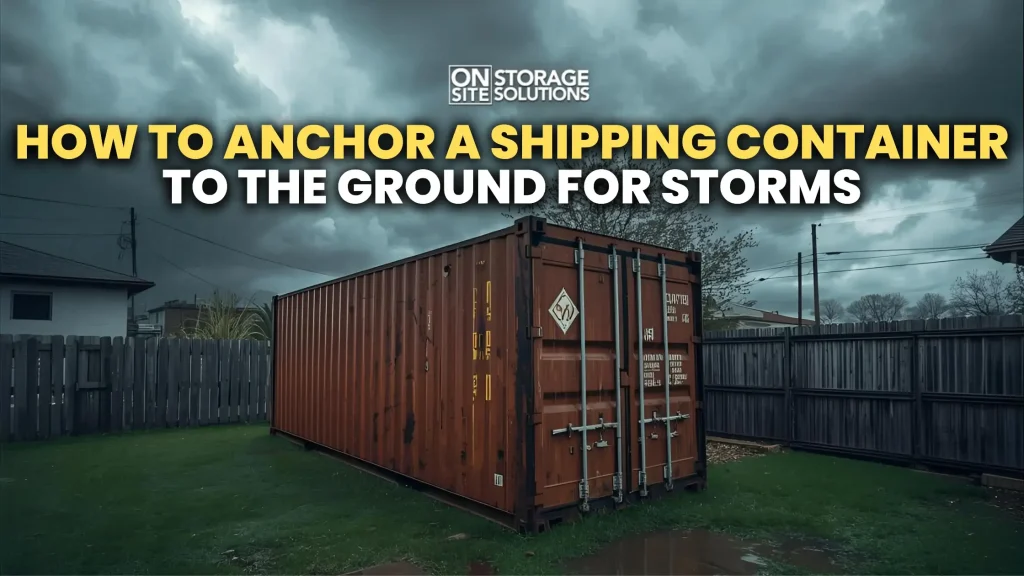

When extreme weather hits, even the toughest shipping containers can be at risk if they’re not properly secured. If you’re using a shipping container for storage, a workspace, or a storm shelter, knowing how to anchor a shipping container to the ground correctly can make the difference between safety and serious damage.
A properly installed shipping container anchors ensure your container stays firmly in place, providing reliable protection for your belongings, equipment, or workspace.
Why Anchoring Matters During Extreme Weather
Anchoring is the foundation of storm safety for shipping containers. Even though these metal plate boxes are heavy, up to 5,000 pounds when empty, hurricane and tornado winds can easily push, tip, or roll them.
During a Category 3 hurricane, wind speeds can reach up to 130 mph, creating enough pressure to move a container that isn’t secured to the ground. Similarly, tornadoes can produce even stronger localized gusts capable of lifting a container off the ground like a toy.
Proper anchoring keeps your container stable and safe, preventing damage to your belongings or nearby property. FEMA and local building codes emphasize the importance of secure foundations in storm zones.
Understanding Container Movement in High Winds
When high winds hit a container, they create three main types of movement:
- Uplift: Winds can create suction under the container, lifting it from the ground.
- Sliding: Strong lateral gusts push the container horizontally.
- Overturning: Uneven wind pressure can cause a container to tip or roll.
Even though a 20-foot container weighs over 2 tons, that weight alone isn’t enough to resist strong winds. That’s why anchoring is crucial. It gives your container grip and stability, keeping it fixed to the ground even under heavy wind load.
Types of Anchoring Systems for Shipping Containers
Not all anchoring systems are created equal. The right choice depends on your ground type, location, and how permanent you want your container setup to be.
Ground Anchors
Ground anchors are the most common and versatile option. They screw directly into the soil and attach to the container’s corner castings using steel-plated cables or brackets.
They’re ideal for areas with moderate to firm soil and can be installed without a concrete pad. Once tightened, they provide strong resistance to both uplift and lateral movement.
Concrete Base Plates
For permanent or semi-permanent installations, especially storm shelters, concrete footings offer the best stability. Containers are welded or bolted to reinforced concrete slabs or embedded anchor bolts.
This method is excellent for hurricane-prone regions like Florida or coastal Texas, where soil saturation and flooding can weaken other systems. Learn more about proper concrete installation from the American Concrete Institute.
Helical or Screw Anchors
Helical (screw) anchors twist into the ground like giant screws. They’re perfect for clay or sandy soils, offering a secure hold without needing heavy machinery.
The key to their strength is depth. The deeper they’re installed, the better they resist wind uplift. They’re also reusable and can be easily repositioned if you move your container.
Step-by-Step Guide: How to Anchor Your Shipping Container
Anchoring your container doesn’t need to be complicated. Here’s a simple guide you can follow to protect your investment before storm season hits:
- Choose the Right Location
Pick high ground with good drainage. Avoid flood zones and unstable slopes where water or soil erosion can loosen your anchors. - Mark Anchor Points
Mark all four corners of your container. For extra security in high-wind zones, add mid-point anchors along the sides.
- Install Anchors or Pour Footings
Depending on your chosen method, screw in the ground anchors or pour your concrete footings. Make sure each anchor aligns with the corner castings. - Attach with Heavy-Duty Brackets or Chains
Use strong steel chains or cables rated for high tension. Connect securely to the corner castings and tighten until snug. - Test Stability
Gently rock the container to test for movement. If it shifts, tighten connections further. Always inspect before and after major storms.
Common Anchoring Mistakes to Avoid
Anchoring seems simple, but missing one step can leave your container vulnerable during a storm. Avoid these common mistakes:
- Relying on Weight Alone: Even a full container can move in strong winds if it isn’t anchored.
- Using Weak Stakes: Garden stakes or light rebar won’t hold under hurricane pressure.
- Ignoring Soil Type: Sandy or soft ground needs deeper anchors or concrete bases.
- Skipping Inspections: Bolts and cables loosen over time. Check them twice a year.
Reinforcing Your Container Beyond Anchoring
Anchoring is just one part of the equation. For complete storm protection, use connection fittings to strengthen stacked or adjacent containers.
- Twist Locks: Secure stacked containers together at the corners.
- Bridge Fittings: Connect containers side by side for stability.
- Dovetail Locks: Add reinforced connection points for wind resistance.
Learn more in our article: Locks & Fittings for Shipping Container Storm Shelters
Recommended Anchoring Kits from On-Site Storage Solutions
At On-Site Storage Solutions, we offer premium-grade anchoring systems designed for both residential and commercial applications.
Our Container Anchoring Kit includes:
- Four heavy-duty galvanized steel anchors
- Adjustable corner brackets for 20’ or 40’ containers
- Wind resistance rated up to 150 mph
- Corrosion-resistant hardware
Each kit is designed for fast installation and long-term reliability, ensuring your container stays safe even in hurricane or tornado conditions.
Final Tips for Hurricane-Proofing Your Container
Anchoring is your first line of defense against high winds, but it’s most effective when combined with other safety steps:
- Inspect all anchors and fittings every six months.
- Re-tighten connections after heavy storms.
- Ensure proper drainage and elevation.
- Add insulation and roof reinforcements to improve overall durability.
With these precautions, your container can become a reliable, storm-resistant structure designed to handle extreme weather.
Conclusion
Shipping containers are strong by design, but proper anchoring transforms them into truly hurricane-ready shelters. Whether you’re securing one for storage or preparing a container home, investing in the right anchors ensures safety, stability, and peace of mind.
To learn more or order your anchoring kit, visit On-Site Storage Solutions or call us at (888) 977-9085. Our experts can help you choose the right setup for your soil type, container size, and location.