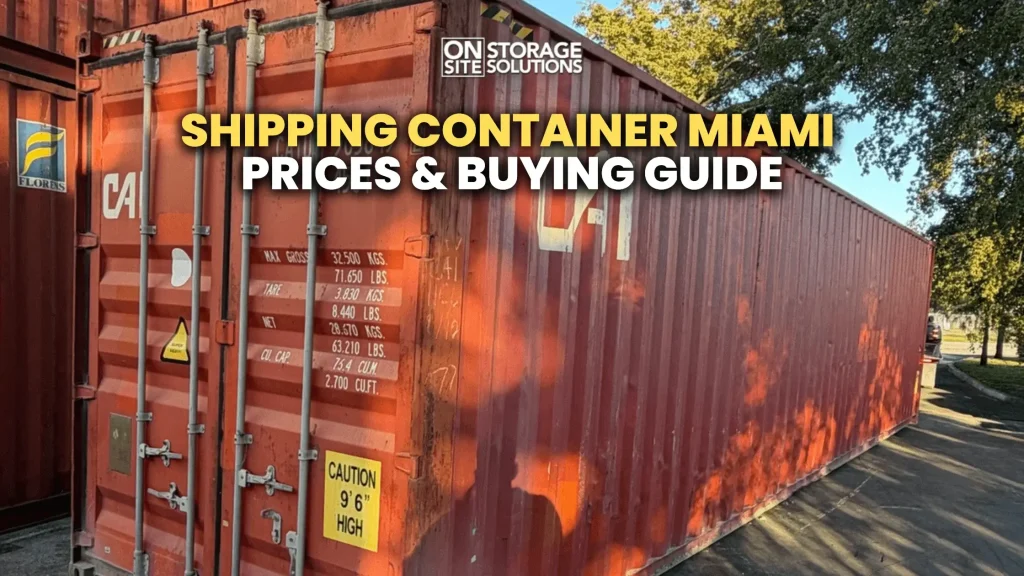

Shipping container Miami pricing reflects a fast-moving market shaped by port activity, demand cycles, and local conditions. Buyers who understand how costs are built can make faster and more confident decisions.
This guide breaks down real pricing factors, compares container types, and explains the extra costs that often surprise first-time buyers.
Choosing Between 20ft and 40ft Shipping Container Miami Options
20 Foot Container
A 20 foot unit is a practical choice for limited space and smaller storage needs. Priced at around $1,350, it is easier to position on residential or tight commercial properties.
The lower upfront cost makes it attractive for short term use or budget conscious buyers.
40 Foot Container
A 40 foot container provides significantly more storage capacity. Typically priced at around $1,750, it is often preferred by businesses that need to store bulk materials or large equipment.
While the price is higher, the cost per square foot is usually better, making it a strong long term investment.
40 Foot High Cube Container
A 40 foot high cube container offers the same length as a standard 40 foot unit but includes additional vertical space for taller cargo or extra storage capacity. With an average price of around $1,950, it is a popular option for buyers who need maximum storage efficiency.
The added height makes it ideal for oversized equipment, inventory storage, and container conversion projects.
Which One Offers Better Value
Value depends on how the container will be used. Smaller projects benefit from the simplicity of a 20 foot unit.
Larger operations or those planning to repurpose containers into offices or retail spaces often gain more flexibility from a 40 foot option.
Shipping Container Miami New vs Used Pricing
A. New Containers (One Trip Units)
New containers, often called one trip units, offer the highest level of quality. With prices starting at around $2,500 for a new 20ft container and $3,350 for both new 40ft and 40ft high cube containers, they are ideal for buyers who want a clean look and longer service life.
The higher price reflects better condition and fewer maintenance concerns over time
B. Used Containers (Cargo Worthy and Wind and Watertight)
Used containers are more budget friendly and come in grades such as cargo worthy and wind and watertight. Compared to new units, these containers offer lower upfront costs while still providing reliable functionality.
These units are still functional but may show signs of use like dents or surface rust. They are a practical option for storage and non-visual applications.
Inspection Tips for Used Shipping Containers Miami
Buyers looking into used shipping containers Miami should pay close attention to condition. Inspect the flooring, doors, and structural corners for damage or weakness.
Miami’s humid coastal environment can accelerate corrosion, so checking for rust and sealing issues is essential before making a purchase.
Shipping Container Miami and Climate Impact on Cost
In shipping container Miami markets, local weather plays a major role in how containers are priced and evaluated. Miami’s coastal environment directly affects the condition and long-term value of steel containers.
- Humidity impact: High humidity in Miami can speed up steel wear and surface corrosion.
- Salt air exposure: Coastal air increases rust risk over time compared to inland locations.
- Visible aging: Older containers in Miami often show more exterior wear due to environment.
- Price adjustment: Sellers may price containers higher or lower based on climate-related condition.
- Condition vs cost: Well-maintained containers can still cost more despite minor cosmetic rust.
- Buyer decision: Paying slightly more upfront can reduce long-term repair and maintenance costs.
Shipping Container Miami Seasonal Price Trends
In shipping container Miami markets, pricing shifts throughout the year based on demand and global shipping activity. These changes affect availability and the overall cost buyers see at different times.
- Market activity affects how container prices move throughout the year.
- High imports increase supply and can help stabilize pricing.
- Peak seasons drive demand higher and reduce available inventory.
- Slow periods offer better deals and more options for buyers.
- Advance planning helps avoid paying premium prices.
- Trend tracking gives buyers better control over purchase timing.
Hidden Costs Behind Shipping Container Miami Purchases
In the shipping container Miami market, the listed price is only part of the total cost. Buyers should also consider additional expenses that can affect the overall budget.
- Base price: only one part of the total cost when buying a shipping container.
- Delivery fees: vary based on distance, location, and site accessibility.
- Special equipment may be required for difficult placements, increasing costs.
- Site preparation: needed to ensure a stable and level surface.
- Permits and approvals: may be required depending on local property rules.
- Modification costs: add up when repurposing containers with doors, insulation, or ventilation.
Shipping Container Miami Delivery and Transport Costs
In the shipping container Miami market, delivery is a major part of the total cost and can vary depending on location and site conditions. Understanding these factors helps buyers plan ahead and avoid unexpected charges.
- Distance and location: Transport costs increase based on how far the container needs to be delivered and how accessible the site is.
- Type of equipment: Some deliveries use tilt bed trucks, while tighter spaces may require cranes, which can raise the total cost.
- Site conditions: Narrow roads, soft ground, or obstacles can make delivery more complex and expensive.
- Local regulations: Buyers researching container transport Miami should check permit requirements, especially in residential areas or restricted zones.
- Service provider experience: Working with experienced providers helps avoid delays and ensures smoother delivery planning.
Customization and Repurposing Costs
Containers are often used beyond storage. Many buyers repurpose containers into offices, shops, or workspaces. These projects require additional investment but offer long-term value.
Basic upgrades include ventilation and lighting. More advanced modifications involve insulation, windows, and electrical systems.
The cost depends on the level of customization. Simple changes are affordable, while full conversions require a larger budget.
Planning ahead ensures that the total cost aligns with the intended use.
Tips for Getting the Best Value
Getting the best deal on a container is not just about price. Smart buyers focus on timing, condition, and trusted providers to avoid costly mistakes.
- Compare suppliers: Review multiple sellers to understand fair market pricing and avoid overpaying.
- Inspect before buying: Check container condition to prevent unexpected repair costs later.
- Balance price and quality: Buyers looking for shipping container Miami deals should focus on durability, not just the lowest price.
- Buy at the right time: Slower market periods often offer better pricing and more availability.
- Choose trusted providers: Working with established companies like On-site Storage Solutions can help ensure fair pricing, reliable delivery, and proper container condition.
Conclusion
The shipping container Miami market offers many options, but pricing depends on size, condition, timing, and delivery. Understanding these factors helps buyers make smarter and more cost-effective decisions.
A careful approach leads to better value and long-term use.
For fast and reliable container solutions, On-Site Storage solutions provides shipping containers in the Miami area. Call (888) 977-9085 for details or pricing.
FREQUENTLY ASKED QUESTIONS
A 40 ft shipping container in Miami typically ranges depending on condition, with used units costing less and new one-trip containers priced higher. Market demand, delivery distance, and availability also affect the final price.
The main factors include size, condition (new or used), delivery costs, and seasonal demand at the Port of Miami. Local availability can also cause prices to rise or fall quickly.
Yes, container homes are allowed in Florida, including Miami, but they must meet local building codes and zoning regulations. Proper insulation, ventilation, and permits are required for approval.
Miami does allow container homes in certain areas, but approval depends on zoning laws and compliance with building standards. It is important to check with local authorities before starting a project.
Yes, used containers can be safe if they are properly inspected. Buyers should check for rust, structural damage, and ensure the unit is cargo worthy or wind and watertight.