
Buy shipping containers for as low as $1,350.00! CALL US TODAY! (888) 977-9085

Rent shipping containers for as low as $95.00 a month. CALL US TODAY! (888) 977-9085
Rent-To-Own Shipping containers for as low as $79.99 a month. CALL US TODAY! (888) 977-9085
  • Buy
    • Buy Shipping Containers
    • Buy Refrigerated Shipping Containers
    • Modifications
    • Shipping Container Accessories
  • Rent
    • Shipping Container Rental
    • Rent Refrigerated Shipping Containers
  • Rent-To-Own
  • Locations
  • Resources
    • FAQ
    • Container Types
    • Container Conditions
    • Container Grades
    • Delivery Guide
    • Containers We Delivered
    • Tax Exemption
    • Blogs
  • Onsite Special
  • Why Onsite Storage
  • Buy
    • Buy Shipping Containers
    • Buy Refrigerated Shipping Containers
    • Modifications
    • Shipping Container Accessories
  • Rent
    • Shipping Container Rental
    • Rent Refrigerated Shipping Containers
  • Rent-To-Own
  • Locations
  • Resources
    • FAQ
    • Container Types
    • Container Conditions
    • Container Grades
    • Delivery Guide
    • Containers We Delivered
    • Tax Exemption
    • Blogs
  • Onsite Special
  • Why Onsite Storage
Onsite Storage Solutions Logo
$0.00 0 Cart
(888) 977-9085
(888) 977-9085
Onsite Storage Solutions Logo
$0.00 0 Cart

My Account

  • Buy
    • Buy Shipping Containers
    • Buy Refrigerated Shipping Containers
    • Modifications
    • Shipping Container Accessories
  • Rent
    • Shipping Container Rental
    • Rent Refrigerated Shipping Containers
  • Rent-To-Own
  • Locations
  • Resources
    • FAQ
    • Container Types
    • Container Conditions
    • Container Grades
    • Delivery Guide
    • Containers We Delivered
    • Tax Exemption
    • Blogs
  • Onsite Special
  • Why Onsite Storage
  • Buy
    • Buy Shipping Containers
    • Buy Refrigerated Shipping Containers
    • Modifications
    • Shipping Container Accessories
  • Rent
    • Shipping Container Rental
    • Rent Refrigerated Shipping Containers
  • Rent-To-Own
  • Locations
  • Resources
    • FAQ
    • Container Types
    • Container Conditions
    • Container Grades
    • Delivery Guide
    • Containers We Delivered
    • Tax Exemption
    • Blogs
  • Onsite Special
  • Why Onsite Storage

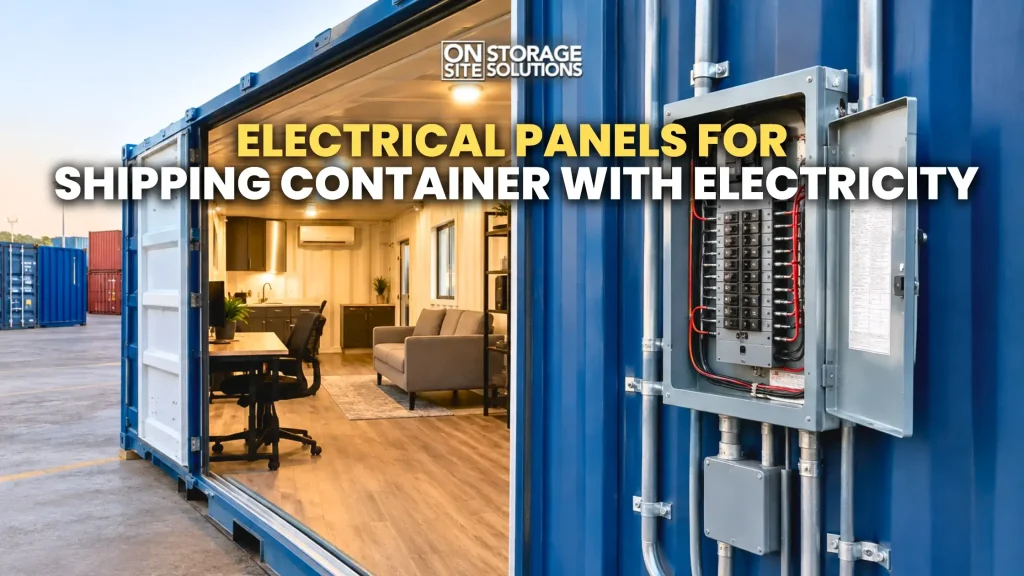
Electrical Panels for Shipping Container with Electricity

Electrical panels for a shipping container with electricity and safe power distribution

The use of a shipping container with electricity as homes, offices, and storage units has grown rapidly in recent years. They’re strong, affordable, modular, versatile, and eco-friendly, making them an ideal solution for DIY projects, small businesses, and off-grid living.

However, to make a container functional, safe, and comfortable, a reliable electrical system is essential. A well-installed electrical panel allows the space to power lighting, appliances, HVAC systems, tools, and technology efficiently.

This guide will show you why electrical panels are vital and how to set up a dependable system.

Understanding Shipping Container with Electricity Basics

Understanding shipping container with electricity basics and essential electrical components

Before starting any installation, understanding the fundamentals is crucial. Shipping containers with electricity require careful planning to ensure safety, compliance with electrical codes, and long-term efficiency. 

A well-planned setup ensures the container remains functional for various uses. For those considering a shipping container purchase, knowing how to integrate electricity from the start simplifies future modifications and maximizes usability.

What is an Electrical Panel in a Shipping Container with Electricity

An electrical panel is the central hub for all electrical circuits inside a container. It houses breakers or fuses that protect the system from overloads, short circuits, or electrical faults.

In a shipping container with electricity, the panel distributes power safely to all devices, appliances, and lights. Modern panels may also include surge protection and monitoring features to safeguard electronics and improve efficiency. 

Without a well-installed panel, even basic functions like powering lights or equipment can be unsafe

Setting Up Your Shipping Container with Electricity

Setting up your shipping container with electricity for safe and reliable power

Equipping a shipping container requires thoughtful planning, the right materials, and adherence to safety codes. Installing electricity in a shipping container properly allows it to power lighting, appliances, HVAC systems, tools, and technology efficiently, making it suitable for offices, workshops, tiny homes, or storage units.

Planning Your Electrical Setup

Map out where outlets, lighting, and appliances will go, and add shelving to maximize vertical space and stay organized. Decide the container’s main use, office, tiny home, storage, or workshop. To ensure safety, efficiency, and convenience.

Picking the Right Electrical Kit

Consider pre-made electrical kits designed specifically for shipping containers. These kits include panels, breakers, outlets, wiring, and installation instructions. Using a kit simplifies the process, ensures compatibility, and reduces the risk of mistakes.

find shipping containers for sale

Installing the Electrical Panel

Use a surface-mounted panel for easy installation in tight spaces. Proper grounding prevents shocks and protects appliances. Mount it in a dry, accessible area with enough capacity, and label breakers clearly for easy troubleshooting.

Running Wires, Installing Outlets, and Adding Shelving

Run wires through conduit and secure them with brackets. Install outlets and switches with proper spacing. Add shelving to organize tools or items, maximize storage, and keep the container neat. Test circuits to ensure safety and prevent hazards.

Final Check and Testing

Before turning on the power, have a licensed electrician inspect your work. Testing ensures all circuits are functional, breakers operate correctly, grounding is effective, and the system meets local electrical codes.

Safety Considerations in Shipping Containers with Electricity

Safety considerations for shipping containers with electricity and electrical systems

Metal containers require additional safety precautions. Because they conduct electricity and are prone to condensation, taking extra measures ensures both people and devices remain protected while maintaining a functional and efficient space.

Ground Fault Protection and Surge Safety

Ensure GFCIs are installed in damp or wet areas. GFCIs cut off power automatically if an imbalance is detected, preventing shocks. Surge protectors also safeguard sensitive electronics from lightning strikes or voltage spikes.

Best Price on Shipping Containers

Insulation and Moisture Control

Condensation is common in metal containers. Without insulation and vapor barriers, moisture can damage wires and electrical components. Effective measures include:

  • Spray foam insulation.
 
  • Vapor barriers on walls and ceilings.
 
  • Weather-sealed electrical boxes.
 
  • Corrosion-resistant fixtures and outlets.
 

Proper insulation and moisture control keep your shipping container with electricity safe, functional, and well-organized with shelving.

Cost Factors to Consider

Cost factors to consider when adding electricity to a shipping container

The cost of setting up a powered shipping container depends on:

  • Container size (20 ft vs. 40 ft).
 
  • Number of outlets, lights, appliances, and shelving units.
 
  • Power source type (grid, generator, or solar).
 
  • Labor and electrician fees.
 
  • Permits and inspections. 
 

Planning carefully can help control costs while ensuring your container meets all your functional and safety needs.

Conclusion

WWT Shipping Containers

Installing an electrical panel in a shipping container with electricity is essential for turning a simple steel box into a functional, safe, and organized space. With proper planning, grounding, installation, and safety precautions, plus the addition of shelving for storage, a container can serve as a workshop, office, living space, or storage unit. 

Certified inspections ensure code compliance and long-term reliability. Adding proper lighting and strategically placed outlets further enhances usability and efficiency within the container.

On-Site Storage Solutions can help you explore durable, customizable shipping containers. Contact us at (888) 977-9085 to choose and electrify the perfect container, while adding shelving to maximize storage and workflow.

FREQUENTLY ASKED QUESTIONS

1. Can you store electronics in a shipping container?

Yes, you can store electronics in a shipping container, but ensure it has electricity, proper insulation, and climate control. Using grounded outlets, surge protectors, and organized shelving helps protect devices from moisture, temperature fluctuations, and electrical hazards.

2. How do electrical panels work in shipping containers?

Electrical panels in shipping containers distribute power safely from the main source to outlets, lights, and appliances. Circuit breakers protect against overloads or short circuits, ensuring a secure, functional space whether for living, working, or storage purposes.

3. What should you consider when installing electrical panels in shipping containers?

Consider grounding, proper panel placement, load calculations, conduit-protected wiring, and adherence to electrical codes. Planning outlet and lighting locations, along with storage solutions like shelving, ensures safety, efficiency, and long-term reliability.

4. How can you prevent major electrical issues in a shipping container home?

Prevent issues by using correctly rated breakers, grounding all circuits, protecting outlets with GFCIs, installing surge protectors, insulating against moisture, and conducting regular inspections by a licensed electrician to maintain a safe electrical system.

5. Do shipping containers need to be grounded?

Yes, grounding is critical in metal shipping containers. It prevents electrical shock, protects appliances, and ensures code compliance. Ground wires should connect to properly installed rods or plates to safely direct electrical currents into the earth.

PrevPreviousA Guide to Installing Electricity in a Shipping Container
NextTrusted Shipping Container Dealers: On-Site StorageNext
  • July 29, 2024
  • By Gregg Schoenborn
  • Blog, How to...
Reefer Refrigerated Containers vs. Reefer Trailers

Reefer Refrigerated Containers vs. Reefer Trailers

September 4, 2026
Reefer Container or Trailer? How to Choose the Right One

Reefer Container or Trailer? How to Choose the Right One

August 28, 2026
How to Bury a Conex Container: Complete Guide

How to Bury a Conex Container: Complete Guide

August 26, 2026
Search

Related Blog Post

Reefer Refrigerated Containers vs. Reefer Trailers
Blog

Reefer Refrigerated Containers vs. Reefer Trailers

Reefer refrigerated containers give businesses a practical way to protect temperature-sensitive cargo, but keeping products cold is only part of the challenge. The real question

Read More »
September 4, 2026 No Comments
Reefer Container or Trailer? How to Choose the Right One
Blog

Reefer Container or Trailer? How to Choose the Right One

A reefer container is an insulated shipping container with an integrated refrigeration unit that helps maintain a controlled temperature for temperature-sensitive cargo. If you’re wondering

Read More »
August 28, 2026 No Comments
How to Bury a Conex Container: Complete Guide
Blog

How to Bury a Conex Container: Complete Guide

How to bury a conex container begins with careful planning, proper reinforcement, and the right preparation to ensure a safe and durable underground storage solution.

Read More »
August 26, 2026 No Comments
How Much Does a Conex Container Weigh by Size
Blog

How Much Does a Conex Container Weigh by Size

How much does a conex container weigh is one of the first questions buyers ask before choosing, transporting, or installing a container. Container weight affects

Read More »
August 24, 2026 No Comments
How Wide Is a Conex Container? Sizes & Dimensions
Blog

How Wide Is a Conex Container? Sizes & Dimensions

When choosing a storage solution, many buyers ask how wide is a conex container before purchasing. The width affects how much space is available for

Read More »
August 21, 2026 No Comments
Are Shipping Containers Called Conex Boxes
Blog

Are Shipping Containers Called Conex Boxes

Are shipping containers called Conex boxes is a common question because shipping containers go by several names, but few are as confusing as Conex box.

Read More »
August 18, 2026 No Comments
Electrical Panels for Shipping Container with Electricity

SUBSCRIBE TO OUR NEWSLETTER TO RECEIVE THE LATEST NEWS AND EXCLUSIVE OFFERS

Captcha validation failed. If you are not a robot then please try again.
Onsite storage solution logo footer

Navigation

  • Blog
  • Locations
  • Type of Containers
  • Conditions
  • Why Onsite Storage
  • Get a Quote
  • Blog
  • Locations
  • Type of Containers
  • Conditions
  • Why Onsite Storage
  • Get a Quote

Resources

  • Sizes
  • Gallery
  • FAQ
  • Reviews
  • Privacy Policy
  • Terms and Conditions
  • Refunds and Returns
  • Shipping Policy
  • Sizes
  • Gallery
  • FAQ
  • Reviews
  • Privacy Policy
  • Terms and Conditions
  • Refunds and Returns
  • Shipping Policy

Contact Us

  • 888-977-9085
  • info@OnSiteStorage.com
  • 21050 Union Street Suite 4, Wildomar, CA 92595

Follow Us

Facebook Page Instagram Page Youtube Channel Linkedin  Page Pinterest Page Google Business Page

Ⓒ 2026 On-Site Storage Solutions, Inc. | All Rights Reserved

secured-payments

(888) 977-9085
Call before you buy. Best prices by phone!

Let's get you the best price.

We use your location to show accurate pricing and availability in your area.