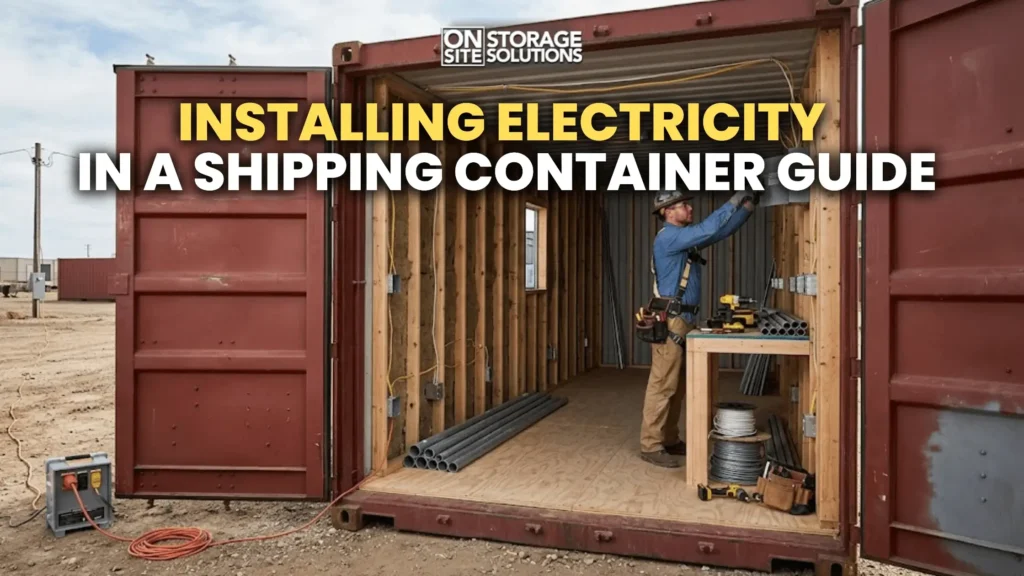

Installing electricity in a shipping container can turn a basic steel box into a useful workspace, office, workshop, or storage area. With the right plan, you can add lights, outlets, HVAC equipment, tools, and other essential devices.
Still, powering a container takes more than adding a few outlets. You also need to consider electrical load, wiring, moisture, grounding, steel walls, and local requirements.
A smart electrical plan can make the container safer and easier to use. It can also help you avoid costly changes later.
Key Takeaways
- Plan the electrical system around the container’s purpose.
- Check local electrical codes and permit requirements.
- Choose a power source that can support the expected load.
- Plan outlet, switch, light, and panel locations before installation.
- Protect wiring from moisture, impact, and the steel structure.
- Use proper grounding and ground-fault protection where required.
- Include materials, labor, permits, and inspections in the budget.
- Ask a qualified electrician to test the system before use.
Why Install Electricity in a Shipping Container?
Electricity can expand the ways you use a container and support different shipping container uses, such as offices, workshops, studios, equipment rooms, and upgraded storage spaces.
Good lighting makes daily tasks easier. In addition, outlets can power computers, tools, fans, refrigeration equipment, and other devices.
Power can also improve comfort inside the container. Heating and cooling equipment can help create a more practical space during hot or cold weather.
Furthermore, a planned electrical system can reduce the need for extension cords. As a result, the interior can stay cleaner, safer, and easier to manage.
Good planning starts with how you will use the container. Before installing electricity in a shipping container, identify the equipment, appliances, and lighting that need power.
Next, consider where people will work and move throughout the container. This helps guide the placement of outlets, switches, lights, and the electrical panel.
Check Electrical Codes Before Installing Electricity in a Shipping Container
Lorem ipsum dolor sit amet, consectetur
Local electrical rules vary by location. Check for required permits and inspections before work begins.
elit. Ut elit tellus, luctus nec ullamcorper mattis, pulvinar dapibus leo.
Estimate the Electrical Load
List the equipment and appliances you plan to use. Then, estimate the total electrical demand to help plan the right circuits and equipment.
Different power sources can meet different project needs.
Power Source | Suitable For | Main Consideration |
Grid connection | Permanent setups | Utility connection and local requirements |
Solar power | Remote locations | Panel and battery capacity |
Generator | Temporary or backup power | Fuel, ventilation, and operating conditions |
Flexible power needs | Extra equipment and planning |
Plan Around the Container Layout
The interior layout should guide your electrical plan. Furniture, shelving, equipment, doors, and windows can affect the best locations for electrical components.
Therefore, plan these details before installation. Doing so can make the finished space easier to use and maintain.
A practical layout can make a shipping container with electricity easier to use every day. Start by identifying the areas that need the most power and lighting.
Choose Practical Outlet Locations
Place outlets near work areas and keep them clear of shelving or large equipment. This makes them easier and safer to access.
Plan Your Layout Before Installing Electricity in a Shipping Container
Plan lighting based on how you will use the container. Workshops may need bright task lighting, while offices may benefit from even lighting.
Select an Accessible Panel Location
Keep the electrical panel accessible to qualified personnel and protected from water and impact. Keep the area clear for safe access and maintenance.
How to Approach Installing Electricity in a Shipping Container?
The installation should follow the electrical plan and local requirements. Because the container has conductive steel walls, wiring protection and grounding need careful attention.
Prepare the Container
Inspect the container for leaks, rust, damage, and openings. Identify suitable entry points and seal them to prevent moisture from entering.
Install Conduit and Electrical Boxes
Conduit can protect wiring from impact and contact with the steel structure. Electrical boxes should be securely installed and appropriate for the environment.
Install the Electrical Panel
The electrical panel distributes power to individual circuits. A qualified electrician should handle panel installation, service connections, and breaker selection.
How to Protect a Shipping Container Electrical System?
A steel container creates several electrical concerns. The system needs protection from faults, moisture, impact, and other hazards.
Ground the Container Properly
Proper grounding helps provide a safe path for fault current. A qualified electrician should determine the correct grounding method based on the electrical system, site conditions, and local code.
Use Ground Fault Protection
Ground-fault protection can reduce the risk of serious electric shock. GFCI protection may be required in areas where moisture is present.
Protect Electrical Components From Weather
Moisture can damage electrical components and create safety risks. Protect openings, covers, and connections from rain and water, and check them regularly for damage or corrosion.
How to Manage Moisture and Insulation When Installing Electricity in a Shipping Container
Condensation can become a concern inside a steel container. Temperature changes can cause moisture to collect on metal surfaces.
Over time, that moisture can affect electrical components. Therefore, address leaks and moisture problems before installing electrical equipment.
Proper insulation can help control temperature changes inside the container. In addition, suitable ventilation can help manage moisture based on the climate and intended use.
Plan insulation carefully around electrical components. It should not block ventilation or interfere with required clearances.
How Much Does It Cost to Install Electricity in a Shipping Container?
The cost of installing electricity in a shipping container depends on the project. Container size, electrical demand, power source, materials, labor, permits, and site conditions can all affect the final cost.
A simple storage unit may need only basic lights and outlets. By comparison, a workshop with HVAC equipment, power tools, and several circuits may need a more complex system.
Consider these factors when planning your budget.
Cost Factor | What Can Affect the Cost |
Larger spaces may need more materials | |
Electrical load | Higher demand may require more circuits |
Power source | Grid, solar, generator, and hybrid systems have different needs |
Materials | Wiring, conduit, boxes, breakers, outlets, and fixtures |
Labor | Complex projects may require more professional work |
Permits | Local permit and inspection fees may apply |
Planning these costs early can make the project easier to manage. It can also reduce surprises during installation.
When Should You Hire a Professional Electrician for Installing Electricity in a Shipping Container?
Electrical work inside a steel container requires proper planning and technical knowledge. Installing electricity in a shipping container without proper care can cause electric shock, fire, equipment damage, or code problems.
Handle Complex Electrical Connections Professionally
A qualified electrician should handle service connections, panel work, grounding, and circuit installation. Professional help is especially important for HVAC equipment, high-demand tools, or complex power systems.
Complete Testing After Installing Electricity in a Shipping Container
Have qualified personnel test the electrical system before regular use. If required, complete local inspections and keep the records for future maintenance.
Final Checklist for a Safe Shipping Container Electrical System
Before using a powered container, review the entire setup after installing electricity in a shipping container. First, confirm that the electrical load matches the equipment you plan to operate.
Next, check the location of outlets, switches, lights, and the electrical panel. Make sure these components remain accessible and protected.
Then inspect the grounding and ground fault protection. Also, check weather protection, moisture control, leaks, and signs of corrosion.
Finally, confirm that required permits and inspections are complete. A professional review can help catch problems before they become expensive repairs.
On-Site Storage Solutions
Ready to choose a container for your next project? On-Site Storage Solutions offers durable shipping containers for storage, workspace, and other customization projects.
Although we do not provide electrical installation services, our team can help you choose a container that fits your intended use and project needs.
Call (888) 977 9085 to discuss your container needs and take the next step toward creating a practical powered space.
FREQUENTLY ASKED QUESTIONS
You can get electricity in a shipping container by connecting it to the grid, using a generator, or installing solar panels. Proper wiring, outlets, and breakers ensure safe and reliable power for lighting and appliances.
A qualified electrician should determine how to ground a shipping container based on the electrical system, site conditions, and local code. The container’s metal frame may also need a proper connection to the grounding system.
Yes, you can install air conditioning in a shipping container. Make sure your electrical system can handle the load, plan proper insulation, and install ventilation to keep the space cool efficiently and safely.
The cost of installing a new electrical box in a shipping container ranges from $100–$300 for materials, plus labor. Total cost depends on container size, number of circuits, and local electrical regulations.
Shipping containers can be powered via grid connection, generators, or solar panels. Proper electrical planning, wiring, and grounding are essential to ensure safety, efficiency, and support for appliances, lighting, and HVAC systems.


