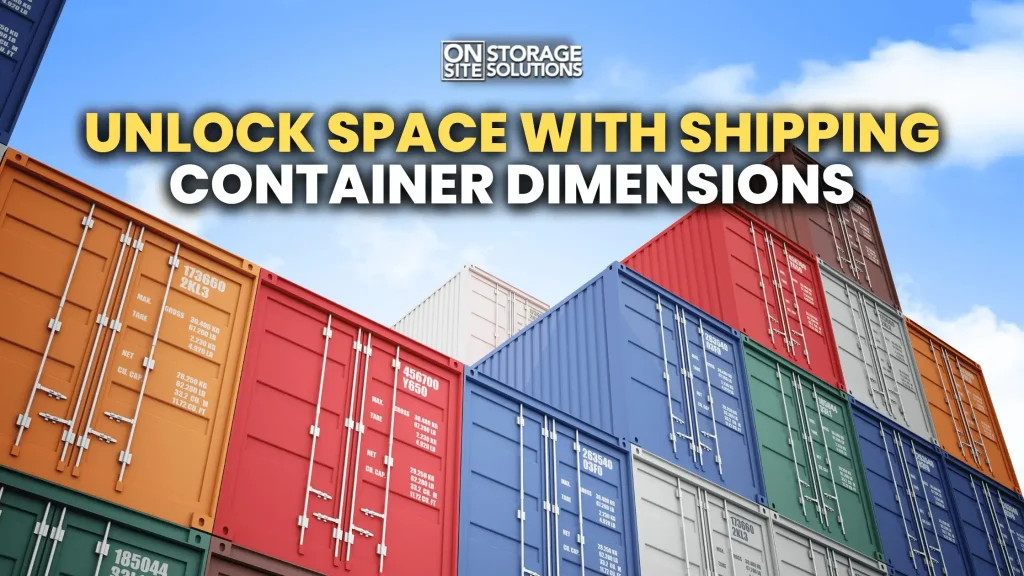

Understanding shipping container dimensions is essential for transporting goods, storing materials, or creating versatile spaces. These containers are a cornerstone of global trade due to their durability, standardization, and flexibility.
Knowing the right size helps ensure efficiency, safety, and cost savings for projects of any scale.
Dry Van Containers: A Standard for Global Shipping
The most common and widely used containers are Dry Van (DV) containers, known for their reliability and all-weather protection. They are completely enclosed, making them ideal for regular goods, from electronics and furniture to textiles and packaged foods.
Standard dry van containers come in multiple sizes, typically measuring 20 feet or 40 feet long, 8 feet wide, and 8.5 feet high. However, understanding shipping container dimensions goes beyond external measurements. Internal dimensions determine how much cargo can safely fit, while door sizes and weight limits are crucial for loading and transportation.
Dry van containers are designed to endure rough handling, harsh weather, and long-distance travel by road, sea, or rail. Their widespread use reflects a global reliance on standard container solutions.
Different Dry Van Container Sizes and Shipping Container Dimensions
Shipping container sizes are standardized for stacking, storage, and transport, but each size serves unique purposes.
- 10-Foot Containers: Compact and versatile, these containers are perfect for smaller storage spaces or temporary office setups. They are commonly used as ticket booths, security huts, or mobile workstations. Their small size makes them an ideal choice for personal or business storage when minimal space is available.
- 20-Foot Containers: The most popular for global shipping, the 20-foot container balances space and convenience. It’s well-suited for small shipments and businesses needing moderate storage without occupying excessive space.
- 40-Foot Containers: These larger containers are preferred for heavy shipments and bulk storage. Often referred to as two TEUs (twenty-foot equivalent units), they provide double the capacity of standard 20-foot containers.
- 40-Foot High Cube Containers: Adding one foot in height, high cubes are ideal for taller cargo or increased stacking flexibility.
- 45-Foot Containers: Common in international shipping, 45-foot containers offer maximum usable space without exceeding weight limits. Their adaptability also makes them a favorite for modular homes, workshops, and temporary commercial spaces.
Shipping container dimensions for dry vans can vary slightly by manufacturer. The most important measurements include external length, width, height, interior space, door size, and the container’s empty weight.
Choosing the right container means matching these factors to your project’s needs.
Innovative Uses of Dry Van Shipping Containers
Dry van containers have extended beyond transport to serve as creative storage and operational solutions.
- Relief Aid Transportation: Non-profits and aid organizations rely on these containers to move emergency supplies to disaster-affected areas. Their strength and weatherproofing ensure critical food, medical supplies, and clothing reach people safely.
- Art and Exhibit Transport: Museums and galleries use dry van containers to transport delicate or high-value exhibits. The controlled, enclosed environment helps maintain stable conditions, protecting items from damage during transit.
- On-Site Storage Solutions: Businesses looking for flexible storage options often turn to containers from a container company near me, such as On-Site Storage Solutions. With new and used shipping containers readily available, these providers offer practical solutions for construction sites, warehouses, or temporary offices.
Refrigerated Containers: Protecting Temperature-Sensitive Cargo
For goods requiring temperature control, Refrigerated (Reefer) containers are essential. These containers include built-in cooling systems to maintain precise temperatures, keeping items like food, vaccines, and chemicals fresh during transport.
Reefer containers come in standard sizes such as 20-foot and 40-foot units. While external dimensions align closely with dry van containers, internal measurements are slightly smaller due to insulation and refrigeration equipment. Tare weights are also higher, reflecting the added machinery.
Uses of Refrigerated Containers
- Emergency Medical Storage: During crises or in remote locations, cooled containers can serve as temporary medical storage units. They ensure that vaccines, medicines, and other temperature-sensitive products remain effective.
- Portable Wine Cellars: Wine enthusiasts and vineyards convert refrigerated containers into mobile wine storage units. These containers can include shelving, humidity control, and temperature regulation to replicate professional wine cellars.
Knowing shipping container dimensions ensures that these conversions or storage solutions maximize available space while meeting weight and structural limits.
Key Points to Weigh When Selecting Shipping Container Dimensions
Selecting the right container involves more than picking a size off a chart. Several factors must guide your decision:
- Understanding Your Project Needs: Identify if you need a container for short-term storage, shipping, or long-term installation. Different applications require different container sizes, internal configurations, and durability features.
- Interior vs. Exterior Dimensions: Exterior dimensions help determine placement feasibility, while interior space ensures cargo fits properly. Doors, ceiling height, and internal width are equally important.
- Regulatory Compliance: International shipments require containers that meet global standards, such as CSC plates and ISO certifications. Compliance guarantees safe handling and smooth customs clearance.
- Weight Limits: Even the largest containers have maximum payloads. Overloading containers can damage cargo and incur penalties during transit.
- Additional Features: Consider factors like refrigeration, security enhancements, or modifications for specific projects. Working with a reputable container company near you ensures access to containers that meet exact specifications.
Choosing Between New and Used Shipping Containers
New shipping containers provide the assurance of pristine condition, minimal maintenance, and longer service life. They are ideal for businesses needing reliable shipping or long-term storage.
Used shipping containers offer cost savings while still maintaining structural integrity. They are excellent for projects such as temporary offices, storage units, or creative construction.
Businesses can purchase shipping boxes for sale or full container units through trusted providers like On-Site Storage Solutions, a leading source for both new and used containers.
Creative Applications Beyond Shipping Using Shipping Container Dimensions
Shipping containers are no longer limited to freight. Innovative uses include:
- Modular Homes: High cube containers provide extra height for residential or office conversion. Multiple units can be combined to create multi-story living spaces.
- Workshops and Studios: Containers offer flexible and secure environments for small-scale production or creative studios.
- Retail Spaces: Pop-up shops and temporary stores can utilize containers for quick, cost-effective retail setups.
Each of these applications requires a clear understanding of shipping container dimensions to ensure usability and compliance with building or safety codes.
Conclusion
Mastering shipping container dimensions is key for shipping, storage, or creative projects. From a compact 10-foot dry van to a 45-foot high cube, each container serves a unique purpose. By considering measurements, weight limits, and project needs, you can choose the right container with confidence.
On-Site Storage Solutions offers a wide range of new and used shipping containers, including refrigerated and high cube units, for personal or commercial use. Trust a leading container company near you to provide secure, durable, and versatile storage solutions.
Call us today at (888) 977-9085 to reserve your container.
FREQUENTLY ASKED QUESTIONS
The standard shipping container is a Dry Van (DV) container, typically 20 feet or 40 feet long, 8 feet wide, and 8.5 feet high.
The maximum height depends on the type. Standard Dry Van containers are 8.5 feet high, while High Cube containers add an extra foot, making them 9.5 feet high
A 20-foot container measures 20 ft long, 8 ft wide, and 8.5 ft high externally. Internal dimensions are slightly smaller, allowing for efficient cargo storage.
A 40-foot container measures 40 ft long, 8 ft wide, and 8.5 ft high externally. High Cube versions are 9.5 ft high, offering more internal space for tall cargo.
The 20ft container is compact and ideal for smaller shipments or storage, while the 40ft container offers double the cargo space and is better for bulk shipments or larger projects.


