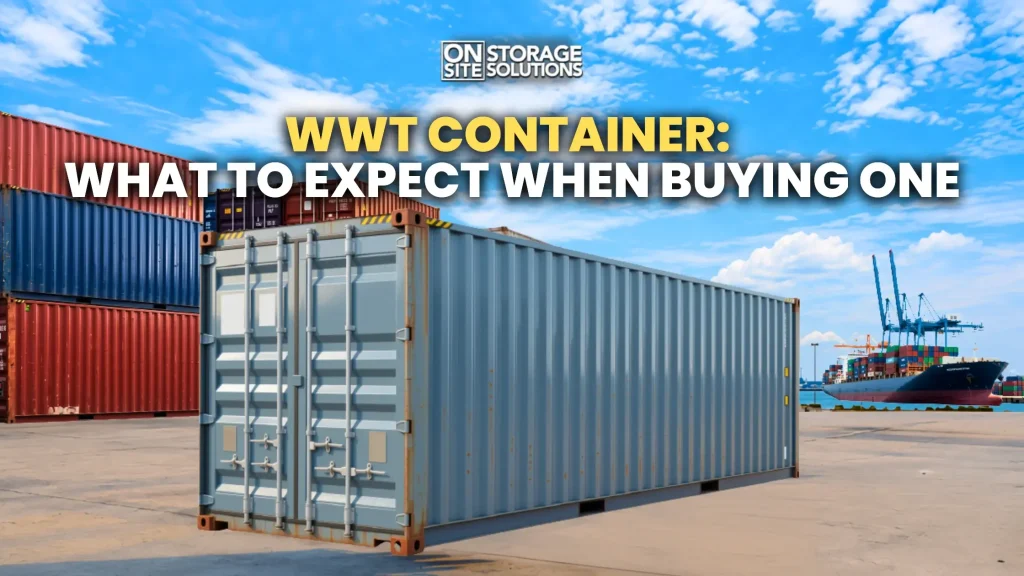

A WWT Container offers a practical way to get secure, weather resistant storage without the higher cost of a new unit. Built from durable steel, it can protect equipment, inventory, tools, and other valuable items on your property.
Used containers often show signs of previous use, such as faded paint, dents, scratches, or surface rust. The key is to look beyond appearance and check the roof, doors, floor, seals, and overall structure before you buy.
Key Takeaways
- A WWT Container provides secure storage and protection from normal wind and rain.
- Used containers may show dents, faded paint, scratches, and surface rust.
- Inspect the exterior, doors, seals, floor, and structural condition before buying.
- Previous repairs are not always a concern when the work is properly completed.
- A cargo worthy shipping container is better suited for transportation and shipping needs.
- Choose the right size based on your storage needs, available space, and budget.
- Plan for delivery, placement, maintenance, and other ownership costs.
- The best shipping container is one that matches your intended use and storage requirements.
Understanding the Basics of Wind and Water Tight Units
A WWT Container is a used shipping container designed to provide secure, enclosed storage while keeping normal wind and rain out. It is a practical option for storing equipment, inventory, tools, and other items without the cost of building a permanent storage space.
Wind and water tight units can show normal signs of use, such as dents, scratches, or faded paint. What matters most is that the container remains structurally sound and provides the protection you need.
What to Know About Used WWT Container Condition
A used container will usually show signs of previous use. Faded paint, scratches, dents, old logos, and surface corrosion are common and do not always affect performance.
When checking the exterior, focus on the condition of the steel and look for serious damage.
- Check for holes: Look for holes or damaged panels that could allow water inside.
- Check the frame: Make sure the main frame is not severely bent, twisted, or weakened.
- Inspect rust: Surface rust can be manageable, but deep rust that has damaged the steel needs closer attention.
The goal is simple: focus on condition, not appearance alone. A used container does not need to look new to provide reliable storage.
Key Inspection Points Before You Buy a Used Container
Before purchasing a WWT Container, take a few minutes to test the features you will use regularly. The goal is to make sure everything works as expected before the unit arrives at your property.
1. Test the Doors
Open and close each door fully. Check that the handles, hinges, and locking bars move smoothly and that the doors close securely.
2. Check the Door Seals
Examine the seals around the doors for cracks, gaps, or areas that have become worn. Good seals help keep outdoor moisture from entering the storage space.
3. Look Inside the Floor Area
Check the floor for soft spots, major damage, or signs of moisture. If you plan to store heavy equipment or machinery, make sure the floor is suitable for the load.
4. Ask About Maintenance
Ask the supplier if any recent maintenance or repairs were completed. This can give you a clearer picture of what to expect after delivery.
A simple functional check can help you avoid surprises and make sure the container is ready for its intended use.
Structural Repairs and Welding on a WWT Container
A WWT Container may have had repairs during its previous service life. Welding, reinforced panels, or replaced sections are not automatically a problem. What matters is that the repair is properly completed and the surrounding structure remains sound.
When reviewing a repaired area, look for clean welds, secure patches, and no visible gaps or separation. A reputable supplier should also be able to explain major repairs and give you a clear idea of the container’s current condition.
Good repairs can extend the useful life of a used container and help it continue serving as dependable storage.
WWT Container vs. Cargo Worthy Units
A WWT Container is generally intended for storage, while a cargo worthy shipping container is designed for applications that require cargo transportation standards.
Feature | WWT Container | Cargo Worthy Shipping Container |
Primary use | Storage | Cargo transportation |
Weather protection | Keeps normal wind and rain out | Protects cargo during transportation |
Best for | Storage, equipment, inventory, and jobsites | Shipping and continued cargo use |
Cost | Generally more affordable for storage | Typically costs more |
For private property storage, a WWT unit can be a practical and cost effective choice when shipping certification is not required.
Getting the Most From Your Storage Container
A container can do more than store boxes and equipment. With the right setup, it can support business operations, organize a jobsite, or provide a practical space for tools, inventory, and materials.
1. Practical Uses Beyond Storage
Businesses can use containers for equipment, building materials, seasonal inventory, and jobsite supplies. Entrepreneurs can also turn them into workshops, offices, studios, or customized workspaces with additions such as shelving, lighting, insulation, and electrical systems.
For businesses managing valuable inventory, smart containers can also provide added visibility through tracking and monitoring technology.
2. Choosing the Right Size and Configuration
Choose a size based on what you plan to store and how often you need access to it. A 20 ft container can be a practical option for general storage, while larger units provide more room for equipment, inventory, and materials.
Leave enough space inside for movement and access. Measuring large items before delivery can also help prevent problems with fitting equipment through the doors.
3. Keeping Your Container Strong and Functional
Regular maintenance can help extend the useful life of your WWT Container. Check the roof and doors after severe weather, keep moving hardware working properly, and address signs of rust before they become larger problems.
It is also important to watch for condensation inside the container. Good organization and appropriate ventilation can help protect stored items from moisture.
4. Understanding the Total Cost
The purchase price is only part of the investment. Consider delivery, site preparation, repairs, modifications, and accessories when comparing your options.
A lower priced unit is not always the best value. Look at the container’s condition, included services, delivery requirements, and expected maintenance to understand the overall cost before buying.
A WWT Container can be a smart choice when you need durable, secure storage at a practical price. By checking the container’s condition, size, doors, floor, and repair history before buying, you can choose a unit that fits your needs and is ready for long term use.
On-Site Storage Solutions offers storage containers for businesses, jobsites, and property owners looking for reliable storage solutions.
To find the right container for your needs or get help with your purchase, call (888) 977-9085 today.
FREQUENTLY ASKED QUESTIONS
It means the container is designed to keep normal wind and rain from entering when properly closed and maintained. It is mainly intended for secure storage and does not mean the container is climate controlled or certified for international shipping.
Used units can have faded paint, dents, scratches, old markings, and surface rust from previous service. These signs of use are not necessarily a problem, but buyers should check for holes, serious structural damage, and other issues that could affect performance.
Yes. They are commonly used for storing equipment, tools, inventory, building materials, and other items that need protection from normal outdoor conditions.
Check the doors, seals, roof, floor, walls, and overall structure. Look for leaks, major damage, deep rust, damaged seals, or problems that could affect how the container functions.
The main difference is the intended use. A storage focused unit is designed for stationary storage, while a cargo worthy shipping container is intended to meet requirements associated with cargo transportation.


