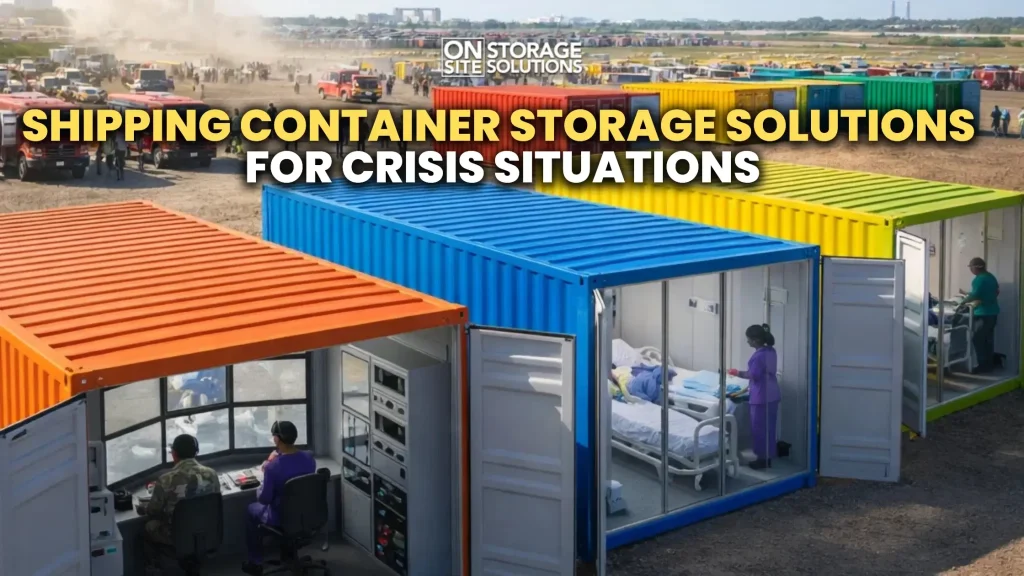

Shipping container storage solutions play a vital role in crisis situations where rapid action and secure storage are critical. In this blog, we will explore how these systems effectively support disaster response, medical aid, and relief operations.
During emergencies, time is limited and decisions must be made quickly. A shipping container offers a ready-to-use storage space that can be deployed immediately, eliminating the need to construct facilities from the ground up.
These containers are widely used to store food, water, medical supplies, and essential tools in one secure location. Thanks to their durability, mobility, and reliability, they have become a trusted solution in emergency operations worldwide.
Why Shipping Container Storage Solutions Are Essential in Crisis Situations
Shipping container storage solutions play an important role in disaster response by providing secure and dependable storage for emergency operations.
Shipping Container Storage Solutions for Rapid Deployment
Fast delivery and setup make these containers highly effective in emergency areas where immediate storage is needed.
- Shipping container storage solutions are transported to disaster sites using trucks or cranes and placed in secure locations for quick use.
- The ground must be flat and stable to ensure safety and prevent movement.
- Emergency teams coordinate to position containers efficiently so supplies can be accessed without delay.
- Planning is important when using different container sizes to ensure proper distribution across affected areas.
Shipping Container Storage Solutions for Managing Supplies in Emergencies
These containers help keep emergency supplies organized, secure, and easy to access during crisis situations.
- Items are arranged in clear sections based on priority so essential supplies can be reached quickly.
- Medical supplies are stored in accessible areas, while other resources are grouped and labeled for easy identification.
- Access is limited to authorized personnel to maintain security and prevent loss.
- Shelving and labeling systems improve speed and accuracy when retrieving items in urgent situations.
Benefits of Using Shipping Containers
Shipping container storage solutions offer several practical advantages that make them highly effective during emergencies. These benefits help organizations respond faster, stay organized, and protect essential supplies in difficult conditions.
- Strength: A shipping container storage solution is made of steel, which allows it to handle rough weather, heavy use, and harsh emergency conditions.
- Mobility: A shipping container can be transported by truck, ship, or train, making it easy to move supplies quickly to disaster areas where they are needed most.
- Security: Containers can be tightly locked, helping protect important supplies such as food, medicine, and equipment from theft or damage.
- Cost efficiency: Instead of building temporary storage facilities, organizations can reuse existing containers, which saves both time and money during emergency response operations.
Shipping Container Storage Solutions for Common Container Sizes in Emergencies
Different container sizes are used depending on the situation and the amount of supplies needed. Each type of container serves a specific purpose in emergency storage and disaster response.
- 10 ft container: Small and ideal for tight spaces such as crowded cities or narrow streets where large units cannot fit easily.
- 20 ft container: One of the most commonly used sizes. It can store food packs, medical kits, and rescue tools while still being easy to transport and position.
- 40 ft container: Best for large scale storage needs. It is often placed in central relief areas where bulk supplies are stored and distributed.
- Refrigerated containers: Used for storing food, medicine, and vaccines that need controlled temperatures to stay safe and effective for longer periods.
Shipping Container Storage Solutions for Future Emergency Needs
Shipping container storage solutions are improving with new technology. Some containers now use solar panels to power lights and cooling systems.
Smart systems can track temperature and inventory inside the container. This helps teams know exactly what is stored and what is needed.
Shipping container modification is also becoming more advanced. Containers can now be turned into mobile clinics, command centers, or storage units with special features.
These improvements make emergency response faster and more organized.
Conclusion
Shipping container storage solutions provide a simple and reliable way to support emergency response efforts. They help keep supplies safe, organized, and ready to use when time matters most.
From small units used in limited spaces to larger containers for bulk storage, they offer flexibility for different types of emergencies. Their strength and mobility make them a practical choice for both short term and long term use.
As emergency needs continue to grow, these containers will remain an important tool in helping teams respond faster and manage resources more effectively.
Organizations that want to improve their emergency readiness can benefit from dependable storage systems designed for real world conditions. For secure, durable, and ready to deploy container solutions, contact On-Site Storage Solutions at (888) 977 9085 and take the next step in building a stronger emergency storage plan.
FREQUENTLY ASKED QUESTIONS
Yes. A Shipping container can be used as a shed because it is strong, weather resistant, and secure. It is commonly used for storage, tools, and even emergency supplies due to its durable steel structure.
The best foundation for a storage container is a level, stable, and well drained surface such as concrete pads, gravel beds, or steel supports. This helps maintain the structural integrity and prevents shifting or sinking over time.
Yes. Shipping containers are widely used in emergencies because they provide secure, weather resistant storage for food, medical supplies, and equipment. They can be rapidly transported and put into operation in disaster zones with minimal setup time.
No, shipping containers are made with Corten steel, which is designed to resist corrosion. However, they can still rust over time if the protective coating is damaged or if they are exposed to constant moisture without maintenance.
A shipping container can be insulated using materials like spray foam, rigid foam boards, or insulated panels. Proper insulation helps control temperature, moisture, and internal comfort, especially when the container is used for storage or field operations.