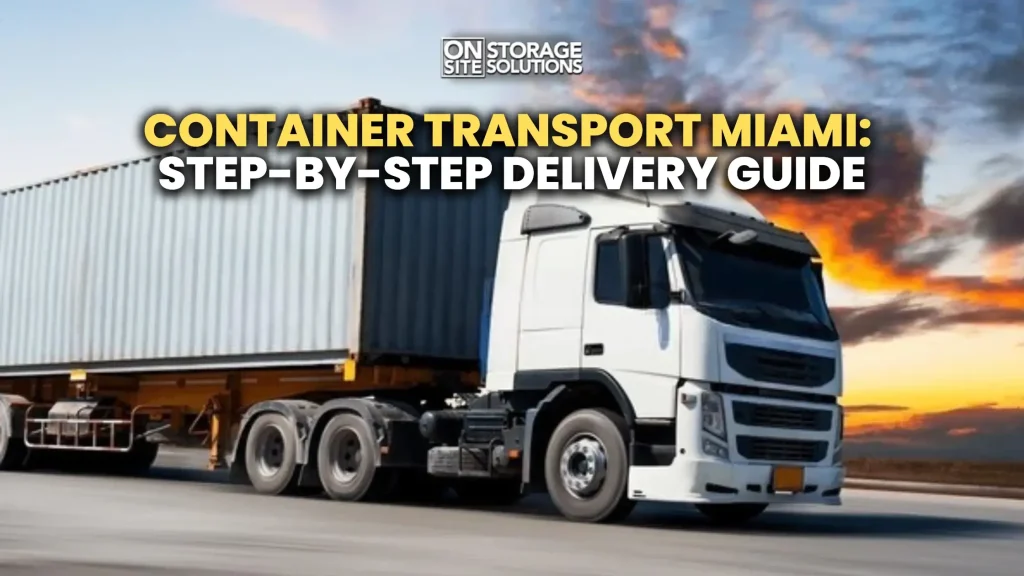

Container transport Miami services are supported by a strong logistics network in South Florida, especially through major port activity in the region. A steady flow of containers is maintained through ocean container shipping from Miami, which helps ensure consistent availability for residential, commercial, and construction needs.
In a city like Miami, where access can be tight, weather can be unpredictable, and zoning rules vary by county, a successful container delivery depends on preparation and coordination from start to finish.
This overview walks you through everything you need to know, including service areas, site requirements, equipment types, permits, delivery timelines, and post-delivery setup.
What Is Container Transport Miami?
Container transport Miami refers to the delivery, relocation, and precise placement of shipping containers used for storage and commercial purposes throughout the Miami area. These containers are used for construction storage, residential moves, business inventory overflow, and temporary office setups.
A shipping container Miami solution provides a durable and secure storage option that can be delivered directly to your property for immediate use. Because they are heavy and oversized, professional transport ensures safe delivery and accurate placement.
Proper container transport is not just about moving a unit from point A to point B. It involves assessing access conditions, selecting the right equipment, and ensuring compliance with local property and safety requirements.
Container Transport Miami Service Areas
Container transport Miami services cover both Miami-Dade and Broward County, but delivery conditions can vary greatly depending on location.
From tight urban streets in downtown Miami to more open industrial areas in Broward, access and placement can directly affect delivery speed and ease.
Urban zones often come with narrow roads, limited parking, and restricted access, while suburban and industrial areas usually allow smoother truck movement and faster placement.
Key factors that affect delivery include:
- Distance from the supplier
- Traffic conditions
- Property access and layout
- Local zoning or neighborhood restrictions
Understanding your service area helps set realistic expectations for timing, cost, and delivery process.
Site Access Requirements for Container Delivery
Before scheduling container transport Miami delivery, your site must meet specific access and safety requirements.
Truck Entry and Maneuvering Space
The delivery truck needs enough space to enter, turn, and unload safely, which is essential for successful shipping container delivery in tight urban or residential areas.
Stable and Level Ground
Clear Access Path
A clear path from the street to the placement area is required. Remove vehicles, debris, fences, or landscaping to avoid delays or extra charges.
Final Safety Check
Do a final check before delivery to ensure the site is clear, accessible, and safe. Confirm gates are open and no hidden obstacles are present.
Truck Types and Equipment Used for Container Transport Miami
Different delivery situations require different equipment depending on site access.
Tilt-Bed Trucks
Tilt-bed trucks are the most common option. The container slides off the back and is placed directly on the ground. Best for open areas with easy access.
Flatbed Trucks
Flatbed trucks are mainly used for transport and staging. Additional equipment is often needed for unloading at the final site, making them less common for residential deliveries.
Crane-Assisted Delivery
Crane delivery is used for tight or restricted access areas. It allows precise placement in locations where trucks cannot directly reach, such as backyards or enclosed spaces.
Choosing the Right Equipment
Selecting the correct equipment and container size is important to ensure safe, smooth, and accurate container placement without delays or site issues.
Permit and HOA Rules for Container Transport in Miami
In many areas, container transport Miami deliveries must follow local zoning laws, permits, and Miami HOA restrictions.
Miami-Dade and Broward may require permits depending on the container’s duration and use. Temporary storage may not need approval, but long-term or commercial use usually does.
HOAs may also restrict visibility and placement duration, and may require prior approval before delivery.
Key considerations include:
- Permit rules based on usage and duration
- Local zoning requirements
- HOA restrictions and approvals
Always confirm local rules before scheduling delivery to avoid delays or penalties.
Weather and Environmental Factors in Miami Deliveries
Miami’s climate plays a major role in container transport planning. Heavy rain, hurricane season, and high humidity can all affect delivery schedules and container conditions.
Rain can make ground surfaces unstable, increasing the risk of sinking or improper placement. Strong winds during storms can also make container handling unsafe.
Humidity and salt exposure in coastal areas may contribute to long-term corrosion if containers are not properly maintained or protected after delivery.
Proper timing and weather monitoring are essential for a smooth delivery process.
Container Transport Miami Delivery Timeline and Process
Delivery timelines for container transport Miami depend on container availability, site readiness, permits, and weather conditions
What Affects Your Schedule
Small delays in preparation can affect your delivery timeline. Permits, access issues, or weather can push schedules back.
Booking and Scheduling Process
The process includes booking, site confirmation, dispatch, transport, and final placement. Delivery is completed within the scheduled window once requirements are met.
Delivery Day Execution
On delivery day, the truck arrives and checks site access before unloading. The container is placed using a tilt-bed truck or crane, depending on the site.
Precise placement is important for safety and usability. On-site supervision is recommended.
Possible Causes of Delay
Post-Delivery Setup, Security, and Maintenance
After container delivery, proper setup ensures long-term durability and security. Heavy-duty locks or lock boxes should be installed immediately to protect against unauthorized access. If the container is placed on bare ground, adding support blocks or a gravel base can improve drainage and stability.
Regular inspections are recommended to check for rust, dents, or moisture buildup, especially in Miami’s humid environment. Proper maintenance helps extend the lifespan of the container and keeps stored items protected.
Key Takeaways
Container transport Miami delivery works best when every step is properly planned, from site preparation and access checks to permits and equipment selection.
When these elements are in place, the entire process becomes faster, safer, and more efficient for both residential and commercial needs.
A well-prepared site and the right delivery coordination can prevent delays and ensure your container is placed exactly where it is needed without complications.
Get Fast Container Transport Miami Delivery
When it comes to container transport Miami delivery, proper planning is what ensures a smooth and hassle free process. From site preparation and access checks to selecting the right equipment, every step helps avoid delays and ensures accurate placement.
At On-Site Storage Solutions, we provide dependable container transport services focused on safety, efficiency, and precise delivery. We make sure your container arrives on schedule and is positioned exactly where your site requires it.
Don’t let delays or logistics issues slow your project down. Call us today at (888) 977-9085 to schedule your container transport Miami delivery or request a free quote. Get fast, reliable service with professional handling from start to finish.
FREQUENTLY ASKED QUESTIONS
Cost varies depending on distance, site access, and equipment required for delivery. Urban areas or tight properties may increase pricing due to additional handling, permits, or crane assistance if standard truck access is limited.
Permit requirements depend on local zoning rules and how long the container stays on-site. Miami-Dade and Broward may require permits for long-term or commercial use, while temporary storage may not always need approval.
A 20-foot container is typically delivered using a tilt-bed truck that slides it directly onto the ground. In restricted areas, crane-assisted delivery may be used to place the container accurately in tight or enclosed spaces.
Prepare by clearing the access path, ensuring the ground is level and stable, and removing obstacles like vehicles or debris. Confirm gate access and check overhead clearance to allow safe truck entry and container placement.
Yes, shipping containers are designed to withstand harsh conditions including rain, wind, and heat. However, in humid or coastal areas like Miami, regular maintenance helps prevent rust and ensures long-term durability.