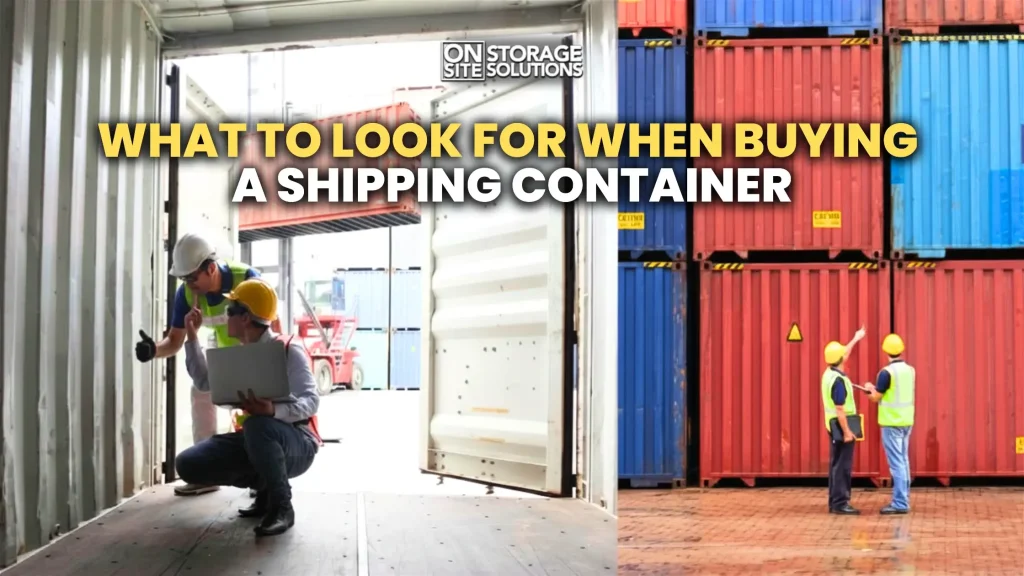

When considering purchasing a shipping container for storage, relocation, or conversion into a living space, understanding what to look for when buying a shipping container is crucial for making an informed decision.
Shipping containers vary widely, from units crafted with durable Corten steel designed for international shipping and heavy cargo loads, to specialty containers with features like double doors or open tops.
Several important factors can influence your choice, including size, condition, intended use, and an understanding of shipping container strength, which plays a major role in durability and long-term performance.
This guide breaks down the essentials in a clear, easy-to-follow way to help you confidently choose the right shipping container for your needs.
Factors to Consider: What to Look for When Buying a Shipping Container
When deciding what to look for when buying a shipping container, it’s important to evaluate a few key factors to ensure you get the best value and performance for your project. From size and type to condition and grading, each detail plays a role in long-term usability.
Type and Size: What to Look for When Buying a Shipping Container
Selecting the right container type and size depends entirely on how you plan to use it, either for storage, transportation, or conversion.
Types of Shipping Containers
- Standard Dry Van Container: The most common option, ideal for transporting or storing dry goods such as furniture, equipment, and boxed items.
- Refrigerated Container (Reefer): Equipped with temperature control, perfect for perishable items like food, pharmaceuticals, or chemicals.
- Open-Top Container: Designed with a removable top, making it easier to load oversized or tall cargo.
- Flat Rack Container: Features collapsible sides, suitable for heavy machinery or large, awkwardly shaped items.
- Tank Container: Built specifically for transporting liquids, gases, or powders that require specialized handling.
- High Cube Container: One foot taller than standard containers, offering extra vertical storage space.
Common Sizes of Shipping Containers
Understanding standard container dimensions helps you plan placement, transportation, and storage capacity effectively. Knowing the standard container size for shipping also ensures compatibility with trucks, ships, and rail transport.
- 20-Foot Standard Container
Dimensions: 20 ft (L) × 8 ft (W) × 8.6 ft (H)
Capacity: Approx. 1,170 cubic feet.
- 40-Foot Standard Container
Dimensions: 40 ft (L) × 8 ft (W) × 8.6 ft (H)
Capacity: Approx. 2,390 cubic feet.
- 20-Foot High Cube Container
Dimensions: 20 ft (L) × 8 ft (W) × 9.6 ft (H)
Capacity: Approx. 2,700 cubic feet.
- 40-Foot High Cube Container
Dimensions: 40 ft (L) × 8 ft (W) × 9.6 ft (H)
Capacity: Approx. 2,720 cubic feet.
Condition and Grades: What to Look for When Buying a Shipping Container
Another critical part of knowing what to look for when buying a shipping container is understanding container condition and grading. Containers are available in new, used, and refurbished options, each with its own advantages.
Container Conditions: What to Look for When Buying a Shipping Container
New One-Trip Containers
New one-trip containers are manufactured overseas and used only once to transport cargo. Minor dents or scratches may appear due to transit, but these containers are structurally sound and nearly new, making them a popular choice for long-term use.
Used Containers
Used containers typically served in shipping fleets for 5–15 years. Because they have already been depreciated, many buyers choose them as low cost shipping containers for storage or modification projects.
While they may show visible wear such as rust spots, dents, or faded paint, they remain highly durable and functional for storage and transport.
Shipping Container Grades
IICL (IICL-6)
These containers meet strict inspection standards set by the Institute of International Container Lessors. They are approved for overseas shipping and are typically in excellent condition, commanding a higher price.
Wind and Water Tight (WWT)
WWT containers are sealed against leaks and ideal for storage. Cosmetic wear is common, but structural integrity remains intact.
Cargo Worthy (CW)
Cargo-worthy containers are certified for transport and feature a valid CSC plate. They may show signs of age but are safe for shipping goods.
As-Is Containers
As-is containers are heavily worn and may have structural issues such as holes or damaged flooring. These are best suited for non-critical projects where appearance and longevity are not priorities.
Final Thoughts on Choosing the Right Shipping Container
Understanding what to look for when buying a shipping container helps ensure your investment meets both your immediate and long-term needs, especially when evaluating how much does a shipping container cost varies based on size, condition, and delivery area.
Carefully consider the container’s size, type, condition, and grade before purchasing. If you’re using it for storage, transportation, or conversion into a custom space, choosing the right container will save time, money, and effort in the long run.
On-Site Storage Solutions
When you’re ready to purchase a shipping container, trust On-Site Storage Solutions to deliver quality containers across the United States and Canada. Our team can help you evaluate size, condition, and delivery options to find the perfect fit. Call us today at (888) 977-9085 to secure your ideal shipping container.
FREQUENTLY ASKED QUESTIONS
Before buying, consider the container’s size, condition, and intended use. Check for structural integrity, rust, and leaks, and factor in delivery access and site preparation to avoid unexpected costs or installation issues.
Choose a shipping container based on your purpose, available space, and budget. Match the container type and size to your needs, and decide whether new, used, or refurbished options best suit your project.
The main difference is storage capacity. A 40ft container offers nearly double the space of a 20ft unit, making it better for larger projects, while 20ft containers are easier to place and transport.
The most common shipping container is the 20-foot standard dry van. It’s widely used for storage and transport because of its manageable size, durability, and compatibility with most shipping and delivery methods.
HC stands for High Cube. High Cube containers are one foot taller than standard containers, providing extra vertical space, which is ideal for storing taller items or converting containers into usable living or work spaces.


