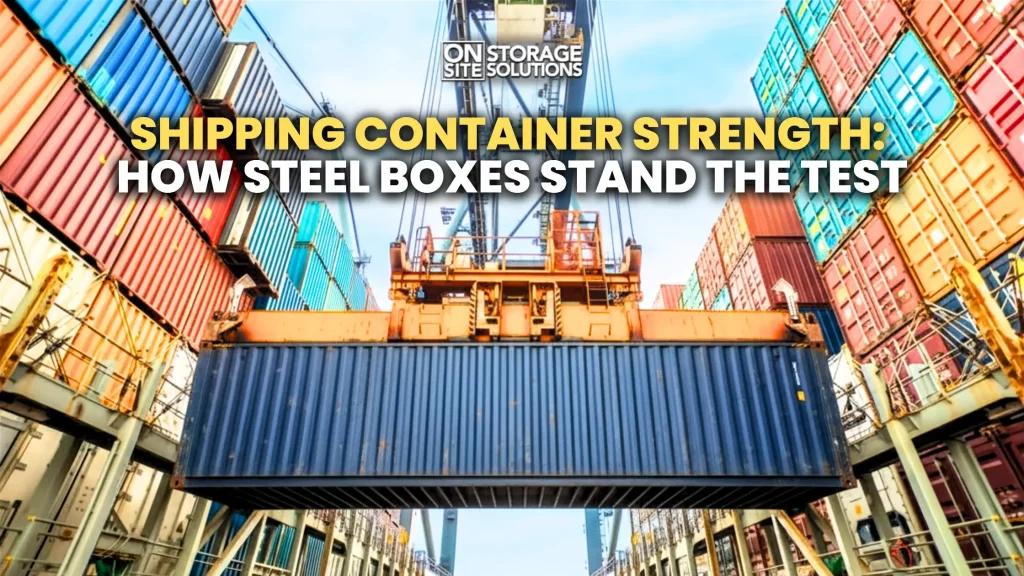

In logistics, architecture, and storage, shipping container strength is a key factor that often goes unnoticed. These steel boxes are the backbone of global trade, transporting goods safely by sea, truck, and rail.
Shipping containers come in various designs, with the standard container size for shipping being 20ft or 40ft. These dimensions ensure efficient transport, stacking, and handling across ships, trucks, and trains.
Understanding why shipping containers are so strong helps businesses and builders make the most of their versatility.
Why Shipping Container Strength Matters
The strength of shipping containers is essential for multiple reasons. First, containers endure harsh conditions at sea, where high winds, saltwater, and heavy loads are common. Second, they provide secure storage during transportation and on construction sites.
Their structural integrity ensures that contents remain safe even under extreme pressure. This combination of durability and stability is why containers are trusted worldwide.
Understanding Shipping Container Strength
Shipping containers are designed to withstand tough conditions thanks to their robust construction, which is the reason behind their impressive shipping container strength. Most are made from corten steel, also called weathering steel, which resists rust and corrosion.
This steel allows containers to survive harsh climates and carry heavy cargo over long distances. Inside, many containers feature strong wood floors, like marine-grade plywood or bamboo, which distribute weight evenly and protect the cargo.
Corner castings, thicker steel at the corners, allow containers to be lifted and stacked securely, enhancing overall stability.
Finally, rubber seals around the doors keep out water, dust, and debris, contributing to long-lasting durability.
Key Factors That Determine Shipping Container Strength
Several design elements work together to give shipping containers their incredible strength:
- Corten Steel Walls: Resist corrosion and rust, providing long-term durability.
- Reinforced Corners: Steel corners enable safe stacking and lifting, maintaining stability.
- Corrugated Design: The rigid steel structure adds rigidity and prevents deformation.
- Flooring: Strong wood floors help evenly distribute weight and secure cargo.
- Door Seals: Rubber seals protect against water and weather damage, preserving strength.
These features contribute to the overall shipping container strength, making containers strong, versatile, and ideal for shipping, storage, or construction.
The Incredible Strength and Versatility of Shipping Containers
Shipping containers are more than just boxes, they’re strong, flexible, and cost-effective. Some of their benefits include:
Strong and Stable Construction
The corrugated steel walls and reinforced corners give containers remarkable stability. They can hold heavy loads and be stacked several units high without compromising structural integrity. This is why shipping container strength is trusted for both transport and building projects.
Long-Lasting Durability
Designed to withstand years of exposure to harsh conditions, containers are incredibly durable. Their longevity makes them ideal for both storage and innovative architectural projects.
Safe and Secure
With robust steel walls, reinforced corners, and secure door seals, shipping containers keep contents protected from theft, weather, and damage.
Easy and Cost-Effective Building
Using containers in construction is fast and economical. Their strength reduces the need for additional reinforcement, saving time and money while maintaining reliability.
Flexible Design Options
Containers can be modified or combined for different uses, from offices and homes to retail spaces. Their adaptability makes them invaluable in modern design and construction.
What Makes Shipping Containers So Strong?
The strength of shipping containers comes from a combination of materials and design:
- Corten Steel: Resistant to corrosion and rust, ideal for heavy-duty use.
- Wood Flooring: Marine-grade plywood or bamboo handles heavy loads and protects cargo.
- Corner Castings: Reinforced steel corners provide stability for lifting and stacking.
- Rubber Seals: Keep out moisture, adding to durability and security.
Structural Strength, Integrity, and Design of Shipping Containers
Shipping containers are engineered with precision to maximize structural strength. Corrugated steel walls and roofs enhance rigidity and tensile strength, allowing them to resist bending or deformation.
The steel is approximately 2mm thick, offering a perfect balance between durability and weight. Side rails along the length of the container reinforce the floor and roof, while specialized corner fittings allow safe stacking and transport.
This intelligent design ensures that shipping containers remain strong, even under significant loads, making them suitable for shipping, storage, and innovative building projects.
The impressive durability and versatility of shipping containers stem from a combination of Corten steel, marine-grade plywood, corrugated walls, corner castings, and rubber seals. These elements work together to provide a sturdy, long-lasting structure that can withstand severe weather, carry heavy loads, and serve multiple purposes.
Whether for global commerce or creative architectural projects, shipping container strength is a critical factor that ensures safety, efficiency, and longevity. On-Site Storage Solutions provides a wide selection of containers designed to maximize durability and security for any storage or construction need.
Contact us today at (888) 977-9085 to explore our selection and find the perfect shipping container tailored to your requirements.
FREQUENTLY ASKED QUESTIONS
A standard 40ft shipping container can safely carry up to 67,200 lbs (30,480 kg) of cargo, depending on the container type. Its structure, including Corten steel walls, reinforced corners, and flooring, ensures it can handle heavy loads during transport.
Shipping containers are extremely strong due to their corten steel construction, corrugated walls, and reinforced corners. They are designed to withstand harsh weather, heavy loads, stacking, and rough handling, making them reliable for shipping, storage, and even construction projects.
Standard shipping containers can be stacked up to 7–9 units high, depending on design and condition. This is possible because their reinforced corners and corrugated steel walls distribute weight efficiently, allowing safe stacking in storage yards and on ships.
The roof is made from 2mm thick Corten steel and is strong enough to withstand environmental stress and cargo movement. While it supports some weight, it is primarily designed for protection and should not be relied on for heavy loads without reinforcement.
The floor is usually made of marine-grade plywood or bamboo, reinforced by steel crossbeams. It distributes heavy cargo evenly and can support up to 5,000–6,000 lbs, depending on container size and design, ensuring stability during transport.


