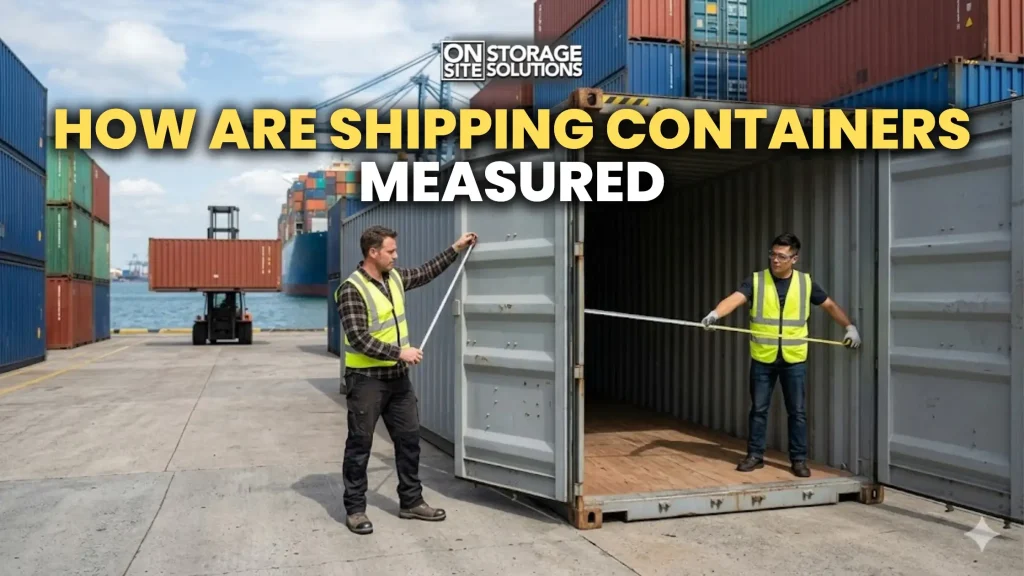

Understanding how are shipping containers measured is essential for anyone looking to buy, lease, or utilize these versatile storage units. Measuring a container may seem complex at first, but with the right approach, it becomes simple and straightforward.
This guide will help you navigate the dimensions of shipping containers, both internally and externally, to ensure a perfect fit for your cargo, storage, or living needs.
Shipping Container Internal Measurements
When learning how are shipping containers measured, it is important to start with internal dimensions. Internal measurements refer to the usable space inside the container where cargo, equipment, or furnishings will fit.
- Width is measured by taking the distance between the two longest interior walls. This measurement ensures that your cargo can fit comfortably without being forced.
- Length is calculated from one end wall to the other on the inside. For standard containers, this is typically 20 feet or 40 feet, making 20 foot containers and 40 foot containers the most common options.
- Height measures the vertical space from the floor to the ceiling of the container. Standard containers are about 8.5 feet tall, while high-cube models reach 9.5 feet, giving extra room for taller items.
Door dimensions are also crucial. Door opening width should be measured between the support frames, allowing a small gap for smooth entry and exit. Door height is measured from the floor to the top of the frame, which may be slightly less than the internal height. This ensures that large items can pass through without obstruction.
Internal measurements are vital for planning cargo arrangement or converting a container into functional living or office space. Correct calculations help avoid overloading and make operations more efficient.
External Shipping Container Measurements
Understanding how are shipping containers measured externally is equally important. External dimensions indicate if the container fits in a space or on a transport vehicle.
- Length is measured from one end to the other on the outside of the container. Standard lengths of 20 feet and 40 feet correspond to commonly used container types in shipping logistics.
- Width is measured across the narrow side, typically the same as the internal width unless modifications have been made.
- Height is measured from the ground to the top of the container, which is important for clearance during transport or placement on a property.
External measurements help in planning stacking, movement, and lifting operations. They ensure the container can be placed on trucks, ships, or rails without obstruction.
The design of an intermodal shipping container allows for seamless transfer across different transport methods, but accurate measurements are necessary for safety and efficiency.
Key Considerations for Understanding How Are Shipping Containers Measured
Choosing the right container requires thoughtful consideration. Understanding how are shipping containers measured helps determine the best size for current and future needs.
How Are Shipping Containers Measured for Their Purpose
The intended use of a shipping container plays a key role in selecting the right dimensions. If you plan to ship goods, internal measurements must accommodate not just the cargo, but also packaging materials like boxes, pallets, or bubble wraps.
For personal or commercial conversions, such as creating an office, gym, or living space, you must account for furniture, equipment, and the number of users. High-cube containers offer extra height, making them ideal for vertical storage or standing space.b
Future Requirements
Planning for growth is essential. If you anticipate additional cargo, personnel, or equipment, it’s wise to select a container that allows expansion. A 40 foot container may be more suitable for long-term needs due to its increased capacity and flexibility.
How Are Shipping Containers Measured for Versatility
Containers are highly adaptable. Some may serve as temporary storage units, while others are converted into offices, workshops, or homes. Choosing a container with enough room for future adjustments ensures versatility. High-cube containers, for example, offer additional space for vertical modifications or shelving.
Shipping Container Types and Variations
- Common shipping container types
- Standard containers usually come in 20-foot and 40-foot lengths
- High-cube containers are similar but provide an extra 1 foot of height
- Specialty containers are designed for specific cargo needs, such as:
- Refrigerated containers (reefers) for temperature-sensitive goods
- Flat rack containers for oversized or heavy cargo
- Open-top containers for items that need to be loaded from above
- Shipping containers are also known as:
- Conex boxes
- Sea cans
- Cargo boxes
- Even though they go by different names, they are all built to comply with uniform global sizing standards, ensuring consistency in dimensions worldwide.
- Naming differences may still affect how people describe dimensions and usage
- Materials and durability
- Most containers are made from weathering steel
- This material is designed to:
- Resist rust and corrosion
- Withstand harsh weather conditions
- Because of this, containers are:
- Highly durable for international shipping
- Commonly used for long-term outdoor storage
Practical Tips for Accurate Measurements
When measuring your container, use a tape measure for precision. Always record internal and external dimensions separately, and note the height and width of the doors. These details matter when planning for cargo entry or creating customized spaces.
Avoid estimating dimensions, as even a few inches can impact logistics and usability. For multi-container projects, consider documenting each container’s measurements in a chart for easy reference.
Exploring How Are Shipping Containers Measured for Uses Beyond Cargo
Containers are no longer limited to transporting goods. Understanding how are shipping containers measured enables creative applications, including portable offices, pop-up shops, tiny homes, and workshops. Accurate measurements ensure functionality and maximize usable space.
For instance, a shipping container converted into a small office must allow space for desks, chairs, and storage. A gym conversion requires additional height for equipment like treadmills or weight racks. Accurate measurement planning prevents costly mistakes and ensures a smooth transformation.
Conclusion
Learning how are shipping containers measured is key for anyone using them for storage or shipping. By checking internal and external dimensions, door sizes, and container type, you can choose the right fit for your needs.
Shipping containers are highly versatile. Used for transporting goods, personal storage, or creative projects, accurate measurements ensure safety, efficiency, and usability.
On-Site Storage Solutions offers a wide range of new and used containers, from 20 foot containers to 40 foot containers. Call (888) 977-9085 to find the right container for your project.
FREQUENTLY ASKED QUESTIONS
To measure a shipping container, check both internal and external dimensions:
- Internal: Measure width (longest side), length (shortest side), and height (floor to ceiling). Don’t forget the door width and height.
- External: Measure the length, width, and height from the outside of the container. This ensures it fits in its intended space and for transport.
The most common standard sizes are 20 foot containers and 40 foot containers. Heights vary:
- Standard: 8.5 feet tall
- High-cube: 9.5 feet tall for extra vertical space
Width is generally about 8 feet, consistent across most containers.
- 20ft container: Shorter, easier to move, ideal for smaller shipments or storage.
- 40ft container: Twice the length, provides more storage or living space, ideal for larger cargo or office/living conversions.
High-cube options are available for both sizes, adding extra height.
L × W × H refers to the Length × Width × Height of the container.
- Length (L): Longest side
- Width (W): Narrow side
- Height (H): From floor to ceiling (internal) or ground to top (external)
It’s the standard way to define container size for storage or shipping.
A 20ft container typically measures:
- Inside dimensions: approximately 19 feet 4 inches in length, 7 feet 8 inches in width, and 7 feet 10 inches in height
- Outside dimensions: roughly 20 feet long, 8 feet wide, and 8 feet 6 inches tall
High-cube versions add about 1 foot in height for extra vertical space.


