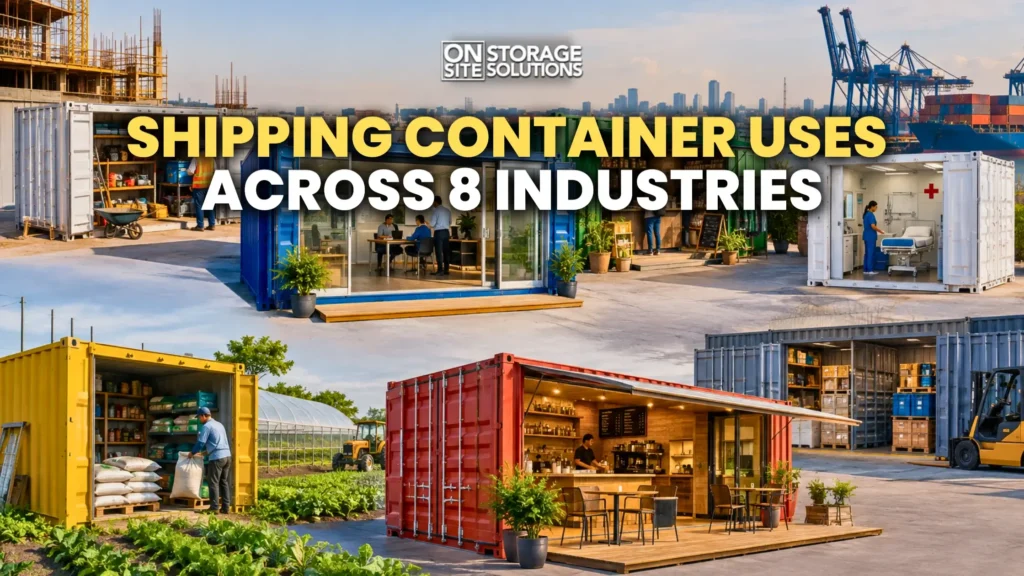

A steel shipping container can become far more than a place to move cargo. Shipping container uses include construction, manufacturing, education, retail, agriculture, healthcare, and public services.
They give organizations a practical way to add secure space without the cost and time of a major building project. Businesses value these units because they combine strength, mobility, and flexibility in one structure.
With the right modifications, a container can become a workspace, storage area, classroom, clinic, retail space, or specialized facility.
Key Takeaways
- Shipping containers provide durable, flexible space for many industries.
- Construction and manufacturing use them for tools, materials, and inventory.
- Schools and healthcare providers use modified containers for practical facilities.
- Retailers use them for inventory, pop-up shops, and commercial space.
- Farms use them for equipment, supplies, produce, and growing systems.
- Choose based on site access, condition, intended use, and local requirements.
Shipping Container Uses in Construction
Construction sites need secure, flexible space. Shipping container uses help protect tools, materials, and equipment while providing extra workspace.
Shipping Container Uses for On-Site Storage
- Tools and Equipment: Store power tools, safety gear, and construction equipment in one secure location.
- Building Materials: Keep supplies organized and protected from outdoor exposure.
- Job Site Security: Secure doors can help limit unauthorized access to valuable items.
Flexible Construction Site Offices
- Project Management: Create space for supervisors and project managers to handle daily tasks.
- Meetings: Use the container for team meetings and project discussions.
- Workstations: Add lighting, insulation, windows, flooring, and electrical service for a comfortable workspace.
For projects that require more power, installing electricity in a shipping container should be handled by a qualified professional and comply with applicable electrical requirements.
Workshops and Break Rooms
- Repair Areas: Support minor equipment repairs and preparation work.
- Worker Breaks: Provide a dedicated space for employees to rest.
- Extra Workspace: Add useful space without building a permanent structure.
Shipping Container Uses in Manufacturing
Manufacturing facilities often need extra space without disrupting production. Containers provide a practical way to store parts, supplies, tools, and materials close to the work area.
Their modular design also makes it easy to adapt as needs change.
Shipping Container Uses for Inventory Control
- Parts Storage: Keep spare parts, packaging, and maintenance supplies organized.
- Finished Goods: Store products securely without taking up valuable factory space.
- Easy Access: Shelving helps workers find inventory faster.
Production Support Areas
- Equipment Preparation: Create space for preparing tools and equipment.
- Assembly Support: Create space for assembly work and production preparation.
- Maintenance: Provide a dedicated area for basic maintenance work.
Specialized Industrial Storage
- Temperature-Sensitive Goods: Refrigerated containers can support products that need controlled temperatures.
- Equipment Storage: Protect industrial equipment and materials in a dedicated space.
- Custom Storage: Modify containers to meet specific operational needs.
Shipping Container Uses for Schools and Education
Schools and training organizations often need extra space. Containers can provide flexible classrooms, labs, and training areas with the right modifications for their intended use.
Temporary Classrooms
- Extra Classrooms: Add space when enrollment increases.
- Flexible Learning: Support classes while permanent facilities are planned.
- Quick Expansion: Use available campus space more efficiently.
Computer Labs and Training Rooms
- Computer Labs: Support computers and learning equipment.
- Training Rooms: Provide space for technical and practical instruction.
- Skills Development: Create dedicated areas for hands-on training.
Libraries and Innovation Spaces
- Reading Areas: Create compact spaces for books and quiet study.
- Project Rooms: Give students space for group work and activities.
- Innovation Centers: Support creative projects and hands-on learning.
Shipping Container Uses in Automotive Operations
Automotive businesses need secure space for tools, parts, and equipment. Shipping container uses in automotive operations include storage, maintenance support, and extra workspace for dealerships, repair shops, and collectors.
Parts and Tool Storage
- Parts Storage: Keep tires, tools, and replacement parts organized.
- Tool Storage: Store equipment in one secure location.
- Easy Access: Use shelving to find items faster.
Repair and Maintenance Areas
- Repair Work: Support selected maintenance and preparation tasks.
- Lighting: Improve visibility inside the workspace.
- Ventilation: Help create a safer working environment.
Dealership and Collector Solutions
- Overflow Storage: Store seasonal equipment and extra supplies.
- Detailing Supplies: Keep cleaning and detailing equipment organized.
- Collector Storage: Protect automotive accessories and tools.
Containers for Government and Emergency Services
Government agencies need secure, portable space for records, supplies, and emergency equipment. Containers offer flexible storage, while features like locks, ventilation, and climate control can protect sensitive materials.
Records and Equipment Storage
- Records: Store documents in a dedicated space.
- Equipment: Keep emergency and maintenance equipment organized.
- Security: Help protect stored items from unauthorized access.
Emergency Command Centers
- Communication: Support field communication during emergencies.
- Coordination: Provide space for response teams.
- Supply Hubs: Store essential resources close to affected areas.
Public Service Facilities
- Field Offices: Create temporary workspaces for agencies.
- Service Locations: Bring essential services closer to communities.
- Portable Operations: Relocate facilities as needs change.
Some operations may also require hazardous storage containers designed for specific materials and safety requirements.
Retail Spaces That Go Beyond the Storefront
Retailers need flexible space for seasonal demand, extra inventory, and special events. With the right design, containers can add practical commercial space with windows, lighting, signage, and custom finishes.
Inventory Overflow
- Seasonal Stock: Store extra merchandise and displays.
- Packaging Supplies: Keep boxes and packing materials organized.
- Extra Space: Free up valuable store space.
Pop-Up Retail Spaces
- Temporary Shops: Create flexible retail locations.
- Event Kiosks: Support fairs, markets, and special events.
- Seasonal Sales: Add space for limited-time promotions.
Commercial Storage
- Equipment: Store tools and business equipment securely.
- Supplies: Keep extra materials organized and accessible.
- Daily Operations: Keep essential items close to the business.
Shipping Container Uses in Agriculture
Farms need secure space for equipment, tools, supplies, and harvested products. Shipping container uses in agriculture go beyond storage, with modified units supporting seasonal needs and specialized growing systems.
Shipping Container Uses for Modern Farming
- Growing Systems: Support controlled growing environments.
- Seed Storage: Keep seeds organized and protected.
- Farm Operations: Create space for specialized agricultural needs.
Equipment and Supply Storage
- Farm Tools: Store tractors, tools, and equipment.
- Irrigation Supplies: Keep hoses, pumps, and related items organized.
- Feed and Supplies: Protect essential farm resources from exposure.
Produce and Seasonal Operations
- Produce Storage: Hold harvested products for short-term needs.
- Packing Areas: Support basic packing and preparation tasks.
- Seasonal Sales: Create space for temporary farm sales.
Expanding Healthcare With Container Facilities
Healthcare providers may need extra space when traditional construction is too slow or difficult. Shipping container uses in healthcare can support medical services while meeting key requirements for sanitation, ventilation, accessibility, and safety.
Mobile Clinics
- Treatment Areas: Provide space for basic medical services.
- Consultation Rooms: Support patient consultations and outreach.
- Community Care: Bring services closer to underserved areas.
Testing and Vaccination Centers
- Testing Areas: Provide dedicated space for screening.
- Vaccination Sites: Support organized vaccination services.
- Patient Flow: Help separate and manage patient traffic.
Medical Storage
- Medical Supplies: Keep suitable supplies organized and secure.
- Equipment: Store selected medical equipment in a dedicated space.
- Temperature Control: Use refrigeration for temperature-sensitive materials.
Why Businesses Choose Shipping Containers
The value of a container goes beyond its steel construction. Shipping container uses offer practical advantages for businesses that choose the right unit and plan the installation carefully.
Cost-Effective Space
Containers provide usable space without the cost and timeline of traditional construction. Renting, buying, or choosing rent-to-own can also fit different budgets.
Flexible and Portable
Containers can move as business needs change. Relocate them when operations expand or projects end.
Easy to Customize
Add doors, windows, insulation, shelving, lighting, and electrical systems to create a shipping container with electricity that suits specific operational needs.
Practical Long-Term Value
A well-maintained container can provide useful space for years. Businesses can also repurpose it as their needs evolve.
Find the Right Container for Your Business
The best container is not always the largest or cheapest option. Start by considering the space you need, the materials you plan to store, the location, delivery access, and local requirements.
If you are considering a shipping container purchase, compare the container’s condition, size, intended use, delivery access, and local requirements before making a decision.
On-Site Storage Solutions can help you explore container options for storage, business operations, construction projects, and other applications. Shipping container uses continue to grow because these units give businesses a flexible way to solve real space challenges without unnecessary complexity.
Call us at (888) 977 9085 to discuss your needs and find a container solution that fits your operation.
FREQUENTLY ASKED QUESTIONS
Shipping containers are versatile units used for transporting goods, secure storage, mobile offices, pop-up shops, classrooms, medical units, and more. Their durability, portability, and adaptability make them suitable for multiple industries beyond traditional shipping.
A general purpose shipping container is a standard steel container designed for dry cargo. It is commonly used to transport or store nonperishable goods and can be repurposed for offices, workshops, storage, or even classrooms with minimal modifications.
Shipping containers are used by construction companies, manufacturers, retailers, governments, educational institutions, healthcare providers, and private individuals. Their adaptability allows them to serve industries needing secure storage, mobile workspaces, or temporary facilities.
Advantages include durability, portability, cost-effectiveness, and adaptability for multiple uses. Disadvantages may include limited insulation, the need for modifications for specific uses, and occasional challenges with space optimization and local zoning regulations.
A shipping container can remain useful for many years when properly maintained. Its lifespan depends on factors such as its condition, climate, corrosion, maintenance, and intended use.


