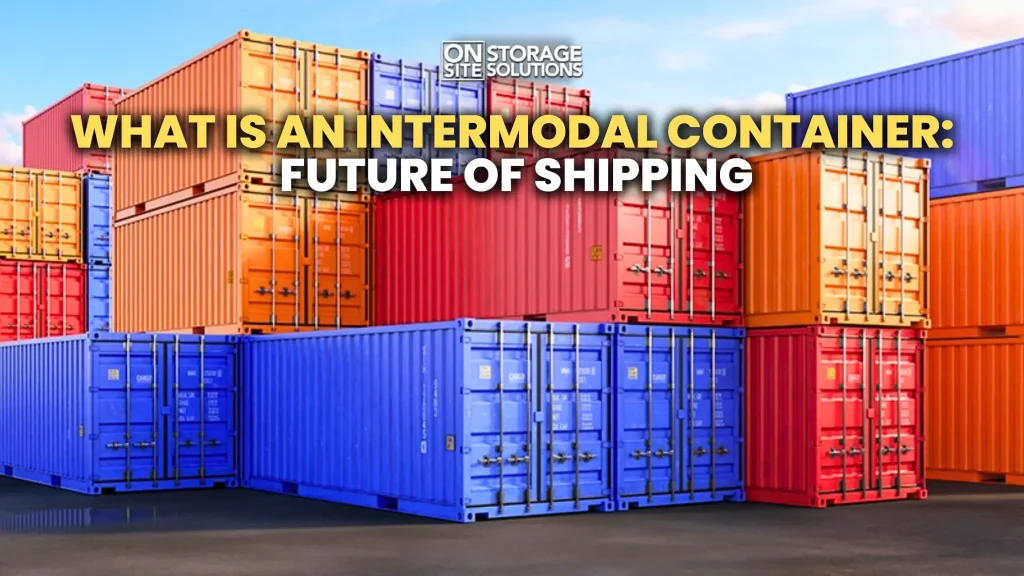

Global trade is moving faster, smarter, and with far less margin for inefficiency. At the center of this transformation is a simple but powerful innovation that reshaped logistics from the ground up. Understanding what is an intermodal container explains why modern shipping works the way it does and why the system continues to scale worldwide.
Intermodal containers allow goods to flow smoothly across oceans, highways, and rail networks without interruption. They reduce friction, cut costs, and create reliability in a world that depends on precision.
As supply chains grow more complex, these containers are no longer just tools of transport. They are the foundation of global commerce.
What Is an Intermodal Container and Why It Changed Shipping
What Is an Intermodal Container Defined by Global Standards
To understand what is an intermodal container, it helps to start with standardization. An intermodal container is a large, reusable steel container designed to move cargo seamlessly across ships, trucks, and trains without unloading its contents.
These containers follow specifications set by the International Organization for Standardization. This global framework ensures every container fits perfectly onto transport equipment anywhere in the world. That consistency is what allows shipping to operate at massive scale.
Because the cargo stays sealed from origin to destination, handling time drops dramatically. Fewer touchpoints mean fewer delays, fewer damages, and lower labor costs.
Engineered for Heavy Loads
Intermodal containers are engineered for durability. Thick steel walls, reinforced corner castings, and weather resistant coatings allow them to endure rough seas and extreme climates.
This rugged design makes them ideal as storage shipping containers as well. Many businesses use them beyond transportation for onsite storage, pop up facilities, or mobile workspaces.
The real breakthrough is not just strength. It is predictability. Logistics planners know exactly how these containers behave across every transport mode.
Intermodal Container Dimensions and Global Compatibility
What Is an Intermodal Container Size Standard
When people ask what is an intermodal container, size is often part of the answer. The most common units are 20 foot and 40 foot containers, measured in TEUs or Twenty foot Equivalent Units.
Standard intermodal container dimensions for a 20 foot unit are roughly 20 feet long, 8 feet wide, and 8 feet 6 inches tall. A 40 foot container doubles the length while keeping the same width and height.
High cube containers add extra vertical space, standing 9 feet 6 inches tall. This added capacity supports lighter, high volume cargo without increasing footprint.
How Dimensions Support Intermodal Shipping Container Efficiency
Uniform sizing allows containers to stack securely on container ships, railcars, and chassis. This predictability answers a common logistics question about how many shipping containers can fit on a container ship.
Modern vessels carry thousands of TEUs because containers align perfectly, maximizing space and balance. Every inch is planned. Nothing is wasted.
This efficiency translates directly into lower shipping costs and faster global trade cycles.
Different Types of Intermodal Transportation Made Simple
The Role of Intermodal Containers Across Multiple Transport Modes
Understanding what is an intermodal container also means understanding how it moves. Intermodal transportation integrates sea freight, rail transport, and road delivery into one continuous system.
Cargo leaves the factory inside a sealed container. That same container travels by truck to a rail terminal, by train to a port, and by ship across oceans. At no point is the cargo handled directly.
This process reduces congestion at ports and speeds up inland distribution. It also lowers emissions by shifting long distance transport from trucks to rail and sea.
How Different Types of Intermodal Transportation Reduce Risk
Using different types of intermodal transportation spreads risk. Delays in one mode do not halt the entire journey.
Containers can be rerouted quickly without unpacking cargo. That flexibility is critical in today’s unpredictable global environment.
For shippers, this means resilience. For customers, it means reliability.
What Is an Intermodal Container Explained Through Its Different Types
What Intermodal Containers Can Carry
Not all cargo is the same, and intermodal containers reflect that reality. Dry freight containers handle most manufactured goods, from electronics to textiles.
Refrigerated containers or reefers protect perishable items like food and pharmaceuticals. Temperature control keeps products safe from origin to destination.
Tank containers move liquids and chemicals securely. Flat racks and open top containers handle oversized machinery and construction materials.
How Specialized Containers Expand Logistics Options
Each container type is engineered to meet specific cargo requirements, helping minimize damage and reduce waste during transit.
Many intermodal container designs can also be modified with features like insulation, ventilation, custom fittings, and shipping container ramps, making loading and unloading safer and more efficient.
This built-in versatility allows containers to adapt to niche industries and keeps supply chains agile, flexible, and responsive to changing demands.
Why Businesses Rely on Intermodal Containers
Cost Efficiency and Financial Benefits
One of the strongest arguments for intermodal containers is cost efficiency. Single load systems reduce labor, handling equipment, and insurance claims.
Containers move faster through terminals. Faster movement lowers storage fees and improves inventory turnover. For growing businesses, these savings compound quickly.
Operational Reliability and Safety Benefits
Intermodal containers meet strict safety standards. Their sealed design protects against theft, contamination, and environmental damage.
Modern tracking technology adds transparency. Businesses monitor container location and condition in real time, increasing trust across the supply chain.
Reliability is not a bonus. It is the baseline expectation.
What Is an Intermodal Container and the Future of Sustainable Shipping
What Is an Intermodal Container Contribution to Sustainability
Shipping faces growing pressure to reduce environmental impact. Intermodal systems support that goal by shifting freight to more efficient transport modes. Rail and sea produce fewer emissions per ton than long haul trucking.
Containers make this shift seamless. Reusable containers also reduce packaging waste, supporting circular economy principles.
How Intermodal Containers Shape Future Logistics
As automation and data analytics evolve, containers will become even smarter. Sensors, predictive maintenance, and AI routing will further streamline movement.
The core concept remains unchanged. Standardized containers enable innovation without disruption. That stability is why they continue to dominate global logistics.
Onsite Storage and Extended Use Cases
Beyond transport, intermodal containers serve as secure onsite storage solutions. Construction sites, retail operations, and disaster response teams rely on them for fast deployment.
Their durability and mobility make them ideal for temporary and permanent applications. Businesses gain flexibility without long term infrastructure costs.
This extended utility increases return on investment well beyond shipping.
Conclusion
As intermodal containers continue to shape the future of shipping and onsite storage, working with the right provider makes all the difference. On-Site Storage Solutions offers durable storage and intermodal shipping containers built to meet industry standards and real-world demands.
Businesses needing secure onsite storage or containers ready for transport can rely on their dependable inventory to support efficient logistics from start to finish. To find the right container for your needs, call (888) 977-9085 and speak with a knowledgeable specialist today.
FREQUENTLY ASKED QUESTIONS
An intermodal container is a large, reusable steel container designed to transport goods across ships, trucks, and trains without unloading its contents.
Another name for an intermodal container is an ISO container or shipping container, which meets standards set by the International Organization for Standardization.
An example of intermodal is when a container leaves a factory on a truck, is then loaded onto a train, and finally shipped across the ocean on a cargo ship without opening the container.
The main purpose of intermodal transport is to move cargo efficiently and safely across multiple transport modes while reducing handling, costs, and delays
The two main types of intermodal transportation are rail transport and sea freight, often combined with road delivery for the final leg.


