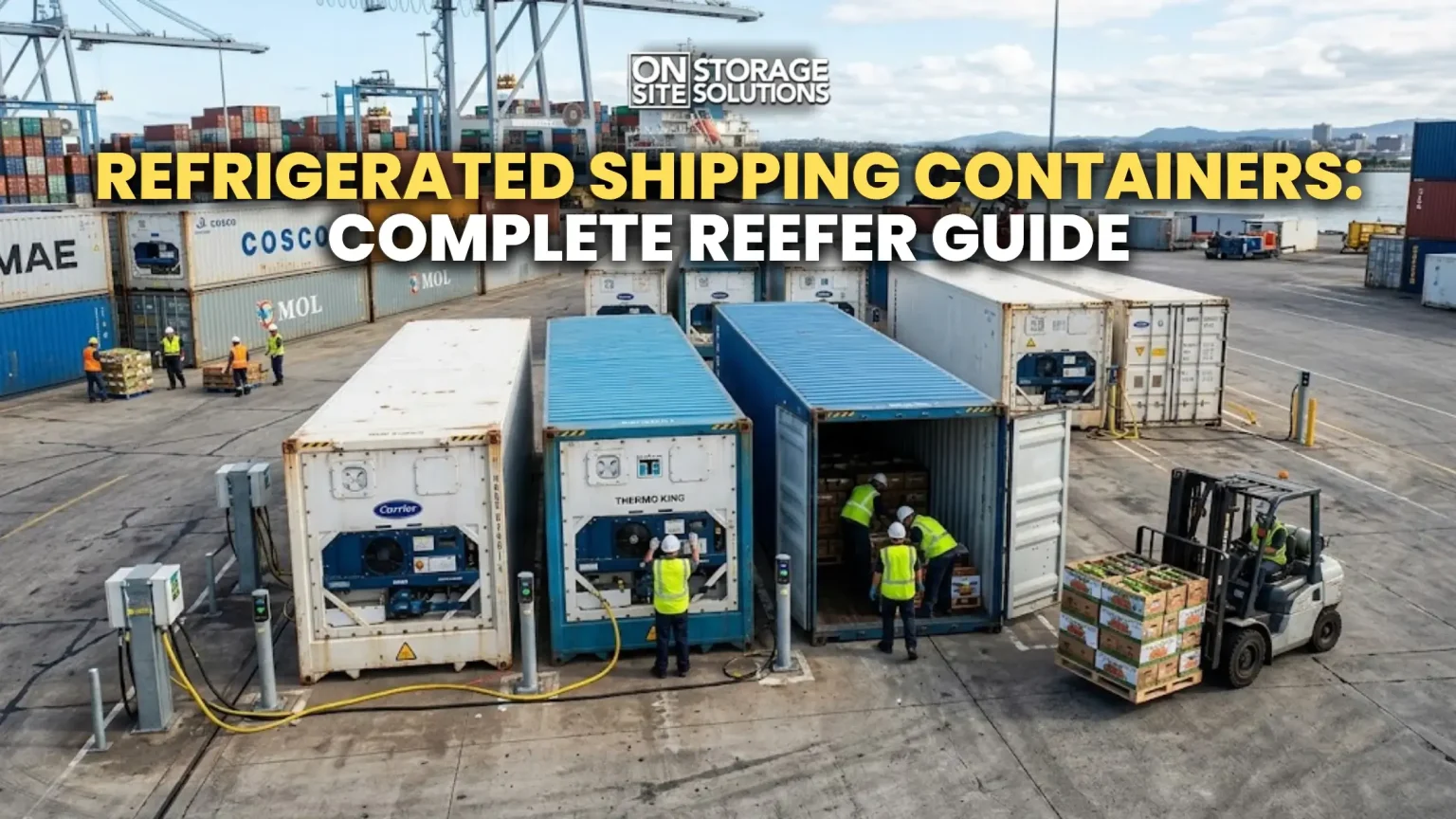

Refrigerated shipping containers give businesses a practical way to protect products that need controlled temperatures during transportation or storage. Instead of investing immediately in a permanent cold room, businesses can create flexible temperature controlled space that can be used where it is needed.
From fresh produce and frozen foods to flowers, pharmaceuticals, and laboratory materials, temperature sensitive products depend on reliable cold storage. A reefer provides that capability in a portable format, making it useful for businesses dealing with changing inventory, seasonal demand, or temporary storage requirements.
Key Takeaways
- Refrigerated shipping containers provide controlled-temperature storage for products that need chilled or frozen conditions.
- Reefers come in different types and sizes, with 20-foot, 40-foot, and 40-foot High Cube models being common options.
- Choosing the right reefer depends on your cargo, storage needs, available space, power supply, and how long you need it.
- Proper loading, airflow, and regular maintenance help keep temperatures stable and protect stored products.
- Businesses can buy or rent a reefer depending on their storage needs, budget, and expected length of use.
Refrigerated Shipping Containers: What Is a Reefer Container?
A reefer container is a specialized shipping container with a built-in refrigeration system that keeps temperature-sensitive products at a controlled temperature during transportation or storage. Refrigerated shipping containers are insulated to reduce heat transfer and can maintain consistent conditions even in changing outdoor environments.
They can be used at warehouses, farms, restaurants, distribution centers, and other locations as a flexible cold-storage solution without requiring permanent construction.
How Refrigerated Shipping Containers Work
How does Reefer Container work? The process is similar to how a large commercial refrigerator maintains a consistent temperature:
- Refrigeration cycle: A compressor moves refrigerant through the system, while the condenser releases heat and the evaporator absorbs heat from inside the container.
- Air circulation: Fans circulate conditioned air throughout the cargo area. Special flooring allows air to flow beneath the stored products, helping maintain more even temperatures.
- Temperature monitoring: Modern reefer systems use digital controls, temperature sensors, alarms, and recording equipment to monitor conditions and alert operators when temperatures move outside the desired range.
Exploring the Main Types of Refrigerated Shipping Containers
- Integral Containers
Integral Containers have built-in refrigeration equipment that operates using an appropriate electrical power source. They are a convenient option for transportation and on-site cold storage because the refrigeration system is part of the container itself. - Porthole Containers
Porthole containers use openings in the rear wall to receive conditioned air from an external refrigeration source. They were common in earlier refrigerated transport systems, while integral designs are now more widely used for modern applications.
How Big Is a Refrigerated Shipping Container?
Refrigerated shipping containers commonly come in 20-foot, 40-foot, and 40-foot High Cube sizes. The right option depends on your available space, storage volume, and loading requirements.
Feature | 20 Foot Reefer | 40 Foot Reefer | 40 Foot High Cube Reefer |
Approximate exterior length | 20 ft | 40 ft | 40 ft |
Approximate exterior width | 8 ft | 8 ft | 8 ft |
Approximate exterior height | 8 ft 6 in | 8 ft 6 in | 9 ft 6 in |
Approximate floor area | 134 sq. ft. | 284 sq. ft. | 284 sq. ft. |
Approximate volume | 1,007 cu. ft. | 2,132 cu. ft. | 2,368 cu. ft. |
Approximate Euro pallet capacity | 11 | 25 | 25 |
Approximate standard pallet capacity | 9 to 10 | 21 | 21 |
Figures are approximate and can vary by manufacturer and refrigeration equipment. Always confirm the specifications of the individual unit.
What Are the Dimensions of Refrigerated Shipping Containers?
Dimensions affect not only storage capacity but also delivery access, loading, and the space required around the container. The table below provides 40-foot refrigerated container specifications alongside the other common sizes.
Specification | 20 Foot | 40 Foot | 40 Foot High Cube |
External dimensions | 20 ft L × 8 ft W × 8 ft 6 in H | 40 ft L × 8 ft W × 8 ft 6 in H | 40 ft L × 8 ft W × 9 ft 6 in H |
Approximate internal length | 17 ft 11 in | 37 ft 11 in | 37 ft |
Approximate internal width | 7 ft 8 in | 7 ft 8 in | 7 ft 6 in |
Approximate internal height | 7 ft 6 in | 7 ft 6 in | 8 ft 4 in |
Approximate floor area | 134 sq. ft. | 284 sq. ft. | 284 sq. ft. |
Approximate volume | 1,007 cu. ft. | 2,132 cu. ft. | 2,368 cu. ft. |
The High Cube option provides additional vertical clearance, which can be useful for certain storage and loading arrangements.
What Are Refrigerated Shipping Containers Used For?
Refrigerated shipping containers are used anywhere products need a controlled environment instead of ordinary ambient storage.
A. Food and Agriculture
Fresh produce, meat, seafood, dairy products, frozen foods, beverages, and flowers are common applications. Farmers and food distributors can also use reefers to hold products after harvest while they prepare inventory for transportation or sale.
B. Restaurants and Retail
Restaurants, supermarkets, caterers, and retailers can use a reefer as overflow capacity during busy seasons. A unit can also provide temporary storage during renovations or when existing refrigeration equipment is being serviced.
C. Healthcare and Laboratories
Some medicines, medical supplies, biological materials, and laboratory products require controlled temperatures. A reefer can provide additional capacity for facilities that need temporary or flexible cold storage.
D. Events and Emergency Storage
Large events can require significant amounts of refrigerated inventory. Reefers can also provide temporary cold storage during emergencies, equipment failures, or unexpected increases in demand.
Finding the Best Refrigerated Shipping Container for Your Needs
Choosing the right unit starts with the products, not the container size.
Consider these five factors:
- Cargo requirements: Identify the temperature range and handling requirements of the products.
- Storage volume: Estimate current inventory and allow room for future growth.
- Pallet configuration: Consider pallet dimensions, stacking, and loading equipment.
- Available property: Measure the space required for the container and delivery equipment.
- Duration of use: Decide how long the cold storage will be needed.
The 40 foot refrigerated container specifications should include more than length and width. Review internal dimensions, refrigeration equipment, electrical requirements, door openings, flooring, insulation, and the condition of the unit before making a decision.
Refrigerated Shipping Container Site and Power Requirements
Before installing a reefer container, ensure the site has stable, level ground, adequate delivery clearance, and enough space for loading, doors, and maintenance. Proper ventilation and drainage should also be considered when choosing the placement area.
Electrical requirements should be confirmed before delivery. Most commercial reefers require a reliable three-phase power supply, but exact requirements vary by refrigeration equipment, so verify the reefer specification in advance.
Buying vs. Renting Refrigerated Shipping Containers
When considering refrigerated shipping containers, the choice between buying and renting usually depends on how long you need the unit and how frequently it will be used.
- Buying a Reefer Container
Buying can be a practical choice for businesses with consistent, long-term refrigeration needs. It provides a dedicated cold-storage asset that can support operations for years. - Renting a Reefer Container
Renting offers more flexibility for seasonal demand, renovations, events, emergencies, or short-term inventory increases. It can also avoid the upfront cost of purchasing a unit.
When comparing options, consider the total cost, including delivery, electricity, maintenance, repairs, expected usage, and the length of time you need the container.
How to Load and Maintain Refrigerated Shipping Containers
Proper loading and regular maintenance help a reefer container maintain stable temperatures and protect both the cargo and refrigeration equipment.
- Allow proper airflow: Arrange products so air can circulate freely and avoid blocking vents or airflow channels.
- Pre-cool cargo: Pre-cool products before loading when required, and keep the doors closed as much as practical to help maintain the desired temperature.
- Avoid overloading: Do not fill the container beyond its usable capacity, as overcrowding can restrict airflow and affect temperature consistency.
- Perform routine maintenance: Regularly clean the container and inspect door seals, drainage, flooring, and temperature readings. Professional refrigeration servicing should be performed when needed.
- Respond to alarms: Investigate repeated alarms or unexpected temperature changes promptly to prevent equipment problems and potential cargo loss.
Final Thoughts
Need reliable temperature-controlled storage without the cost of permanent construction? On-Site Storage Solutions offers refrigerated shipping containers for purchase or rental, giving businesses a flexible solution for food, agriculture, retail, healthcare, and other temperature-sensitive storage needs. Find the right reefer for your operation by calling (888) 977-9085 today.
FREQUENTLY ASKED QUESTIONS
A reefer container is used to store or transport products that require controlled temperatures, including food, produce, flowers, pharmaceuticals, and other temperature-sensitive goods.
Common sizes include 20-foot, 40-foot, and 40-foot High Cube models. The right size depends on storage volume, pallet configuration, and available space.
A built-in refrigeration system removes heat from inside the container, while insulated walls and controlled airflow help maintain the desired temperature.
Power requirements vary by refrigeration unit. Many commercial models require three-phase electrical power, so the unit’s specifications should be confirmed before delivery.
Yes. Renting can be a practical option for seasonal storage, renovations, events, emergencies, or other short-term needs.


