
Buy shipping containers for as low as $1,350.00! CALL US TODAY! (888) 977-9085

Rent shipping containers for as low as $95.00 a month. CALL US TODAY! (888) 977-9085
Rent-To-Own Shipping containers for as low as $79.99 a month. CALL US TODAY! (888) 977-9085
  • Buy
    • Buy Shipping Containers
    • Buy Refrigerated Shipping Containers
    • Modifications
    • Shipping Container Accessories
  • Rent
    • Shipping Container Rental
    • Rent Refrigerated Shipping Containers
  • Rent-To-Own
  • Locations
  • Resources
    • FAQ
    • Container Types
    • Container Conditions
    • Container Grades
    • Delivery Guide
    • Containers We Delivered
    • Tax Exemption
    • Blogs
  • Onsite Special
  • Why Onsite Storage
  • Buy
    • Buy Shipping Containers
    • Buy Refrigerated Shipping Containers
    • Modifications
    • Shipping Container Accessories
  • Rent
    • Shipping Container Rental
    • Rent Refrigerated Shipping Containers
  • Rent-To-Own
  • Locations
  • Resources
    • FAQ
    • Container Types
    • Container Conditions
    • Container Grades
    • Delivery Guide
    • Containers We Delivered
    • Tax Exemption
    • Blogs
  • Onsite Special
  • Why Onsite Storage
Onsite Storage Solutions Logo
$0.00 0 Cart
(888) 977-9085
(888) 977-9085
Onsite Storage Solutions Logo
$0.00 0 Cart

My Account

  • Buy
    • Buy Shipping Containers
    • Buy Refrigerated Shipping Containers
    • Modifications
    • Shipping Container Accessories
  • Rent
    • Shipping Container Rental
    • Rent Refrigerated Shipping Containers
  • Rent-To-Own
  • Locations
  • Resources
    • FAQ
    • Container Types
    • Container Conditions
    • Container Grades
    • Delivery Guide
    • Containers We Delivered
    • Tax Exemption
    • Blogs
  • Onsite Special
  • Why Onsite Storage
  • Buy
    • Buy Shipping Containers
    • Buy Refrigerated Shipping Containers
    • Modifications
    • Shipping Container Accessories
  • Rent
    • Shipping Container Rental
    • Rent Refrigerated Shipping Containers
  • Rent-To-Own
  • Locations
  • Resources
    • FAQ
    • Container Types
    • Container Conditions
    • Container Grades
    • Delivery Guide
    • Containers We Delivered
    • Tax Exemption
    • Blogs
  • Onsite Special
  • Why Onsite Storage

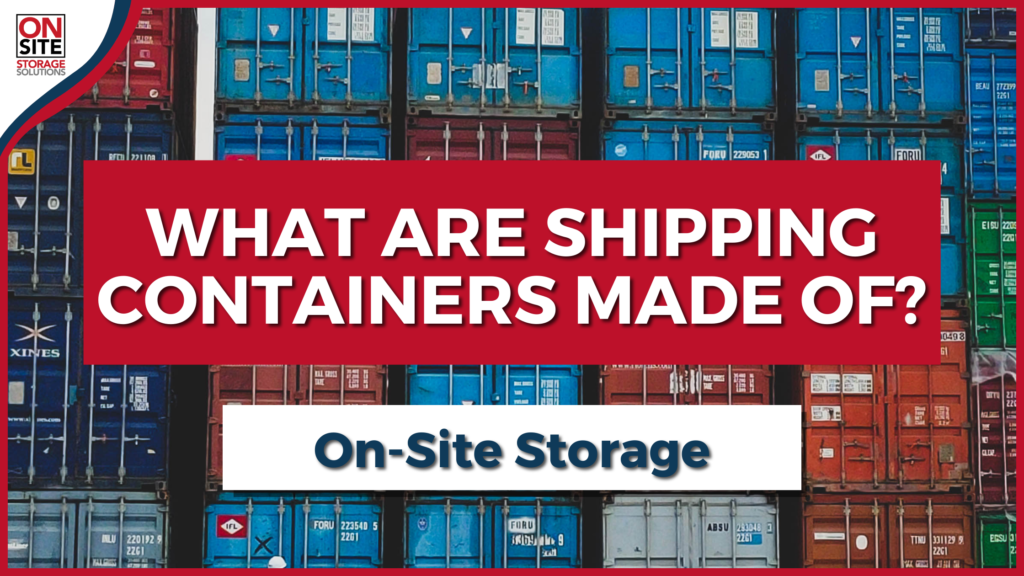
What Are Shipping Containers Made of?

what are shipping containers made of

Shipping containers are everywhere, crossing oceans, stacked at ports, and transformed into homes, offices, and pop-up shops. Yet one question continues to surface among logistics professionals, builders, and curious buyers alike: what are shipping containers made of?

At first glance, they appear to be nothing more than large steel boxes. In reality, their composition, texture, dimensions, and manufacturing origins are the result of decades of engineering refinement. Understanding what shipping containers are made of helps explain why they can survive saltwater voyages, extreme weather conditions, and heavy stacking loads for decades.

In this article, we explore the materials used in shipping containers, how their size and height affect construction, where they are manufactured, and what makes their steel surface so distinctive.

Listen to Blog Podcast:

Onsite Storage Solutions · What Are Shipping Containers Made of?

What Material is Used for Shipping Containers?

When asking what shipping containers are made of, the short answer is steel, but not just any steel.

Primary Material: Weathering Steel (Corten Steel)

Most modern shipping containers are constructed using weathering steel, commonly referred to as Corten steel.

find shipping containers for sale

What is a corrugated sheet?

This alloy is specifically designed to resist corrosion by forming a protective outer layer of oxidation when exposed to moisture and air.

Unlike ordinary steel, which continues to rust and weaken, weathering steel stabilizes over time. The rust-like patina becomes a shield, preventing deeper corrosion and structural decay.

Different Textures of Shipping Containers-Corrugated Steel texture

Key properties of container grade steel include:

  • High tensile strength
  • Resistance to saltwater exposure
  • Ability to withstand temperature fluctuations
  • Long service life with minimal maintenance


This material choice answers the core question of what shipping containers are made of in a practical sense. They are engineered to survive the harshest
global transport environments.

Is Corrugated Steel Rust proof?

The shipping container steel texture is one of its most recognizable features.

The textured surface results from corrugated steel rolling processes, protective primer coatings, and industrial paint layers designed for UV and salt resistance.

Texture is not polished smooth because rougher surfaces hold protective coatings better, minor scratches do not compromise structural integrity, and maintenance and repainting are easier.

For architects and designers, has become an aesthetic feature, often left exposed in container-based structures.

Reinforced frame and wall upgrades that strengthen a shipping container’s structure and boost hurricane-proof performance.

Shiping Container Structural Components and Their Materials

Beyond the walls, a container consists of several key structural elements.

Shipping Container Corner Castings

  • Made from high grade forged steel
  • Allow cranes to lift containers safely
  • Enable standardized stacking and locking

Shipping Container Roof Panels

  • Thin but strong steel sheets
  • Designed to handle environmental exposure rather than heavy loads

Shipping Container Doors

  • Steel frames with locking bars
  • Rubber gaskets for watertight sealing


Each component supports the container’s integrity while maintaining international transport standards.

Shipping Container for Rent

Shipping Container Flooring

While steel dominates the exterior, the flooring tells a different story.

Inside most containers, the flooring is made from heavy-duty marine plywood or bamboo laminates, reinforced by steel cross supports.

These floors are treated to resist:

  • Moisture 
  • Fungal growth 
  • Heavy point loads from cargo


Newer environmental regulations are transforming treatment practices; flooring remains a critical component in explaining shipping container construction beyond the metal shell.

Priming and Painting

Shipping Container Protective Coatings and Paint Layers

Beyond steel, containers are coated with zinc-rich primers, epoxy intermediate layers, and marine-grade topcoats.

These layers protect the steel underneath and extend container life well beyond 15 years in active service.

How Tall Are Shipping Containers?

One of the most frequently asked dimensional questions is how tall are shipping containers.

Shipping Container Standard Heights

Standard container: 8 feet 6 inches (2.59 m)
High cube container: 9 feet 6 inches (2.89 m)

High Cube Shipping Container

High cube containers are especially popular for:

  • Lightweight but voluminous cargo
  • Container homes and offices
  • Modular construction projects


Height directly influences wall reinforcement, steel thickness, and overall material stress, making it an essential factor when discussing container composition.

What is the Size of a Typical Shipping Container?

Understanding the typical size of shipping container helps clarify why material choices are so critical.

Common ISO Container Sizes

20 foot Shipping Container:
Length: 20 ft
Width: 8 ft
Height: 8 ft 6 in

40 foot Shipping Container:
Length: 40 ft
Width: 8 ft
Height: 8 ft 6 in or 9 ft 6 in (high cube)

The longer the container, the greater the structural stress on the steel frame. This is why larger containers often feature reinforced cross members and thicker corner posts.

Aesthetic Ways to Paint Your Shipping Container Metallic Paint

How Size Influences Material Thickness

Smaller containers can rely on slightly lighter steel panels, while longer units require enhanced rigidity to prevent twisting during lifting and transport. 

Engineers must balance:

  • Weight limits
  • Payload capacity
  •  Structural longevity


Balance is a core reason shipping containers have remained standardized for decades.

shipping containers for sale newark

Where Are Shipping Containers Manufactured?

Another important question is where are shipping containers manufactured.

Global Manufacturing Hubs

Over 85 percent of new shipping containers are produced in China, with major manufacturing clusters located in:

  • Guangdong Province
  • Jiangsu Province
  • Shanghai industrial zones


Other countries with container production include:

  • South Korea
  • Vietnam
  • India


China dominates production due to access to raw steel, established port infrastructure, and cost-efficient manufacturing processes.

Despite global production, all containers must meet ISO 668 standards, ensuring material consistency regardless of origin.

Shipping Container Manufacturer

Quality Control in Container Manufacturing

Factories follow strict protocols, including ultrasonic testing of steel, load-bearing simulations, and weather resistance checks.

Processes ensure that containers remain structurally sound throughout their lifespan, no matter where they are manufactured.

Environmental Considerations and Material Evolution

Modern container manufacturing is shifting toward sustainability. Bamboo flooring, low VOC paints, and reduced chemical treatments are becoming more common.

Reused containers also play a major role in reducing steel demand, lowering construction waste, and promoting modular architecture.

Shipping container material’s durability makes repurposing a viable alternative to scrapping.

Shipping Container Materials

Why Material Choice Defines Shipping Container Longevity

Shipping containers are not disposable structures. Their steel composition, engineered structure, and standardized dimensions enable them to cross oceans repeatedly, stack safely under extreme loads, and adapt to new uses beyond shipping. 

A clear understanding of their materials and construction helps buyers, builders, and logistics professionals make informed decisions for transport and design applications.

Conclusion

Conclusion

Shipping containers stand as one of the most effective examples of modern industrial design. Their materials are selected not only for appearance but also for strength, longevity, and adaptability. From weathering steel exteriors to engineered flooring and globally standardized manufacturing, every element plays a role in making containers reliable across countless applications.

On-Site Storage Solutions

If you are considering a storage solution, understanding what shipping containers are made of makes choosing the right unit far more straightforward. On-Site Storage Solutions provides durable storage containers built to handle demanding environments, heavy use, and long-term storage needs. 

If your project requires on-site storage for construction, commercial operations, or temporary space, our team is ready to help you find the right fit. Call (888) 977 9085 to speak with an expert and get dependable storage delivered to your location.

Buy Used Shipping Containers

FREQUENTLY ASKED QUESTIONS

What gauge steel is a shipping container?

Shipping container walls are usually constructed with 14-gauge steel, measuring around 0.075 inches thick. The frame, pillars, and rails of the container, on the other hand, are made of 7-gauge tubular steel, which is thicker at 0.187 inches.

What are cargo containers made of?

Cargo containers are primarily made corten steel. The walls, roof, and floor of these containers are constructed using corrugated steel panels that provide strength and durability. The steel used is typically weather-resistant and able to withstand harsh conditions during transportation. The interior may also feature plywood or other materials for insulation and protection of the cargo.

What is the thickness of a shipping container wall?

The thickness of a shipping container wall is typically 0.075 inches. The walls are made of corrugated steel sheets that provide structural strength and durability to withstand the stresses of transportation and stacking.

What is the floor of a shipping container made of?

The floor of a shipping container is commonly a 1-1/8 inch thick marine plywood. This particular type of plywood is specially designed to withstand the harsh conditions of marine environments, ensuring durability and strength. However, it is worth noting that certain containers may feature alternative flooring materials like bamboo, vinyl, or even steel.

PrevPreviousThe History Of Shipping Containers
NextCONEX Boxes – An OverviewNext
  • January 9, 2023
  • By Gregg Schoenborn
  • Blog, How to...
How to Choose the Best Storage Containers in Newark, NJ

How to Choose the Best Storage Containers in Newark, NJ

January 23, 2026
Certified Shipping Container Tornado Shelter Guide

Certified Shipping Container Tornado Shelter Guide

November 17, 2025
How to Anchor a Shipping Container to the Ground for Storms

How to Anchor a Shipping Container to the Ground for Storms

November 14, 2025
Search

Related Blog Post

How to Choose the Best Storage Containers in Newark, NJ
Blog

How to Choose the Best Storage Containers in Newark, NJ

Finding extra space in a busy city like Newark isn’t always easy. When you’re a business owner, contractor, or property manager, storage needs can grow

Read More »
January 23, 2026 No Comments
Certified Shipping Container Tornado Shelter Guide
Blog

Certified Shipping Container Tornado Shelter Guide

When tornado season hits, having a safe and secure place to take cover can make all the difference. While traditional underground storm shelters are effective,

Read More »
November 17, 2025 No Comments
How to Anchor a Shipping Container to the Ground for Storms
Blog

How to Anchor a Shipping Container to the Ground for Storms

When extreme weather hits, even the toughest shipping containers can be at risk if they’re not properly secured. If you’re using a shipping container for

Read More »
November 14, 2025 No Comments
Locks & Fittings for Shipping Container Storm Shelters
Blog

Locks & Fittings for Shipping Container Storm Shelters

When it comes to keeping shipping containers safe during hurricanes and tornadoes, anchoring is only the first step. Knowing how to anchor a shipping container

Read More »
November 12, 2025 No Comments
Storage container placed at a Wildomar home
Blog

Extra Storage in Wildomar, CA: Top Practical Uses

When space starts to run out at home or at work, having extra storage in Wildomar, CA can make a big difference. You’re renovating, moving,

Read More »
November 4, 2025 No Comments
Cargo Containers for Sale: A Complete Buyer’s Guide
Blog

Cargo Containers for Sale: A Complete Buyer’s Guide

Find the best cargo containers for sale with this complete 2025 guide. Compare new vs. used units, check pricing, and get expert tips on delivery and inspection. From 20-foot to high-cube containers, learn how to choose the right container for storage, transport, or projects. Trust On-Site Storage Solutions for fast, reliable delivery.

Read More »
October 16, 2025 No Comments
what are shipping containers made of

SUBSCRIBE TO OUR NEWSLETTER TO RECEIVE THE LATEST NEWS AND EXCLUSIVE OFFERS

Captcha validation failed. If you are not a robot then please try again.
Onsite storage solution logo footer

Navigation

  • Blog
  • Locations
  • Type of Containers
  • Conditions
  • Why Onsite Storage
  • Get a Quote
  • Blog
  • Locations
  • Type of Containers
  • Conditions
  • Why Onsite Storage
  • Get a Quote

Resources

  • Sizes
  • Gallery
  • FAQ
  • Reviews
  • Privacy Policy
  • Terms and Conditions
  • Refunds and Returns
  • Shipping Policy
  • Sizes
  • Gallery
  • FAQ
  • Reviews
  • Privacy Policy
  • Terms and Conditions
  • Refunds and Returns
  • Shipping Policy

Contact Us

  • 888-977-9085
  • info@OnSiteStorage.com
  • PO Box 1051 Wildomar, CA 92595

Follow Us

Facebook Page Instagram Page Youtube Channel Linkedin  Page Pinterest Page Google Business Page

Ⓒ 2025 On-site Storage Solutions | All Rights Reserved

secured-payments

(888) 977-9085
Call before you buy. Best prices by phone!

Let's get you the best price.

We use your location to show accurate pricing and availability in your area.