
Buy shipping containers for as low as $1,350.00! CALL US TODAY! (888) 977-9085

Rent shipping containers for as low as $95.00 a month. CALL US TODAY! (888) 977-9085
Rent-To-Own Shipping containers for as low as $79.99 a month. CALL US TODAY! (888) 977-9085
  • Buy
    • Buy Shipping Containers
    • Buy Refrigerated Shipping Containers
    • Modifications
    • Shipping Container Accessories
  • Rent
    • Shipping Container Rental
    • Rent Refrigerated Shipping Containers
  • Rent-To-Own
  • Locations
  • Resources
    • FAQ
    • Container Types
    • Container Conditions
    • Container Grades
    • Delivery Guide
    • Containers We Delivered
    • Tax Exemption
    • Blogs
  • Onsite Special
  • Why Onsite Storage
  • Buy
    • Buy Shipping Containers
    • Buy Refrigerated Shipping Containers
    • Modifications
    • Shipping Container Accessories
  • Rent
    • Shipping Container Rental
    • Rent Refrigerated Shipping Containers
  • Rent-To-Own
  • Locations
  • Resources
    • FAQ
    • Container Types
    • Container Conditions
    • Container Grades
    • Delivery Guide
    • Containers We Delivered
    • Tax Exemption
    • Blogs
  • Onsite Special
  • Why Onsite Storage
Onsite Storage Solutions Logo
$0.00 0 Cart
(888) 977-9085
(888) 977-9085
Onsite Storage Solutions Logo
$0.00 0 Cart

My Account

  • Buy
    • Buy Shipping Containers
    • Buy Refrigerated Shipping Containers
    • Modifications
    • Shipping Container Accessories
  • Rent
    • Shipping Container Rental
    • Rent Refrigerated Shipping Containers
  • Rent-To-Own
  • Locations
  • Resources
    • FAQ
    • Container Types
    • Container Conditions
    • Container Grades
    • Delivery Guide
    • Containers We Delivered
    • Tax Exemption
    • Blogs
  • Onsite Special
  • Why Onsite Storage
  • Buy
    • Buy Shipping Containers
    • Buy Refrigerated Shipping Containers
    • Modifications
    • Shipping Container Accessories
  • Rent
    • Shipping Container Rental
    • Rent Refrigerated Shipping Containers
  • Rent-To-Own
  • Locations
  • Resources
    • FAQ
    • Container Types
    • Container Conditions
    • Container Grades
    • Delivery Guide
    • Containers We Delivered
    • Tax Exemption
    • Blogs
  • Onsite Special
  • Why Onsite Storage

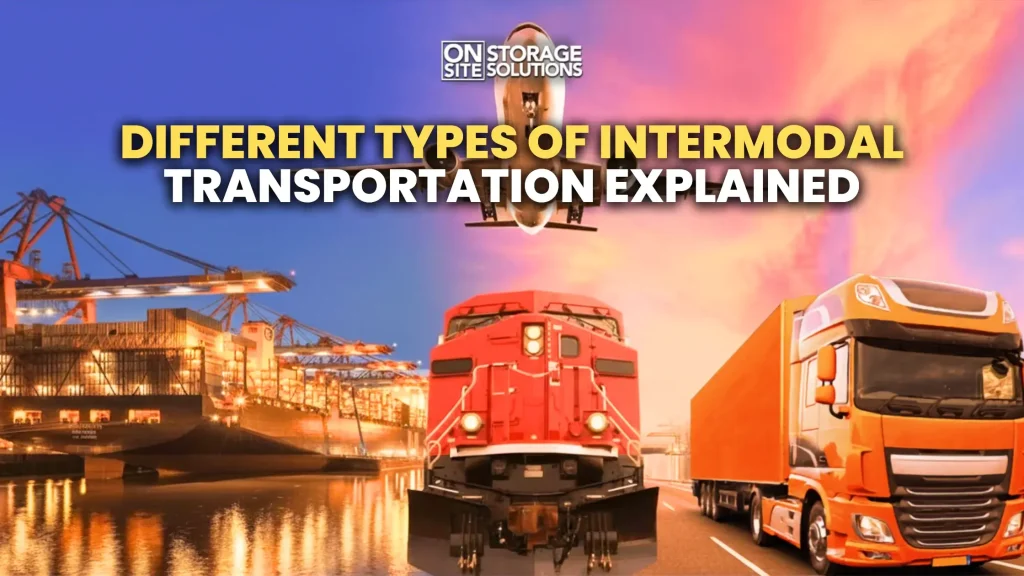
Different Types of Intermodal Transportation Explained

Different types of intermodal transportation used to move cargo by truck train ship and aircraft

Different types of intermodal transportation are reshaping how goods move across regions, borders, and oceans. Modern supply chains no longer rely on a single mode of transport. Instead, they blend road, rail, sea, and air into smarter, more resilient systems that prioritize speed, cost control, and reliability.

As global trade expands and customer expectations rise, intermodal transportation has become a strategic advantage rather than just a logistics option. Businesses that understand how these systems work are better positioned to reduce risk, optimize costs, and scale efficiently.

Understanding the Different Types of Intermodal Transportation

Understanding the different types of intermodal transportation for global freight

Different types of intermodal transportation refer to the movement of cargo using two or more transport modes under separate contracts. A specialized carrier handles each leg of the journey, while the cargo itself remains inside the same container.

This containerized approach reduces handling, limits damage, and improves security. It also allows logistics teams to select the most efficient mode for each segment of the journey.

Why Different Types of Intermodal Transportation Matter

Intermodal transportation supports global trade by connecting inland production centers with international markets. It creates flexibility within supply chains while lowering dependence on any single transportation method.

As fuel prices fluctuate and infrastructure evolves, intermodal systems provide a reliable way to balance speed, cost, and environmental responsibility.

A Brief History of Different Types of Intermodal Transportation

A brief history of different types of intermodal transportation and global logistics

Before containers, freight moved as break bulk cargo. Goods were loaded and unloaded piece by piece at every stop, increasing labor costs and the risk of damage or loss.

The introduction of standardized containers changed everything. Inspired by military logistics and early rail innovations, containers allowed freight to move seamlessly between trucks, trains, and ships.

This shift laid the foundation for the different types of intermodal transportation used worldwide today.

Different Types of Intermodal Transportation by Road Rail

Transportation-By-Road-Rail Different types of intermodal transportation by road rail for efficient cargo movement

Road Rail as a Backbone of Intermodal Freight

One of the most common different types of intermodal transportation combines trucks and trains. Cargo is picked up by truck, transferred to rail for long distances, and delivered again by truck.

Rail excels at moving heavy or high-volume freight efficiently over land. Trucks handle the first and last mile, providing access and flexibility.

When Road Rail Works Best

This method is ideal for non-urgent shipments such as construction materials, agricultural products, and industrial equipment. It reduces fuel consumption and highway congestion while maintaining predictable transit times.

Rail Sea Intermodal Transportation

Rail sea intermodal transportation for domestic and international freight

Connecting Inland Regions to Global Markets

Rail sea transport links inland origins to seaports through rail networks. Containers are then loaded onto vessels for international shipping.

This approach supports bulk trade and large-scale manufacturing. It is especially valuable for exporters moving heavy goods overseas.

Capacity and Scale Advantages

Ports using this system handle massive volumes efficiently. Questions like how many shipping containers can fit on a container ship highlight the scale of modern maritime logistics, where thousands of containers move in a single voyage.

Road Sea Intermodal Transportation

Road sea intermodal transportation connecting trucks with ocean shipping

Flexible Access to Ports

Road-sea transport uses trucks to move containers directly to ports. From there, cargo is transferred onto ships for long-distance travel.

This method works well when rail access is limited or when shipments originate closer to ports.

Ideal Use Cases

Road sea transport suits time-sensitive or smaller shipments. Perishable goods, retail inventory, and specialty products benefit from faster port access and simplified scheduling.

Different Types of Intermodal Transportation Using Air Sea

Different types of intermodal transportation using air sea logistics

Speed Meets Cost Efficiency

Air sea intermodal transport blends the speed of air freight with the cost advantages of ocean shipping. Cargo is flown to a hub airport, then transferred to ships for international delivery.

This option balances urgency and budget. It is commonly used for high-value goods that cannot wait for full ocean transit.

Security and Control in Different Types of Intermodal Transportation

High security standards make this method attractive for electronics, pharmaceuticals, and luxury items. The reduced handling also lowers the risk of damage or theft.

Rail Truck Intermodal Transportation

Transportation Rail truck intermodal transportation for flexible freight delivery

Precision and Speed Combined

Rail truck transport moves cargo long distances by rail, then uses trucks for final delivery. This system supports faster transit than full rail while retaining cost savings.

It plays a key role in regional distribution networks where delivery windows are tight.

Supporting Evolving Supply Chains

As e-commerce grows, this mode supports rapid replenishment. It also aligns well with modern distribution centers that require predictable arrival schedules.

Infrastructure Supporting Intermodal Systems

Infrastructure supporting intermodal systems and cargo transportation

Terminals, Equipment, and Containers

Intermodal success depends on specialized infrastructure. Terminals are designed for quick transfers, and equipment such as cranes and shipping container ramps improves efficiency and safety.

Containers themselves act as mobile warehouses, protecting cargo throughout the journey.

Technology Integration

Tracking systems allow real-time visibility. Shippers can monitor progress, anticipate delays, and adjust plans quickly.

This transparency makes intermodal transportation as dependable as traditional trucking.

Advantages of Different Types of Intermodal Transportation

Advantages of different types of intermodal transportation for businesses

Cost Efficiency and Fuel Savings

Rail and sea transport consume significantly less fuel per ton-mile. Combining modes lowers overall costs, especially for long hauls.

This efficiency allows companies to stay competitive even as fuel prices rise.

Environmental Benefits

Rail-based transport can reduce emissions dramatically. Organizations using intermodal strategies lower their carbon footprint while meeting sustainability goals.

Capacity and Reliability

Intermodal systems offer consistent capacity. Businesses avoid driver shortages and seasonal rate spikes common in trucking.

Double-stacked railcars further increase throughput without expanding infrastructure.

Challenges and Limitations to Consider

Challenges and limitations to consider in intermodal transportation

Coordination and Timing

Transfers between modes introduce complexity. Poor planning can cause delays and increase costs. Strong coordination and experienced partners are essential for success.

Infrastructure and Security Concerns

Intermodal facilities require significant investment. Containers also raise security concerns, as they can be misused if not monitored properly.

Weather disruptions at ports and terminals can impact schedules as well.

How to Choose Among the Different Types of Intermodal Transportation

How to choose among the different types of intermodal transportation for your shipment

Selecting among the different types of intermodal transportation depends on cargo type, distance, urgency, and budget. No single solution fits every shipment.

Understanding the strengths of each mode helps businesses design resilient logistics strategies.

Intermodal transportation supports modern commerce by offering adaptable, scalable solutions. It also integrates seamlessly with the different types of transportation to move cargo required in global supply chains.

The Role of Containers in Intermodal Transport

Containers are the backbone of intermodal systems. They reduce handling, improve safety, and simplify customs processes.

From storage to transit, containers protect goods and serve as temporary warehouses during long journeys.

Final Thoughts

Dry Van Containers For Sale Near Me

Different types of intermodal transportation are shaping the future of global logistics by offering efficiency, flexibility, and sustainability. Companies using intermodal solutions gain resilience, reduce costs, and unlock new growth opportunities.

Cargo travels best when protected at every stage. On-Site Storage Solutions provides durable storage and shipping containers for road, rail, and sea, from cargo-worthy units to wind- and water-tight options.

Call (888) 977-9085 to find the right container and keep your intermodal shipments secure and efficient.

FREQUENTLY ASKED QUESTIONS

1. What is the meaning of intermodal transportation?

Intermodal transportation is the movement of cargo using two or more modes of transport, such as trucks, trains, ships, or planes, while the cargo stays in the same container to reduce handling, improve security, and increase efficiency.

2. What is the main advantage of intermodal transportation?

The main advantage of intermodal transportation is its ability to combine efficiency, cost savings, flexibility, and environmental benefits, allowing businesses to move goods reliably while reducing fuel usage and transit delays.

3. What are the different types of intermodal transportation?

The different types of intermodal transportation include:

  • Road-Rail – trucks and trains.
  • Rail-Sea – trains and ships.
  • Road-Sea – trucks and ships.
  • Air-Sea – planes and ships.
  • Rail-Truck – trains and trucks.
4. How many types of intermodal are there?

There are five main types of intermodal transportation, each combining different modes to optimize speed, cost, and cargo safety.

5. What types of goods use intermodal?

Intermodal transportation is used for a wide range of goods, including:

  • Heavy or bulky cargo (industrial equipment, construction materials).
  • Time-sensitive shipments (perishable goods, retail inventory).
  • High-value items (electronics, pharmaceuticals, luxury goods).
PrevPreviousBuilding Steelhaven: A Unique and Inviting Shipping Container Home in Northern Michigan
NextTransforming Global Trade: Intermodal Freight ContainersNext
  • June 28, 2023
  • By Gregg Schoenborn
  • Blog, How to...
Top-rated Metal Storage Containers for Shipping and Logistics?

Top-rated Metal Storage Containers for Shipping and Logistics?

August 7, 2026
Which Companies Supply Industrial Metal Storage Containers?

Which Companies Supply Industrial Metal Storage Containers?

August 4, 2026
Where Can I Buy Heavy-Duty Metal Storage Containers Near Me?

Where Can I Buy Heavy-Duty Metal Storage Containers Near Me?

August 3, 2026
Search

Related Blog Post

Top-rated Metal Storage Containers for Shipping and Logistics?
Blog

Top-rated Metal Storage Containers for Shipping and Logistics?

Storage containers for shipping provide businesses with a secure and flexible way to manage cargo, inventory, and equipment. Companies in construction, manufacturing, retail, and logistics

Read More »
August 7, 2026 No Comments
Which Companies Supply Industrial Metal Storage Containers?
Blog

Which Companies Supply Industrial Metal Storage Containers?

Protecting valuable equipment, inventory, and materials is essential for businesses that operate in demanding environments. Choosing the right industrial metal storage containers helps safeguard assets

Read More »
August 4, 2026 No Comments
Where Can I Buy Heavy-Duty Metal Storage Containers Near Me?
Blog

Where Can I Buy Heavy-Duty Metal Storage Containers Near Me?

Heavy-duty metal storage containers are steel storage units originally designed for transporting cargo but are now widely used for secure residential, commercial, and industrial storage

Read More »
August 3, 2026 No Comments
Where to buy large metal storage bins for industrial use?
Blog

Where to buy large metal storage bins for industrial use?

Industrial businesses depend on reliable storage to protect equipment, inventory, and valuable materials. Large metal storage bins provide a dependable solution for warehouses, construction sites,

Read More »
July 31, 2026 No Comments
What Are the Best Metal Storage Containers for Outdoor Use?
Blog

What Are the Best Metal Storage Containers for Outdoor Use?

The best metal storage containers provide a durable solution for protecting valuable items from weather, theft, moisture, and long-term outdoor exposure. From residential storage needs

Read More »
July 29, 2026 No Comments
40 Foot Storage Container Rental For A Construction Site
Blog

40 Foot Storage Container Rental For A Construction Site

Construction sites move fast, and without proper storage, tools and materials can quickly become disorganized, damaged, or misplaced. A 40 foot storage container rental is

Read More »
July 27, 2026 No Comments
Different Types of Intermodal Transportation Explained

SUBSCRIBE TO OUR NEWSLETTER TO RECEIVE THE LATEST NEWS AND EXCLUSIVE OFFERS

Captcha validation failed. If you are not a robot then please try again.
Onsite storage solution logo footer

Navigation

  • Blog
  • Locations
  • Type of Containers
  • Conditions
  • Why Onsite Storage
  • Get a Quote
  • Blog
  • Locations
  • Type of Containers
  • Conditions
  • Why Onsite Storage
  • Get a Quote

Resources

  • Sizes
  • Gallery
  • FAQ
  • Reviews
  • Privacy Policy
  • Terms and Conditions
  • Refunds and Returns
  • Shipping Policy
  • Sizes
  • Gallery
  • FAQ
  • Reviews
  • Privacy Policy
  • Terms and Conditions
  • Refunds and Returns
  • Shipping Policy

Contact Us

  • 888-977-9085
  • info@OnSiteStorage.com
  • 21050 Union Street Suite 4, Wildomar, CA 92595

Follow Us

Facebook Page Instagram Page Youtube Channel Linkedin  Page Pinterest Page Google Business Page

Ⓒ 2026 On-Site Storage Solutions, Inc. | All Rights Reserved

secured-payments

(888) 977-9085
Call before you buy. Best prices by phone!

Let's get you the best price.

We use your location to show accurate pricing and availability in your area.