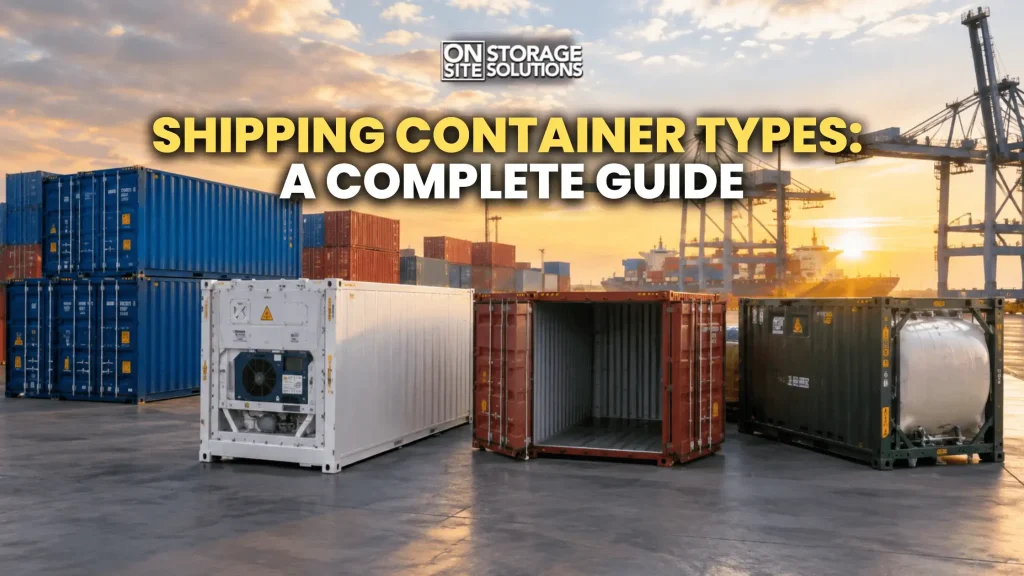

Shipping container types shape the way modern businesses move products across borders, manage inventory, and keep supply chains running smoothly. As global trade grows more competitive, companies rely on specialized containers to improve efficiency, protect cargo, and reduce operational delays.
From standard dry vans to advanced refrigerated and smart units, understanding the right container for the right job helps organizations streamline logistics while unlocking new opportunities for growth.
Understanding the Different Shipping Container Types
Shipping container types play a defining role in how goods move across oceans, railways, and highways. Businesses depend on standardized systems to streamline cargo handling, improve safety, and speed up international trade.
Modern logistics thrives on consistency and flexibility. From small storage units to advanced refrigerated boxes, each Shipping container serves a purpose that aligns with specific cargo needs.
Digital commerce and rapid distribution models have pushed companies to rethink transportation strategies. Learning how different container types work allows logistics planners to optimize cost, time, and operational efficiency.
The Evolution and Core Design of Shipping Container Types
Standardized containers have transformed freight movement since the mid twentieth century. They enable seamless transfers between ships, trucks, and trains with minimal manual handling.
Most containers are built from Corteen steel, known for corrosion resistance and long service life. This durable material allows containers to withstand harsh ocean environments while protecting cargo from external elements.
Wind and Water Tight units also known as wwt container options provide protection from leaks and weather exposure. Businesses often use them for storage and transport when cargo protection is essential.
Safety certifications such as Cargo worthy shipping container inspections confirm that units meet transport standards. These inspections help companies maintain compliance and reduce risk during long distance shipping.
Dry Van Shipping Container Types for Everyday Freight
Dry vans are a versatile option for moving everyday goods across different transportation networks.
Standard Dry Van Containers
Standard dry vans are one of the most common shipping container types. They have rear doors and are suitable for consumer goods, electronics, packaged products, and other general cargo.
Tunnel Containers
Tunnel containers have doors on both ends, making loading and unloading faster. They are useful for busy operations that need quick access to cargo.
Different Container Sizes
Dry vans are available in 10-foot, 20-foot, and 40-foot sizes to suit different cargo volumes. Choosing the right size helps businesses use space efficiently.
High Cube Containers
High cube containers offer extra height and interior space. They are ideal for lightweight or bulky goods that need more room.
Refrigerated and Insulated Containers for Temperature-Sensitive Cargo
Some shipping container types are designed to keep temperature-sensitive goods safe during transport and storage.
Refrigerated Units
Refrigerated units (reefers) use cooling systems to maintain stable temperatures for food, medicine, and other sensitive products.
Insulated Containers
Insulated containers help maintain stable internal temperatures without active cooling. They are useful for goods that need protection from temperature changes.
Repurposed Reefer Containers
Older reefer containers can be converted into storage units. Reusing these units gives them a second life and helps reduce unnecessary waste.
Specialized Shipping Container Types for Oversized and Unique Cargo
Some shipping container types are designed to handle oversized, heavy, or specialized cargo.
1. Flat Rack Shipping Container Types
Flat rack containers have a strong base and reinforced end walls for carrying heavy machinery, vehicles, and large equipment.
2. Open Top Containers
Open top containers have a removable roof, making it easier to load tall or oversized cargo with cranes or forklifts.
3. Open Side Containers
Open side containers feature full-length side doors for faster loading and easy access to goods.
4. Duo Con Containers
Duo Con containers can be divided into two smaller storage spaces, making them useful for flexible storage and transport.
5. Military Conex Containers
Military conex containers are built for durability and security. They are used in military operations and commercial applications that require rugged storage and transport.
Shipping Container Types for Liquid Transport and Efficient Chassis Use
Different shipping container types are designed to handle specific cargo and transportation needs.
A. Tank Containers for Liquid Cargo
Tank containers are used to transport liquids, chemicals, and gases. They are built for safe handling and meet international transport standards.
B. Shipping Container Chassis for Road Transport
Chassis provide a secure platform for moving containers by road. They support common 20-foot, 40-foot, and 45-foot containers.
C. Smart Containers for Cargo Tracking
Smart containers use digital technology to track cargo location, temperature, and security. This helps businesses monitor shipments and respond to issues quickly.
Choosing the Right Shipping Container Types for Business Needs
Selecting the ideal container starts with understanding cargo size, weight, and handling needs. Fragile shipments often require insulated or climate-controlled units, while a Cargo worthy shipping container ensures goods meet transport safety standards.
Budget and availability also influence decisions since specialized units such as high cube or tunnel containers may be harder to source in certain regions. Proactive planning prevents costly delays and surprises.
Standardizing container use across operations improves efficiency and simplifies maintenance, scheduling, and training. Many businesses also repurpose retired containers into offices, pop up spaces, or modular structures to support sustainability goals.
The Future of Shipping Container Types and Global Logistics
The future of containers is being shaped by digital technology, including sensors, automation, and real-time tracking. These tools help businesses monitor cargo, improve efficiency, and reduce risks in global shipping.
New container designs will focus on safety, durability, and environmental care. Recycled materials and eco-friendly production can help lower carbon emissions while supporting stronger and more efficient supply chains.
Final Thoughts
Choosing the right container is key to efficient, secure, and flexible logistics. From dry vans and reefers to tank units and modular solutions, each option helps businesses protect cargo, optimize operations, and stay competitive in global trade.
On-Site Storage Solutions provides durable containers for storage, transport, or specialized cargo needs. Call (888) 977-9085 today to find the perfect container and simplify your logistics with reliable, on-site solutions.
FREQUENTLY ASKED QUESTIONS
Intermodal containers, commonly known as shipping or cargo containers, are built to safely carry goods across oceans, highways, and railways.
There are many types of shipping containers, including standard dry vans, high cubes, refrigerated (reefers), insulated non-working units, flat racks, open top, open side, tank containers, and specialized modular units.
A shipping container is called an ISO container because it follows international standards set by the International Organization for Standardization, ensuring uniform dimensions and safe intermodal transport.
FCL (Full Container Load) is when a single shipment fills an entire container.
LCL (Less than Container Load) is when multiple shipments share one container, optimizing space and cost.
A standard shipping container typically lasts 15–20 years, depending on materials, usage, and maintenance, with Corten steel providing durability against harsh environments.


