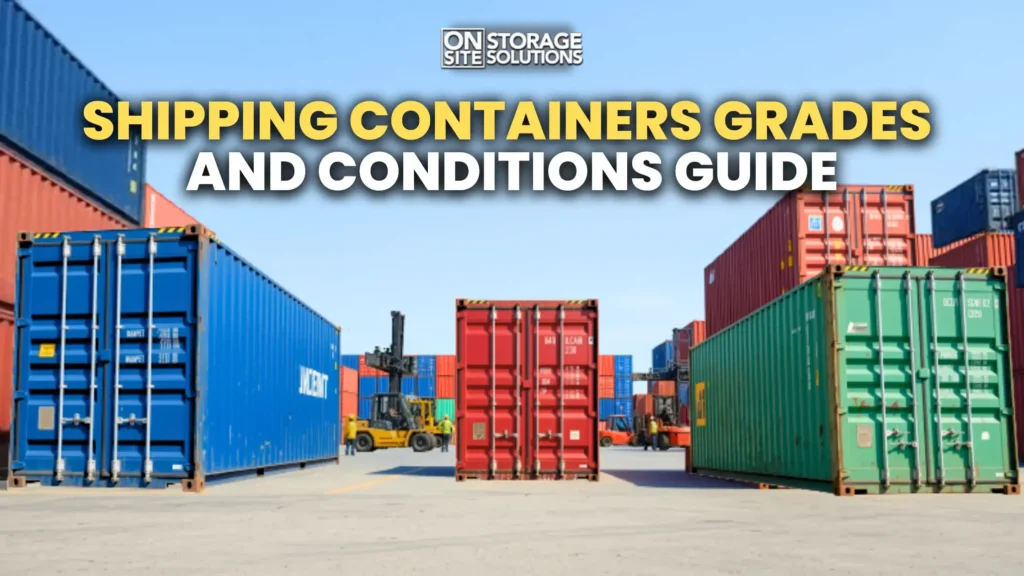

Shipping containers come in a variety of conditions and classifications, and understanding shipping containers grades is essential before making a purchase. Each container grade reflects its structural integrity, appearance, and suitability for specific uses. Whether you need a unit for storage, export, or modification, knowing how shipping containers are categorized helps you make a confident and cost-effective decision.
Shipping containers are available in New, Used, and Refurbished conditions, and each condition falls under specific grading standards. These include IICL, Cargo Worthy, Wind and Water Tight (WWT), and As-Is categories.
By understanding how these classifications are defined, buyers can better evaluate durability, lifespan, and overall value.
Understanding Shipping Containers Grades and Conditions
When discussing shipping containers grades, it’s important to separate conditions from classification. Condition refers to whether the container is new, used, or refurbished. Grade, on the other hand, determines the inspection standard it meets.
Shipping containers are built to withstand harsh international transport conditions. Even after years of service, many units remain structurally sound. The grading system helps determine whether the container is suitable for cargo transport, secure storage, or specialized modifications.
To ensure consistent quality, On-Site Storage Solutions follows ISO-based inspection guidelines to evaluate all containers before categorizing them.
New Containers in Shipping Containers Grades
New or “One-Trip” containers represent the highest level of quality available. These containers are manufactured overseas, used once to transport cargo, and then sold. Although they may show minor cosmetic imperfections from transport, such as small dents or light scratches, they remain in near-pristine structural condition.
Most new containers are labeled as IICL or Grade A, meaning they meet strict inspection criteria and are suitable for international shipping. These containers typically come in uniform colors like tan, gray, or blue and include all required capacity and identification markings.
Used Shipping Containers and Their Grades
Used containers are popular among buyers who prioritize functionality and affordability. These units have typically been in circulation for 8–15 years and may show visible wear.
Cargo Worthy Shipping Containers
Cargo Worthy containers are inspected and approved for international transport. For containers intended for export, a shipping container CSC survey is required to verify structural integrity and ensure compliance with international transport standards.
Cosmetic wear such as dents, faded paint, and minor rust patches is common, but the container remains structurally sound and secure for shipping via sea, rail, or road.
Wind and Water Tight Shipping Containers
Wind and Water Tight (WWT) containers are guaranteed to be sealed against leaks. In the hierarchy of shipping containers grades, these units are ideal for secure storage but may not qualify for international cargo use without re-certification.
Expect visible wear such as surface rust, abrasions, or dents from previous transport use. However, the structure remains intact and weather-resistant.
As-Is Shipping Containers
As-Is containers fall into the lowest tier of classification. These units typically have structural issues such as holes, damaged flooring, or compromised seals.
While they are not recommended for sensitive storage or shipping, they may still be useful for construction site storage or housing non-sensitive materials where full weather protection is not required.
Refurbished Units in Different Container Grades
Refurbished containers begin as Wind and Water Tight units but undergo restoration to extend usability. Within shipping containers grades, refurbishment improves appearance and longevity without restoring the container to “new” status.
There are three main refurbishment levels:
Typical Refurbishment – Exterior rust removal, priming, and repainting.
- Roof and exterior walls are cleaned and prepped.
- Locks, gaskets, and decals are refreshed.
Full Refurbishment – Includes interior repainting.
- Interior walls, floor, and ceiling receive a fresh coat.
- Enhances longevity and visual appeal.
Factory Refurbishment – Extensive structural and cosmetic renovation.
- Full exterior and interior restoration.
- Repairs structural damage, replaces flooring if needed.
- Restores container to near-new condition.
Refurbished containers offer a balance between cost savings and improved visual appeal.
Choosing the Right Shipping Containers Grades for Your Needs
Understanding these distinctions will also help you choose the right shipping container based on budget, durability requirements, and long-term usage plans. For general storage, Wind and Water Tight units offer reliable protection at a lower cost.
If budget is your top priority and cosmetic condition is not important, an As-Is container may suffice. Understanding these grading distinctions ensures you invest in a container that matches both your operational and financial requirements.
On-Site Storage Solutions
On-Site Storage Solutions helps you find the ideal shipping container for any purpose. We offer new, used, and refurbished units across multiple grades and sizes to match residential, commercial, and industrial requirements.
Our team can guide you through the different shipping containers grades, helping you confidently select the most suitable option for your specific storage or shipping needs.
Contact our knowledgeable customer service team today at 888-405-8772 and let us help you choose the right container solution with confidence.
FREQUENTLY ASKED QUESTIONS
Shipping containers are classified by grade based on condition and usability: IICL (new/one-trip), Cargo Worthy (approved for shipping), Wind and Water Tight (WWT), and As-Is. Grades reflect structural integrity, durability, and suitability for storage or transport.
A one-trip container is a brand-new container used only once for transporting goods, often from overseas manufacturers. It’s near-pristine, labeled as IICL or Grade A, and suitable for shipping or long-term storage without significant wear or damage.
CW stands for Cargo Worthy. These containers are inspected and approved for international transport, ensuring structural integrity. Minor cosmetic wear may exist, but they are safe for shipping via sea, rail, or road and may require a CSC survey.
A container grade indicates the condition, quality, and inspection status of a shipping container. Grades determine usability for shipping or storage, from new/one-trip to Cargo Worthy, Wind and Water Tight, or As-Is, guiding buyers in making informed choices.
B grade containers usually refer to slightly used or minorly damaged units still suitable for storage or limited shipping. C grade containers often have significant wear or cosmetic defects, making them better for non-sensitive storage where aesthetics or full weatherproofing aren’t critical.


